A week ago, Brandon Marshall was considered just your average egomaniacal wide receiver; self-centered, attention seeking, demanding, aversive to authority and inclined to engage in risky and/or violent activities off the field.
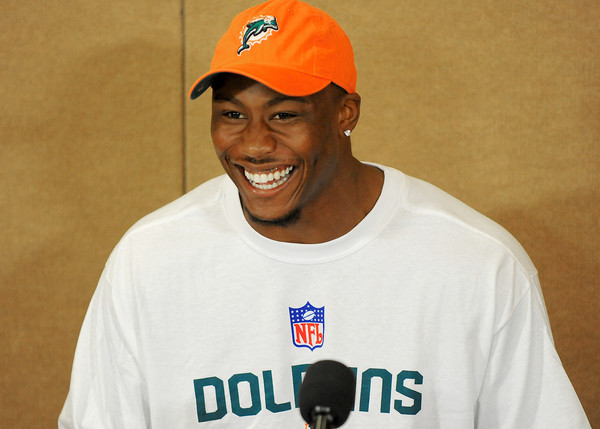
On Monday, the Miami Dolphins wide receiver took the courageous step of publicly revealing that he suffers from a serious psychiatric illness called borderline personality disorder (BPD). The diagnosis helps explain his history of domestic violence and disruptive behavior in the locker room.
But what does that say about all the other wide receivers in the league who share many of Marshall’s personality traits? Are several of the NFL’s elite wide receivers mentally ill?
The common characteristics of BPD are: a pervasive pattern of affective instability, severe difficulties in interpersonal relationships, problems with behavioral or impulse control (including suicidal behaviors) and disrupted cognitive processes. This instability often disrupts family and work life, long-term planning and the individual’s sense of self-identity.
There’s a long list of wide receivers who have severe difficulty with interpersonal relationships and problems with impulse control. I could rattle off countless examples of domestic abuse, confrontation with coaches and impulsive acitivities like running over a police officer or attempting suicide.
Perhaps more revealing is BPD’s not-so-distant cousin, narcissistic personality disorder (NPD). A diagnosis of NPD is based on the existence of at least five of these qualities:
· Grandiose sense of self-importance
· Preoccupied with fantasies of success, power, love, etc.
· Believes that he/she is special
· Requires excessive admiration
· Has a sense of entitlement
· Is interpersonally exploitive
· Lacks empathy
· Envious of others
· Shows arrogance
People suffering with NPD often have unreasonable expectations of special treatment and tend to react to criticism with rage, shame or humiliation.
Of course, it’s possible to be narcissistic without having NPD. Narcissism is rampant in our society and appears to be more prevalent among athletes in general. We’ve grown accustomed to athletes speaking of themselves or “their talents” in the third person, referring to themselves as a brand or coming up with their own nicknames. Yet, wide receivers appear to take the concept of the narcissistic athlete to another level.
Their narcissistic tendencies have been enhanced by increased media exposure and reinforced by an escalation of in number and value of endorsement opportunities, however, the concept of the narcissistic wide receiver is not a new phenomena.
In 1973, Dr. Arnold Mandell, a team psychiatrist for the San Diego Chargers, created personality profiles for every football position. His analysis of the wide receiver was spot on and still rings true thirty eight years later.
“The wide receiver is a very special human being,” Mandell wrote. “He shares many features with actors and movie stars. He is narcissistic and vain and basically a loner.”
He added, “They love to be the center of attention. They need to be noticed. They have an imperviousness in that they don’t seem to mind criticism about being like that. All players want the respect of fellow players. Showing off usually is not an admired characteristic by most players, but by wide receivers it is very admired.”
“They are interested in looking pretty, being pretty. They are elegant, interpersonally isolated. Wide receivers don’t group, they don’t mob out. They are actors, uninflected about showing off, individualists, quite interested in their own welfare, their own appearance.”
Sound like somebody you know? How about Brandon Marshall, Terrell Owens, Randy Moss, Keyshawn Johnson, Braylon Edwards, Chad Ochocinco and Michael Irvin, to name a few.
Some may argue that there are players with big egos at every position in the NFL, it’s just more noticable with wide receivers because they play a high profile position. The hole in that argument is that quarterback and running back are also high profile positions, in fact, quarterbacks draw more attention than wide receivers, yet they don’t come across nearly as narcissistic.
Of course, that’s not to say that all wide receivers are narcissists. Jerry Rice and Marvin Harrison never drew attention to themselves on or off the field (prior to Dancing With the Stars) and the two top current wide receivers, Andre Johnson and Larry Fitzgerald, project an air of humility. Still, the percentage of narcissistic wide receivers seems disproportionately high.
So why are wide receivers so narcissistic?
There’s a chicken or the egg aspect to this question. Does the wide receiver position create narcissism or are narcissistic athletes drawn to wide reciever because of the nature of the position? It may be a little of both.
The wide receiver’s profile in relation to the quarterback may be part of the problem. Wide receivers are generally the best athletes on the field, yet they don’t receive as much attention or credit as the quarterback. Their production and profile is actually to a large extent dependent on the quarterback. Both of those facors can lead to resentment, which may manifest as narcissism. Consider Terrell Owens, who has thrown one quarterback after another under the bus, seemingly because he wanted to be the star of the team.
A possible explanation for the high rate of narcissism among wide receivers as compared to the other high profile positions is that narcissists are weeded out due to the demands of those positions. The quarterback is the team leader and if he puts his concerns and ego ahead of the team he won’t be in the league very long. Running backs are humbled by the constant pounding they take throughout the game. Narcissists are unlikely to seek that position or last at it if they do.
The wide receiver’s positioning on the field may be a factor as well. They line up alone on an island, which can foster a sense of distance from teammates or a feeling that one’s special. On the flip side, it’s very possible that loners or narcissistic personalities prefer wide receiver because of the isolation or high profile of the position, without the pressures or pouding that come with touching the ball more frequently.
Regardless of the cause, it’s diffficult to argue with the premise that narcissism is a common trait among NFL wide recievers. I’m not qualified to speculate as to whether the personality traits of specific receivers rise to the level of a disorder, or which disorder they may have. It’s an interesting subject for a psychological study.
Brandon Marshall deserves credit for recognizing his illness and seeking help. Maybe some other receivers will follow his lead. Then again, that wouldn’t be very narcissistic of them.
A few days ago, members of my fantasy baseball league engaged in a heated discussion over whether there’s such a thing as “clutch” hitting in baseball. It’s been an ongoing debate within baseball circles since the sabermetrics revolution became mainstream in the past 20 years.
It’s a fascinating argument, beginning with how to define “clutch” – a word often loosely used to describe a player’s dependability or productivity in high pressure situations – then agreeing on a measurable criteria based on specific game situations. Once a definition is established a clash ensues, with proponents of statistical analysis on one side and those beholden to memory and perception on the other.
Even more intriguing than the debate itself (For the record, I’m not completely sold either way) is the passion it evokes in the debaters, especially those who believe that there are “clutch” hitters. Their outrage is a revealing window into the nature of fandom and the role that sports, in this case baseball specifically, play in the lives of sports fans.
I’m not talking about casual fans who watch or even attend a few games a year and check in on the standings now and then or fantasy leaguers who are more concerned with their imaginary teams than the real ones. I’m talking about the real fans, the die-hards.
For them sports are a religion, a source of structure and escape, a connection with other people and a feeling that they belong to something greater than themselves. Like any religion, sports have their own rules, regulations and etiquette, mantras and superstitions. They even have the requisite mythology and heroes to worship (think of all the plaques, statues, monuments and retired jerseys), along with villains to demean and disdain.
Mythology plays a greater role in baseball than any other major American sport because of its history. It wasn’t just America’s favorite pastime during the early and mid 20th century, it was more popular than all the other American sports combined. Before television and internet, radio and print shaped our images of giants of the game in a way no longer possible due to increased access to information.
Those heroes shared certain common characteristics, chief among them the almost super-human ability to raise their level of play in crucial situations, in other words, to be clutch. The concept was supported by references to specific instances or images, many of which have become imbedded in our collective memory, like Bobby Thompson’s home run or Carlton Fisk waving the ball fair.
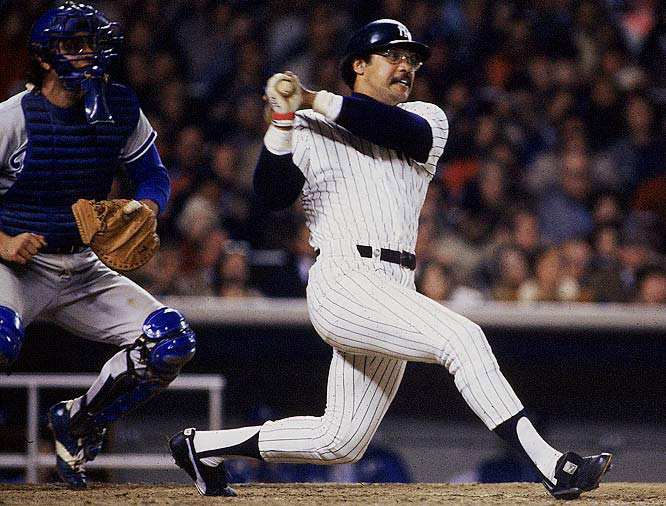
Reggie Jackson rose to the occasion to hit three home runs in Game 6 of the 1977 World Series, earning the moniker Mr. October. More recently, he’s been joined on Mount Clutchmore by another Yankee, Derek Jeter.
These heroes have been passed down from generation to generation, along with the magical numbers, records and streaks which have been used to define greatness and shape “conventional baseball wisdom.” Williams .400 season, Henderson’s stolen bases, triple crown winners, DiMiaggio’s hitting streak, Ryan’s no-hitters and the greatest of them all, Aaron’s 755 home runs, represented the pinnacle of success.
The media continues to create and enhance these legends. The drama of heroes and goats make for great headlines and compelling story lines. The press caters to what their audience is comfortable with, the old myths and wisdom. Most television broadcasts still display a hitter’s batting average, home runs and RBIs when he comes to the plate, even though we now know there are more telling statistics than batting average and RBIs.
It’s important to note that fans follow the game for different reasons. Some are infatuated by the mythology, records and statistics, as they understand them. Others love the intricacies of the game itself, the grip on a curveball, a perfectly executed double play or a batter working the count. The vast majority of fans incorporate a little bit of both schools of thought; it’s a question of which way they lean.
The great myth buster, sabermetrics, represented a revolutionary way of examining a player’s productivity and worth, based on objective analysis of empirical evidence. Its followers ruffled many feathers by pointing out inefficiencies in conventional baseball wisdom and questioning the significance of many of the holy numbers associated with the game’s patron saints.
Sabermetricians argued that it never makes sense to bunt, that errors are an inadequate means for measuring a player’s defensive ability and that stolen bases are over-valued. They concluded that batting average RBIs are relatively ineffective means of evaluating a hitter and that a batter’s worth should be determined by more meaningful statistics, such as on his on-base percentage and to a greater extent, OPS (on-base percentage + slugging percentage.)
Most egregiously, the sabermetricians have produced study after study claiming that “clutch” hitting does not exist. They argue that there’s no empirical evidence to demonstrate that certain players elevate their performance in crucial game situations. Sure, some players’ numbers are greater in the post-season, but that’s based on a small sample size.
To delve into sabermetrics takes a curiosity to explore another way of thinking, devoid of myth and memory. Those who have embraced the statistical revolution and still enjoy baseball either love the game as played on the field, statistics in general or both. They may succumb to fairy tales now and then, but it’s not the essence of their connection to the game.
Many adherents to conventional baseball wisdom have laughed off sabermetric findings, choosing to rely on myths, memories and perceptions instead. Like any extremely devout person, they don’t pick and choose which parts of the religion to follow, they adhere to every aspect of it. They cling to the concept of “clutch” because to do otherwise would be to question their faith.
Baseball the religion, goes to the core of their very being, so their reaction to someone questioning the tenets of the game evokes a visceral response. It’s a defense mechanism against what they perceive as an attack against their sense of self.
If they were to explore sabermetrics, they might not like what they find. When the preconceptions and myths fade away, they may realize that they don’t love the game itself as much as they thought they did. Then they’d have to find a new religion to clutch.
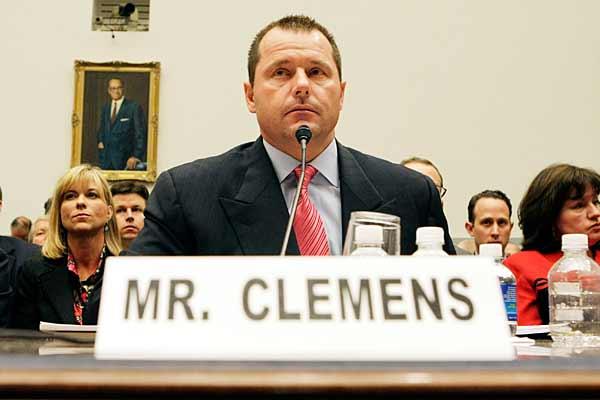
In 2005, the House Government Reform Committee conducted a public hearing regarding the use of steroids and other performance enhancing drugs in Major League Baseball (MLB). Yesterday, a trial against former MLB star Roger Clemens based on his alleged perjury during that hearing ended in a mistrial, just a few months after a mistrial in the Barry Bonds case a few months ago, leaving the government looking incompetent and imprudent.
Contrary to popular opinion I believed that the unusual step of Congress intervening in the affairs of professional sports league was warranted. I didn’t buy the argument that Congress shouldn’t have gotten involved because they had more important things to do than hold congressional hearings on the use of performance enhancing drugs (PEDs) in baseball or that the U.S. Attorney’s office had more pressing cases to try than perjury charges stemming from those hearings and other investigations.
Obviously, Congress had more important issues to deal with, like the wars in Iraq and Afghanistan and the rising national debt, but that doesn’t mean that they shouldn’t have addressed the use of PEDs in baseball as well. Should a physician refuse to treat a patient with a cough or a sprained ankle because he has other patients with more severe conditions like chest pains or pneumonia? Should the police ignore domestic violence and petty theft claims because they have rapes and murders to deal with? I’m sure there were also members of Congress who pushed the issue as a way to gain favor with their constituents, but that doesn’t mean their actions were unjustified.
The PED problem in baseball needed to be addressed by Congress. Their involvement was necessitated by the unwillingness of the people running MLB, from the commissioner’s office to the team owners, to deal with the problem. Steroid use in baseball is a serious issue, not only because of what PEDs do to the athletes’ bodies, but also because of the influence professional athletes have on children and the culture at large.
The major problem with the Congressional hearing was that six players testified, compared to just four baseball executives and zero team owners. The players who used PEDs were certainly culpable, but they received a disproportionate amount of the blame from Congress and the media. In order for an epidemic to become institutionalized, as PED use in baseball was, those in charge must be complicit in the conspiracy and should be held accountable.
The suggestion that the commissioner’s office and team management had no idea this behavior was going on is ludicrous. The players’ appearances changed, from their muscles to their hat size. Mediocre middle infielders began hitting 30-40 home runs a year and there were rumblings about steroid use inside several locker rooms. Jason Giambi’s agent insisted that the Yankees remove a boilerplate clause from his contract stating that it could be voided in the event that he tested positive for steroids.
Once the hearing was over, I believe the U.S. Attorney’s Office was warranted in pursuing a case against Roger Clemens and Miguel Tejada for lying to Congress (Clemens at the above-mentioned hearing and Tejada when speaking to the house committee later in 2005, regarding his connections to Rafael Palmeiro’s PED use. Tejada pleaded guilty to lying to Congress in 2009 and received one year of probation) and Barry Bonds for lying to a grand jury.
I’m well aware that trials such as the ones involving Clemens and Bonds require a substantial allocation of money and man hours, which could be used for other things, but the analogies I used earlier of the doctor and police officer still apply. Both alleged crimes were a direct challenge to the authority of institutions which are essential to the stability of our society and the perpetrators need to be held accountable in order to maintain the credibility of those institutions.
The catch is that the prosecution must be sure they have enough evidence to prove the charges before they bring a case and then try the case effectively. The U.S. Attorney’s Office typically clears those hurdles. With the power of the federal government behind them they have a tremendous number of resources at their disposal and don’t bring a case to trial unless they’re extremely confident they can secure a guilty verdict. According to the Department of Justice, 94.1 percent of federal prosecutors’ cases resolved in 2009 ended with a conviction.
The case against Barry Bonds stemmed from his grand jury testimony in 2003 regarding charges against a suspected steroid dealer, in which he allegedly lied about his use of PEDs. When the allegations against Bonds first became public he was viewed as a villain and Americans was engaged in the issue, but while the government took eight years to build their case, even sports fan grew indifferent towards the steroid scandal and the pending Bonds and Clemens trials.
The case against Bonds began to fall apart pre-trial, when crucial pieces of evidence were deemed inadmissible. Perhaps, the government should have cut their losses and dropped the case then, but they decided to go forward. Though Bonds was convicted on one charge of obstruction of justice, the prosecution failed to convince all 12 jurors that he was guilty on three counts of lying to the grand jury. The hung jury and resulting mistrial was a public relations nightmare for the U.S. Attorney’s Office.
The government’s second big perjury case against a baseball icon fell apart due to incompetence. The Clemens trial, which began on Wednesday, was declared a mistrial by U.S. District Court Judge Reggie Walton yesterday morning after the prosecution introduced evidence which had previously been deemed inadmissible by the court. We may never know how strong the government’s case against Clemens was.
One has to wonder if real or imagined pressure from Congress, the Justice Department, or a superior at the U.S. Attorney’s office influenced the attorneys on these cases to bring them to trial against their better judgment. Now they’re left to decide whether they should pursue a re-trial of Bonds, Clemens or both, as public opinion continues to mount against what’s perceived as a waste of time and taxpayer money during a recession.
The government’s immersion into the MLB steroid scandal did reap some positive results. Baseball was forced to adopt more stringent PED testing and disciplinary measures. It was the scope of the investigation and the botched aftermath which backfired in their face. Only the federal government could jump into a situation with the best of intentions and public support behind them and come out looking like fools.
Over the past several weeks, a number of people have asked me why I don’t write about golf. I’ve heard, “You cover basketball, baseball, football , even tennis, but never any golf.” So, I’m setting the record straight; this site does not provide any golf coverage because it is a sports site and it’s this blogger’s position that golf is not a sport. All sports are games and athletic competitions, but not all athletic competitions and games are sports.
Before you golf lovers throw a fit, relax, I’m not going to go all George Carlin on you, ranting about golf being an elitist, silly waste of valuable real estate. I understand that it’s an extremely difficult game which requires tremendous skill, hand-eye coordination and years of practice in order to perform at a high level. I recognize that it can be very competitive, even addictive for some, and respect its value as a relaxing get away from the wife for a few hours.
I don’t begrudge those who enjoy playing and watching it or appreciate the technical, competitive and historical aspects of the game. I may even join you one day.
I’m also aware that golf is a “sport” as defined by standard dictionaries. Dictionary.com defines sport as, “An athletic activity requiring skill or physical prowess and often of a competitive nature such as racing, baseball, tennis, golf, bowling, wrestling, boxing, hunting, fishing, etc.”
But practically speaking, that definition is inaccurate and overinclusive. As it states in the examples provided, bowling, hunting and fishing are athletic activities which require skill or physical prowess and are often of a competitive nature, and they are certainly not sports.
My definition of a sport includes two key attributes which distinguish it from a game or competition: 1) There must be significant physical exertion and 2) There must be direct head-to-head combat, typically involving defense. By “direct head-to-head combat” I mean that one player or team’s actions is directly affected and countered by the opposing player or team’s actions.
Golf meets neither of those criteria. According to my definition, ping-pong is more of a sport than golf. At least ping pong involves direct competition, though it likely falls short on the physical exertion side.
On a side note, most sports involve a puck or ball, though it’s not required. Boxing and wrestling are sports. Track meets and competitive swimming are a bit tricky. Both require extreme physical exertion, but they don’t involve direct combat in the traditional sense of defense. Participants are confined to their own lanes and may not interfere with other competitors.
However, runners and swimmers do compete simultaneously, directly next to one another, so that the performance of one athlete is likely to evoke a mental and physical response from another athlete, which in turn affects the performance of the original athlete. At one time in our lives we’ve all run a little faster when we realized that somebody was running next to us or after us. Ultimately, given the indirect nature of the competition, I lean towards categorizing swimming and track meets as athletic competitions, rather than sports, though I leave that up for debate.
Golf fans are quick to argue that walking 18 holes, while carrying a bag of clubs is quite tiring and swinging an iron requires significant force, which takes a toll on the body. I don’t doubt that, but in the realm of athletic competition, walking a few miles and swinging a club several times is pretty minimal exertion. Any activity during which participants may smoke cigars while discussing a potential business deal cannot be too strenuous.
Supporters of the game also claim that a golfer engages in direct combat with the rest of the field. A golfer may even choose to alter his approach based on the actions of a competitor. I recognize that there is a competition taking place, but the athletic interaction is indirect. There’s not another player in the golfer’s face attempting to block his shot, or prevent him from hitting it altogether. There’s not a goalie on the green trying to stop the ball from going into the hole or somebody on the other end of the course hitting the ball back at him, forcing him to react and counter.
I’ve even heard golf enthusiasts make the ridiculous argument that the number of sports fans who follow and play golf, combined with the coverage it receives from the sports media, is evidence that it’s a sport. The game’s popularity shouldn’t affect its classification. Poker is one of the most preferred games in the country, yet it’s not a sport, regardless of how many hours of air time ESPN2 fills with it. Nascar is another very popular competition which involves skill, but is not a sport.
My classification of golf isn’t based on my personal interest, or lack there of, in the game. I don’t follow hockey or volleyball, though I consider both of them sports. Nor is golf’s reputation as a “country club sport” a factor, since I believe tennis is a sport.
I’m not saying that sports are inherently superior to other types of games and competitions. I love watching Usain Bolt run and was a sucker for Hungry Hungry Hippos as a kid. I’m simply pointing out that there’s a difference between games, competitions and sports, and golf is a competitive game.
If you disagree with me, that’s your prerogative. I’d love to hear arguments for both sides. But if you’re looking for coverage of the upcoming British Open, new wonderkid Rory McIlroy or speculation as to whether Tiger used performance enhancing drugs, you can putt-putt your way to another website. This one’s reserved for sports.
The NBA has locked out its players and it may be a long time before we see NBA basketball again. In order to maintain my sanity, I’m trying to remain optimistic and focusing on what will happen once play resumes, so I came up with a list of the top 20 free agents available once the lockout ends. This free agent class lacks the star power of the summer of LeBron and a 2012 class that will likely include Chris Paul, Deron Williams and Dwight Howard, though it has several solid contributors who can help put a good team over the top.
The list includes both restricted and unrestricted free agents, assuming there are still restricted free agents under the new collective bargaining agreement. Unrestricted free agents may sign with any team they choose. Teams retain the right to keep their restricted free agents by matching any offer made by another team. I’ve indicated (UR) for unrestricted or (R) for restricted next to the players’ names.
These are the top 20 NBA free agents of 2011.
20) Yao Ming (UR)
Yao’s career may be over, though there have been big men who have contemplated retirement after multiple lower leg injuries only to return for a few very good seasons, Bill Walton and Zydrunas Ilgauskas being two of them. Yao has made it clear that he only wants to play for the Rockets. It will be interesting to see how much money Houston is willing to gamble on his fragile legs.
19) Rodney Stuckey (R)
Pistons’ President of Basketball Operations Joe Dumars viewed Stuckey as the point guard of the future when he traded Chauncey Billups to Denver a few years ago, but now it seems that the organization believes he’s more of a hybrid than a point guard. The team’s selection of Brandon Knight in the first round may be an indication that Stuckey’s run in Detroit has come to an end.
18) Carl Landry (UR)
Landry is one of the more underrated players in the NBA. He’s a solid low post scorer and hard nosed defender who’s probably best suited to come off the bench, but can step into the starting lineup if necessary. The power forward should see a significant bump in his salary from last season of $3 million.
17) Tayshaun Prince (UR)
The glory days of the Pistons seem like a l0ng time ago. Prince has been forgotten amid the chaos within the franchise, but his productivity has remained steady. He’s a very good defender who can stretch a defense and will bring a championship pedigree with him wherever he ends up.
16) Caron Butler (R)
Butler is highly respect among his peers as an intense competitor, though he’s 31-years-old and coming off of knee surgery. The Mavs would like to retain him, but Tyson Chandler is their number one priority and it’s doubtful that they’ll have the money to sign both.
15) Wilson Chandler (R)
Chandler was one of the key components of the Carmelo Anthony trade and was the odd man out on a deep Nuggets team come playoff time. His greatest asset is his ability to defend multiple positions. He’s expressed an interest in returning to the Knicks and they’d love to have him, but it’s unlikely they’ll be able to make the money work.
14) Aaron Brooks (R)
Brooks’ last two seasons have been a bit perplexing. In ’09-’10 he averaged 19.6 points per game and was voted the league’s most improved player. This past season his shooting was atrocious and his attitude questionable, so the Rockets shipped him to Phoenix. He’s a shoot-first point guard with an inconsistent shot, though his quickness provides a nice change of pace off the bench.
13) Jason Richardson (UR)
J-Rich has lost a step since his early days in Golden State and his failure to help the Magic advance past the first round of the playoffs doesn’t help his cause. He’s not going to make any where the $14.4 million he received last season, though he can still be a complimentary shooter on a playoff team.
12) Thaddeus Young (R)
Young is a remarkable athlete who thrives in a fast-paced offense, but right now he’s no more than a high energy player off the bench. Still, he’s only 23 and has time to develop into a more reliable shooter if he’s willing to reconstruct the awkward release on his shot.
11) Greg Oden (R)
Oden is the wild card in this free agent class. His injury history is well documented and it seems unlikely that he’ll be able to remain healthy, though he was the number one pick in the draft just four years ago. The Blazers demonstrated that they still have some faith in him when they extended him a qualifying offer of $8.8 million.
10) Jeff Green (R)
Green’s stock has plummeted over the past few years. Once viewed as a potential wing man for Kevin Durant in Oklahoma City, he played sparingly this past post-season after being traded to the Celtics. He can still score from the perimeter and in the post against smaller forwards and defends well on the perimeter.
9) Jamal Crawford (UR)
Crawford will be in high demand this off-season, even though his scoring average dropped from 18.0 to 14.2 this past season. The ideal sixth man can fill it up in a hurry and has proven that he can be a number one option at times on a very good team.
8) J.R. Smith (UR)
Crawford is more consistent than Smith, but J.R. is six years younger and has many productive years ahead of him, assuming he keeps his head on straight. The Nuggets guard provided George Karl with punch off the bench with his infinite range and tremendous athleticism.
7) Kris Humphries (UR)
Call it the Kardashian effect. After bouncing around the league during his first six seasons, Humphries found his niche in New Jersey last season, averaging 10.4 rebounds per game. He’s a solid rotation player on a playoff team, possibly even a starter at the power forward position.
6) Aaron Affalo (R)
Afflalo has improved significantly in each of his four seasons in the league and has become an efficient shooter and excellent defender. He’ll never be a star, but he’s a solid role player who would make a nice addition to a team like the Bulls that is seeking a shooting guard.
5) DeAndre Jordan (R)
Blake Griffin isn’t the only talented young big man on the Clippers. Jordan was moved into the starting lineup when Chris Kaman was injured and made the most of the opportunity, averaging 7.1 points, 7.3 rebounds and 1.8 blocks per game. It’s highly unlikely that L.A. will allow this budding big man to get away.
4) David West (UR)
West is the best player available through free agency, a versatile scorer who grabs eight boards a game, but he turns 31 this summer and is recovering from a torn anterior cruciate ligament in his left knee. There are reports that the Nets are interested, though West has expressed his desire to return to the Hornets.
3) Nene (UR)
Legitimate centers are difficult to find and Nene is one of the best in the league, in the prime of his career. His numbers aren’t staggering, at 14 points and 7.5 rebounds per game, but he can score in the post and bang with any big man in the league.
2) Marc Gasol (R)
The Grizzlies and their fans are revved up after a deep playoff run this past year without one of their best players, Rudy Gay. Management wants to keep the core of the team intact and is almost certain to match any offer for Pau’s younger, assuming they’re able to remain under the new salary cap.
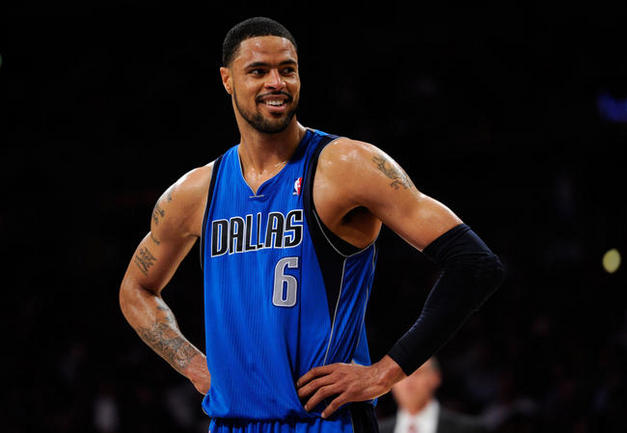
1) Tyson Chandler (UR)
NBA general managers saw how Chandler transformed the Mavs into a tougher, better defensive team this season. He’s been in the league for ten years, but is still just 28 years-old, and seems to be past the toe injury that hampered him earlier in his career. The Mavs have some difficult decisions to make this off-season, though keeping Chandler will be their top priority.
Other notable free agents: Glen “Big Baby” Davis (UR), Nick Young (R), Andre Kirilenko (UR), Reggie Evans (UR), J.J. Barea (UR), Michael Redd (UR), Grant Hill (UR), Shane Battier (UR), Kenyon Martin (UR), Tracy McGrady (UR), Mario Chalmers (R), DeShawn Stevenson (UR), Samuel Dalembert (UR), Nenad Krstic (UR), Brian Cardinal (UR, Chuck Hayes (UR), Marcus Thornton (R), Daequan Cook (R)
Over the course of his 62 years in the booth for the Brooklyn and Los Angeles Dodgers, legendary broadcaster Vin Scully has covered some of baseball’s most memorable moments and uttered a bevy of indelible calls and insightful quotes. This famous line about “the Hawk” during a 1991 game between the Dodgers and Cubs is my favorite.
“Andre Dawson has a bruised knee and is listed as day-to-day. Aren’t we all?”
When baseball fans think of the great Yankee teams of the late 1990s, players such as Derek Jeter, Bernie Williams, Mariano Rivera, Paul O’Neill and David Cone quickly come to mind. Yet, it was seldom used backup catcher Jimmy Leyritz who kicked off the dynasty with a memorable blast in Game 4 of the 1996 World Series.
The Yankees faced the defending champion Atlanta Braves in that series and looked over-matched during the first two games in New York as the Braves took a commanding 2-0 lead. They bounced back to win Game 3, but found themselves in dire straits after falling behind 6-0 early in Game 4. The Yanks scraped together three runs in the sixth inning and, with the score 6-3 going into the eighth inning, Atlanta manager Bobby Cox called on his closer Mark Wohlers to shut down the Yankees over the final two innings.
Wohlers was an All-Star that season, armed with a 100 mph fastball, he was one of the most intimidating closers in baseball. He began the inning by surrendering back-to-back singles to Charlie Hayes and Darryl Strawberry. After Mariano Duncan grounded into a fielder’s choice, Leyritz stepped to the plate with one out and two men on.
At the time, Leyritz was better known for his loquacious personality and idiosyncrasies at the plate than his production on the field. Since being called up by the Yankees in 1990, he’d platooned at third base and served as a backup catcher. He was an average hitter who never smacked more than 17 home runs in a season.
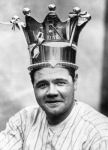
The Ohio native often arrived at the ballpark wearing a cowboy hat and boots. His teammates nicknamed him “The King,” due to his large ego, and on a team composed of reserved professionals, he was the one Yankee sportswriters turned to for provocative quotes.
The right-handed Leyritz had a unique batting stance, which many fans tried to emulate. He kept his front leg straight and stiff, while placing his weight on his back knee, which was slightly bent. As he waited for the pitch, he dangled the knob of the bat in a circular motion behind his head. Then, after each pitch, he twirled the bat at waist level, like a baton.
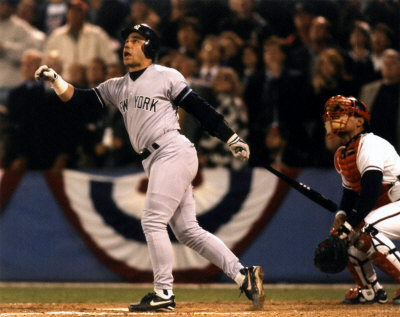
Leyritz had entered Game 4 of the ’96 Series in the sixth inning as a pinch hitter for catcher Joe Girardi. He looked confidant, as always, as he stepped into the batter’s box to face the hard-throwing Wohlers. “The King” worked the count to 2-2, then fouled off two blistering fastballs just to stay alive. In the seventh pitch of the at-bat Leyritz caught up to Wohlers’ heat and jacked a hanging slider over the leftfield wall at Atlanta Fulton County Stadium, tying the game at 6-6.
With one swing of the bat, “The King” completed the Yankee comeback and shifted the momentum of the series. It was the biggest home run by a Yankee since Bucky Dent’s blast against the Red Sox at Fenway Park in 1978. The Yankees won the game 8-6 in the 10th inning and finished off the Braves in six games. They went on to win three more World Series over the next four years.
Leyritz’s sensational shot wasn’t the only dramatic postseason homer of his career, either. The previous year, he hit a walk-off shot against the Mariners in the 15th inning of Game 2 of the ALDS. As a member of the Padres in 1998, he launched three long balls in the NLDS, one of which tied the score in the ninth inning of Game 2 and another in the seventh inning of Game 3 that turned out to be the game winner.
In a second go-around with the Yankees, Leyritz let fly a solo bomb in the eighth inning of Game 4 of the ‘99 World Series. It was the last major league home run hit in the 20th century.
The Yankees had a young Jorge Posada in the farm system so they let Leyritz sign a free agent deal with the Anaheim Angels after the ’96 season. He went on to play for the Rangers, Red Sox, Padres, Yankees again and Dodgers, before hanging it up after the 2000 season. During a career that spanned eleven seasons, Jimmy Leyritz compiled a .264 batting average and hit 90 home runs, though “The King” earned his ransom when the games mattered most. He retired with eight post-season home runs.
Saturday was Old-Timers Day at Yankee Stadium, one of the more glorified traditions in sports. There were several Hall of Famers on hand, including, Yogi Berra, Whitey Ford and Reggie Jackson. Joe Torre received a rousing ovation for his first appearance at Old Timers Day and many of his former players participated, such as, Bernie Williams and Tino Martinez, who took his former teammate David Cone deep. But the man that kicked off the most recent Yankee dynasty was conspicuously absent.
Leyritz has spent the last few years fighting serious criminal charges. His blood alcohol level was above the legal limit when he was behind the wheel during a car accident in 2007 that resulted in the death of the other driver. In November 2010, he was acquitted on a charge of DUI Manslaughter, but convicted on the misdemeanor of driving under the influence. Perhaps the Yankees are letting the dust settle before they invite him back.
Despite his mistakes he’s sure to receive a thunderous applause the next time he appears at the stadium. “The King” remains a crowd favorite in the Bronx and his home run in Game 4 of the ‘96 World Series will forever be a part of Yankee lore. Old Timers day isn’t the same without him.
Nicknames have long played a prominent role in sports. They personalize the athletes for the fans, build camaraderie among teammates, add a humorous element to the competition and are essential to the myth-building of sports legends.
There are many factors to consider when determining what makes a great nickname. Is it apropos? Does it stand the test of time? What’s the source and reason for the nickname? Is it alliterative? Is there a comical component to it? Is it widely known and used?
The list below is inevitably somewhat biased towards athletes from the past 30 years, though the greatest nicknames stand the test of time and many from the first half of the 20th century are recognized. There have been countless great nicknames for duos, trios and groups in sports, but I decided to restrict this list to individuals.
These are the 100 greatest sports nicknames of all-time.
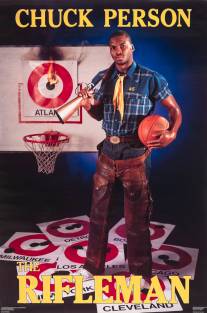
100) The Rifleman – Chuck Person
The longtime Pacer was dead on from way behind the arc and equally as sharp with his tongue. Check out his classic ’80’s poster.
99) The Assassin – Jack Tatum
No elaboration necessary for this nasty former Raiders defensive back.
98) Donnie Baseball – Don Mattingly
Donnie remains a crowd favorite in the Bronx because of the way he approached the game. Bill James summed him up best: “100% ballplayer, zero percent bullshit.”
97) Pudge – Carlton Fisk and Ivan Rodriguez
Fisk’s nickname was due to his big frame and he wore it well, belting his way into the Hall of Fame. Rodriguez will likely have a spot waiting for him in Cooperstown as well.
96) Chi Chi – Juan Rodriguez
Chi Chi’s jovial personality and signature “toreador dance” brought some much needed panache to the PGA Tour.
95) Pops – Willie Stargell
The 1979 Pittsburgh Pirates’ theme song was Sister Sledge’s “We Are Family” and Stargell was the head of that family. Pops won World Series with the Pirates in ’71 and ’79.
94) Nails – Lenny Dykstra
“Nails” was befitting of the gritty, gutsy center fielder for the championship 1986 Mets.
93) Dizzy Dean – Jay Dean
Dizzy won the 1934 N.L. MVP Award as he and brother Paul “Daffy” Dean led the famed St. Louis Cardinals “Gas House Gang” to world series glory.
92) The Flying Tomato – Shaun White
This red head Californian has taken competitive snowboarding to a new level with his death defying Double McTwist 1260.
91) The Croatian Sensation – Toni Kukoc
Kukoc was billed as the greatest European basketball player when he joined the Bulls prior to the ’93-’94 season and was a valuable sixth man on three championship teams.
90) Goose – Richard Gossage
You’d never know it from his nickname, but Gossage terrified opposing batters with a fastball that approached triple digits. Before the days of bullpen specialists, he regularly secured two and three inning saves.
89) The “Say Hey” Kid – Willie Mays
The name aptly reflected the New York Giant center fielder’s boyish exuberance for the game.
88) Lester the Molester – Lester Hayes
Not surprisingly, the Raiders’ defensive back wasn’t a big fan of this one. His other nickname was “The Judge” for meted out justice to wide receivers he faced.
87) The Hawk – Andre Dawson
The multi-talented right fielder finally received his due when writers voted him into the Baseball Hall of Fame last year.
86) Marvelous Marvin Hagler – Marvin Hagler
Hagler liked the sound of this so much that he legally changed his name to Marvelous Marvin Hagler.
85) The Minister of Defense – Reggie White
Fittingly, the pass rusher who put the fear of God into opposing quarterbacks every Sunday also led the post-game prayer sessions.
84) Tree – Wayne Rollins
During his playing days, the former Hawks’ center with the slim, yet wide seven foot one inch frame and long limbs was known simply as “Tree.”
83) Skip 2 my lou – Rafer Alston
Alston picked up this nickname as a playground legend on the streets of New York for the way he dribbled the ball and it stayed with him throughout his NBA career.
82) The Chairman of the Board – Edward “Whitey” Ford
Any time you share a nickname with Frank Sinatra you’ve got it going on. The pitcher with the greatest winning percentage in MLB history was known for his excessive partying and also answered to the name “Slick.”
81) Tractor Traylor – Robert Traylor
He was always listed at 290 pounds, but it’s safe to say the former University of Michigan star crossed the 300 mark in high school and never looked back.
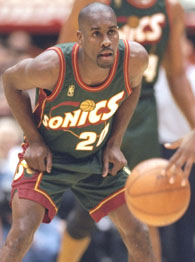
80) The Glove – Gary Payton
Payton was the premiere on-the-ball defender in basketball during the late 1990’s and could trash talk with the best of them.
79) The Bus – Jerome Bettis
The NFL’s fifth all-time leading rusher was bigger than a linebacker and did some serious damage when he got his shoulders squared to the line of scrimmage.
78) Skywalker – David Thompson
Thompson is an integral member of the lineage of great basketball leapers, which includes Elgin Baylor, Dr. J, Dominique Wilkins, Michael Jordan, Vince Carter and Blake Griffin.
77) The Big Aristotle – Shaquille O’Neal
If you go by overall collection of nicknames “The Diesel” is in the top five. “The Big Aristotle” has always been my favorite.
76) The Penguin – Ron Cey
Short legs forced the Cubs third baseman to waddle around the bases.
75) Pee Wee – Harold Reese
Much like his Dodgers teammate Duke Snider, few people ever knew this shortstop’s real name.
74) Sleepy – Eric Floyd
The eyes don’t lie. He and Tracy McGrady must be related.
73) El Duque – Orlando Hernandez
The Duke is a solid nickname. Add a little Spanish flavor and it becomes a classic. Hernandez was referred to exclusively as El Duque during his career in the states.
72) The Worm – Dennis Rodman
As Karl Malone or any of Rodman’s coaches can tell you, this worm got under your skin. His teammate John “Spider” Sally was considered for this list as well.
71) Juice – O.J. Simpson
It was simple and obvious, but it worked.
70) El Presidente – Dennis Martinez
Martinez pitched a perfect game in 1991 and with 245 wins is probably the most under appreciated pitcher of his era. As for the nickname, I have no idea where it came from, but it has a nice air of nobility to it.
69) Big Country – Bryant Reeves
I liked this one so much that in high school I started calling my best friend Big Country. Between Reeves’ size, flat top haircut and the dull expression on his long face, he looked the part.
68) The Count – John Montefusco
This is an obvious twist on Alexandre Dumas’ The Count of Monte Cristo. From Sesame Street to Dracula, everybody loves a count.
67) Satchel – Leroy Paige
There are varying stories as to how Paige picked up the name Satchel, but that’s the case with many of the details and fascinating tales from his life.
66) Clyde the Glide – Clyde Drexler
The nickname just rolls off your tongue, as smooth as his game.
65) Larry Legend – Larry Bird
Bird was fond of referring to himself as “The Hick from French Lick.”
64) Hammerin Hank – Henry Aaron
The Hammer was selected to 25 all-star games and is the rightful all-time home run king, yet he doesn’t receive the recognition of some of his contemporaries like Willie Mays and Mickey Mantle.
63) Clyde – Walt Frazier
Frazier’s Knicks teammates began calling him Clyde because he wore a brimmed hat similar to the one Warren Beatty wore as Clyde Barrow in the movie Bonnie and Clyde. The name jibed with Frazier’s laid back persona.
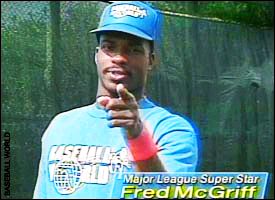
62) Crime Dog – Fred McGriff
The name stems from the commercials featuring the animated crime dog McGruff, though McGriff will always be remembered for his role in another commercial, Tom Emanski’s Defensive Drills Video.
61) Louisiana Lightning – Ron Guidry
Also affectionately referred to as “The Gator” by fans and teammates, Guidry compiled a 25-3 record and 1.74 ERA in 1978.
60) The Golden Jet – Bobby Hull
“The Jet” was known for his blinding speed and rocket shot. He retired second in NHL history in goals scored and ninth in points.
59) El Guapo – Rich Garces
A picture tells a thousand words about this former Red Sox reliever…
58) The Georgia Peach – Ty Cobb
The irony of this one is comical. Anything but a peach, Cobb was a renowned SOB.
57) Round Mound of Rebound – Charles Barkley
The problem with this classic nickname is that it didn’t stick after Charles slimmed down during his first few years in the league.
56) Tiger – Eldrick Woods
If your name is Eldrick you better have a good nickname. The name “Tiger” ranks so high because of its ubiquity within the game of golf.
55) Catfish Hunter – James Hunter
Few people know that the Hall of Fame pitcher’s actual name is James. Bob Dylan was so fond of the pitcher and the name that he wrote a song called “Catfish.”
54) The Admiral – David Robinson
The 7’1 Robinson had to be the tallest man in the history of the U.S. Navy. Or any Navy for that matter.
53) The Mailman – Karl Malone
During Game 1 of the 1997 NBA Finals Malone was on the line about to attempt the winning free throws with the game tied and seconds remaining when Scottie Pippen whispered in his ear, “Just remember, the mailman doesn’t deliver on Sundays, Karl.” Malone missed both free throws and the Bulls won the game.
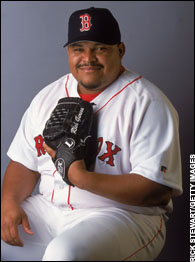
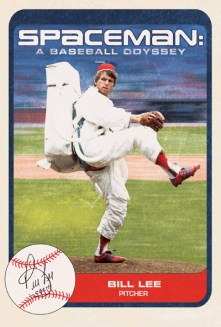
52) Spaceman – Bill Lee
Lee was one of the true characters in baseball, a proud marijuana user known for publicly criticizing management and making controversial political statements.
51) The Barber – Sal Maglie
Maglie won 119 games over ten big league seasons and was given his nickname because he liked to give batters a close shave.
50) Bear Bryant – Paul Bryant
The renowned football coach won 6 championships at the University of Alabama and his star pupil, Joe Namath, still tears up when he talking about him.
49) Sugar Ray – Ray Robinson, born Walker Smith Jr. and Ray Leonard
Walker Smith wasn’t able to obtain an AAU boxing card because he was only 14, so he borrowed his friend Ray Robinson’s card and kept the name. Later in his career his manager told him he was “sweet as sugar.”
48) The Pearl – Earl Monroe
Earl the Pearl’s offensive repertoire was immortalized in Spike Lee’s He Got Game. They called him Jesus on the playgrounds of Philadelphia because he worked miracles on the court.
47) Too Tall Jones – Ed Jones
The 6’9 Jones was the most intimidating member of Dallas’s famed “Doomsday Defense.”
46) AK-47 – Andre Kirilenko
His initials are AK, 47 is his number and like the Kalashnikov he’s named after, he was made in Russia.
45) Oil Can – Dennis Boyd
Boyd supposedly picked up the nickname, which fit his oddball personality, during his beer drinking days in his hometown of Meridian, Mississippi.
44) Mr. Cub – Ernie Banks
Banks is the king of the lovable losers and is vastly underrated outside the city of Chicago.
43) The Microwave – Vinnie Johnson
Johnson used to heat up in a hurry when he came in off the bench for the “Bad Boys” Pistons teams that won back-to-back titles in ’89 and ’90.
42) Mr. Clutch – Jerry West
Not bad for a guy who lost in the NBA Finals eight times. He’s also called “The Logo” because his silhouette is used as the NBA logo.
41) Air Jordan – Michael Jordan
It’s simple, but classic and ties in well to Jordan’s jump man logo.
40) The Chief – Robert Parrish
Parrish was named “The Chief” after the Native American character Chief in One Flew Over the Cuckoo’s Nest, who like Parrish was a quiet big man, with an unnatural running style.
Remember when everybody was certain that Tiger would break Jack’s record of 18 career major championships?
38) Big Papi – David Ortiz
Everything about Papi is big: his size, his personality, his hugs and his swing.
37) The Rocket – Maurice Richard
Richard was the first of many athletes to be labeled “The Rocket,” including Raghib Ismail, Roger Clemens and the “Russian Rocket,” Pavel Bure.
36) Broadway Joe – Joe Namath
With the possible exception of Clyde Frazier, no athlete embodied the pulse and pizzazz of New York City like Joe Willie. He talked the talk and walked the walk.
35) Duke – Edwin Snider
Originally referred to as “The Duke of Flatbush,” it was shortened to just Duke. Snider hit more home runs than any other player in baseball during the 1950’s.
34) The Wizard of Westwood – John Wooden
Wooden set the standard as a teacher and basketball coach and his lessons on life will continue to serve as a guide for people of every profession.
33) Papa Bear – George Halas
Papa Bear did it all in the game of football. He was a player, coach, owner and pioneer over his 65 years in the game.
32) Bonecrusher – James Smith
How would you like to step in the ring with a guy named Bonecrusher?
31) White Shoes – Billy Johnson
This three-time pro bowl wide receiver was one of the first NFL players to do touchdown celebrations. He introduced the “Funky Chicken” during his rookie season with the Houston Oilers.
30) Pistol Pete – Pete Maravich
Aptly named for his brilliant ball-handling skills and shoot from the hip jump shot, Maravich was before his time.
29) The Human Eraser – Marvin Webster
Also known as “Marvin the Magnificent,” Webster averaged 1.4 blocks per game over his ten seasons in the ABA and NBA.
28) Three Finger – Mordecai Brown
Brown lost parts of two fingers on his right hand in a farming accident when he was kid. Despite only three full fingers on his pitching hand he went on to have a Hall of Fame career.
27) Big Game James – James Worthy
Stuck in the shadow of teammates Kareem Abdul-Jabbar and Magic Johnson, Worthy was often the difference in the finals for the Lakers. His nickname has been emulated, but never duplicated.
26) Yogi – Lawrence Berra
Yogi was the perfect name for this short, stubby American poet. He’s one of a select group of athletes recognized simply by a one word nickname.
25) The Brown Bomber – Joe Louis
Louis was the first African-American athlete celebrated by both black and white America when he knocked out Germany’s Max Schmeling.
24) Shoeless Joe – Joe Jackson
Supposedly, a writer penned the name “Shoeless Joe” when the White Sox center fielder didn’t wear shoes one game because of blisters on his feet.
23) Sweetness – Walter Payton
By all accounts, “Sweetness” applied to his character as much as his game. Number 34 is still the second all-time leading rusher in NFL history.
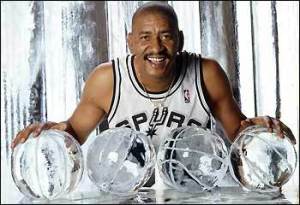
22) The Iceman – George Gervin
One thing he could do was finger roll. Nobody was cooler than the Iceman.
21) The General – Bob Knight
Never has a nickname been more befitting. Knight coached at the U.S. Military Academy and adopted the authoritarian leadership style of his idol General Patton. Point guard Sherman Douglas also went by “The General” and Avery Johnson was “The Little General.”
20) The Wizard of Oz – Ozzie Smith
This was a great play on words and quite apropos. Smith’s back flips and slick fielding introduced an eloquent and magical flare to the game.
19) Mr. October – Reggie Jackson
He hit three home runs on three consecutive pitches in the decisive Game 6 of the 1977 World Series. Enough said.
18) The Human Highlight Film – Dominique Wilkins
This two-time slam dunk champion brought a devastating combination of athleticism and power to his craft.
17) Charlie Hustle – Pete Rose
The guy sprinted to first base after a walk and ended catcher Ray Fosse’s career when he bowled him over at home plate during an all-star game.
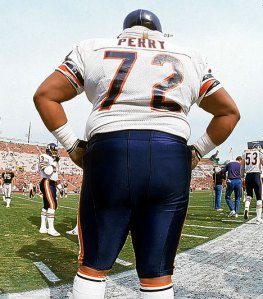
16) The Refrigerator – William Perry
Commonly referred to as “The Fridge,” the Bears defensive tackle developed a cult following after plowing his way into the end zone in Super Bowl XX.
15) Night Train Lane – Dick Lane
The great defensive back’s teammate plucked this nickname from a song that was popular in the Rams locker room.
14) The Iron Horse – Lou Gehrig
Iron horse is an old name for a locomotive, a fitting description for the lean, muscular first baseman who played in 2,130 consecutive games.
13) Mean Joe Greene – Joe Greene
It’s short and simple, but rhymes and is on point. The cornerstone of the vaunted “Steel Curtain” was one of the most dominant defensive players of the 1970’s.
12) Cool Papa Bell – James Bell
This African-American speedster is one of the figures most associated with the Negro Leagues in large part due to his nifty nickname.
11) The Splendid Splinter – Ted Williams
Also known as “Teddy Ballgame,” “The Splendid Splinter” truly captured the artistry and excellence of baseball’s last .400 hitter.
10) The Raging Bull – Jake LaMotta
This nickname was so catchy that Martin Scorsese used it for the title of one of the best boxing movies ever made.
9) The Great One – Wayne Gretzky
The greatest hockey player of all-time was in a class of his own.
8) Dr. J – Julius Erving
Originally just called “The Doctor” for the way he operated on his opponents, the “J” was added later for his breathtaking jams. His nickname has inspired several derivatives, from rapper Dr. Dre to pitcher Dwight Gooden, AKA “Dr. K.”
7) Crazy Legs – Elroy Hirsch
A sportswriter once said of the great running back: “His crazy legs were gyrating in six different directions, all at the same time; he looked like a demented duck.”
6) Chocolate Thunder – Darryl Dawkins
The colorful Dawkins threw it down with such force that he shattered two NBA backboards. He also went by “Sir Slam” and “Dr. Dunkenstein.”
5) Manos de Piedra – Hands of Stone – Roberto Duran
Duran was a brawler who intimidated his opponents by cursing and snarling at them in the ring. The Panamanian took on all comers and began his career with a remarkable 72-1 record.
4) The Galloping Ghost – Harold “Red” Grange
They just don’t have nicknames like this anymore. The legendary halfback was named the greatest college football player of all-time by ESPN in 2008.
3) Stan the Man – Stan Musial
Supposedly, the name originated when an awestruck kid at Ebbets Field said, “Mama there goes that man.” The nickname is now pervasive in American culture and casually used for Stans and Dans everywhere.
2) The Great Bambino – George Herman “Babe” Ruth
“The Babe” acquired many nicknames over the years, though none captured his mystique and grandeur as well as “The Great Bambino.”
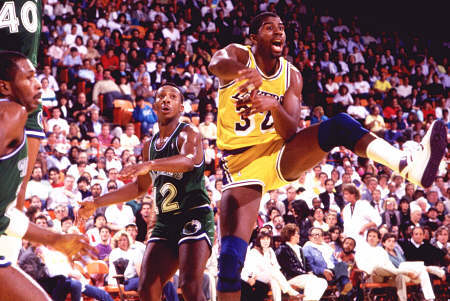
1) Magic – Earvin Johnson
A mesmerized local sportswriter came up with the most apropos nickname in sports after watching Johnson play in high school. His court awareness and no-look passes were simply Magic.
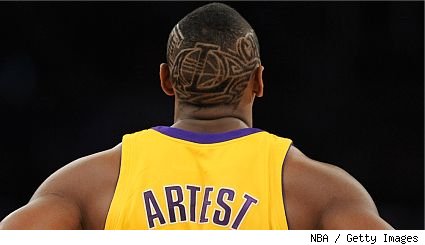
Ron Artest has reportedly filed court documents to change his name to “Metta World Peace.” The enigmatic Lakers forward is just the latest in a long line of ballplayers who have officially or unofficially adopted a new name for any number of reasons.
The first person to come to mind after hearing about Artest is naturally World B. Free. The former NBA sharpshooter was born Lloyd Bernard Free, but in December of 1981 decided to officially incorporate his nickname “All World” into his name.
Former Dolphins wide receiver Mark Duper and boxer Marvin Hagler are two other athletes who legally adopted their nicknames, becoming Mark Super Duper and Marvelous Marvin Hagler. Two New York pitchers, Boof Bonser of the Mets (originally named John) and the Yankees Joba Chamberlain (originally Justin) officially replaced their given first names with their nicknames.
Of course, there’s an endless list of athletes known exclusively by their nicknames, though they haven’t legally changed their name, from superstars like George Herman “Babe” Ruth, Earvin “Magic” Johnson, Vincent “Bo” Jackson, Eldrick “Tiger” Woods and Lawrence “Yogi” Berra to role players like A’s center fielder Covelli “Coco” Crisp, former slam dunk champion Anthony “Spud” Webb and his teammate with the Atlanta Hawks, Wayne “Tree” Rollins.
Julius Erving, known primarily as Dr. J, has the greatest nickname lineage of any athlete. Celtics coach Glenn Rivers’ friends called him “Doc” when he was a kid because Erving was his favorite player, and the name stuck. Legendary hip-hop rapper/producer Andre Young took the stage name Dr. Dre because he too idolized the original high flyer. It’s hard to imagine that former Mets phenom Dwight Gooden would have been called “Dr. K” had there not been a Dr. J first.
Brazilian soccer players are often referred to by one-name nickname, the most obvious example being Edison Arantes de Nascimento, commonly known as Pele. There’s star midfielder “Kaka,” (real name Ricardo Izecson dos Santos Leite), the great scorer “Ronaldo” (real name Ronaldo Luis Nazario de Lima) and two-time FIFA World Player of the Year Ronaldinho (real name Ronaldo de Assis Moreira.) Brazilian basketball player Maybyner “Nene” Hilario followed his fellow countrymen and dropped his last name, legally changing his name to just Nene.
Muhammad Ali, born Cassius Marcellus Clay Jr., was the first prominent Muslim athlete to change his name for religious reasons when he joined the Nation of Islam in 1964. Seven years later, Ferdinand Lewis Alcindor Jr., known as Lew Alcindor, announced that would be known as Kareem Abdul-Jabbar going forward. Former Vikings running back Bobby Moore became Ahmad Rashad and one-time LSU standout and one-time Denver Nuggets guard Chris Jackson adopted the name Mahmoud Abdul-Rauf.
UCLA running back Sharmon Shah changed his named to Karim Abdul-Jabbar while in college. Two years later he was drafted by the Miami Dolphins and in 1998 Kareem Abdul-Jabbar sued Karim for profiting off of his likeness. Kareem pointed out that in addition to the name, Karim also went to UCLA and wore the same number 33. The court ordered the football player to remove the Abdul-Jabbar from the back of his jersey, at which point he changed his name again to Abdul-Karim al-Jabbar.
A couple of athletes have changed their names in order to avoid confusion. Prior to the 2002 draft, Duke standout poitn guard Jason Williams said he wanted to be known as Jay, to avoid being confused with then Grizzlies point guard Jason Williams and former Net Jayson Williams, who was facing manslaughter charges at the time. Angels pitcher Ervin Santana changed his name from Johan to Ervin in the minor leagues so as to avoid being confused with then Twins ace Johan Santana. According to Santana, “I just came up with Ervin… Ervin Santana, that sounds good.”
Some athletes have changed their names in search of a fresh start (like Puff Daddy becoming P. Diddy after his acquittal on gun possession and bribery charges. He’s since dropped the P. and is just Diddy and his given name is Sean Combs, but rap names are a whole other article.) Albert Jojuan Belle was known as Joey growing up and began going by Albert after a stint in rehab. Looking for a “fresh start” San Francisco Defensive back William James Peterson Jr. dropped the Peterson Jr. from his name when he signed with the Eagles in 2006.
During his college career at UCLA, running back Maurice Drew changed his last name to Jones-Drew in honor of his grandfather who had recently passed away. The late center originally named Brian Williams legally adopted the name Bison Dele while playing for the Detroit Pistons, in honor of his Native American and African ancestry.
Some name changes just didn’t stick. Bengals wide receiver Chad Johnson changed his last name to his self-proclaimed nickname, Ochocinco, in August 2008, for no discernible reason other than self-promotion. This past January Chad said he would be changing his last name back to Johnson. In 1993, Cleveland Browns wide receiver Michael Jackson changed his name to Michael Dyson, only to change it back after the first game of the season.
Former female tennis player Renee Richards was born Richard Raskind and it took a lawsuit to enable her to play on the women’s tour after undergoing a sex change. The New York City basketball player known as Shammgod Wells couldn’t afford the cost of changing his name when he enrolled at Providence College and was forced to use his given name God Shammgod.
Midway through his hall of fame basketball career, Nigerian center Akeem Olajuwan added an H to the front of his first name. Speaking of African born basketball players, I believe every athlete who changes his or her name in the future should consider a Congolese name. No country produces better names than the Democratic Republic of the Congo.
There’s Dikembe Mutombo Mpolondo Mukamba Jean-Jacques Wamutombo, commonly known as just Dikembe Mutombo, Oklahoma City forward Serge Ibaka and new Bobcats forward, the 7th pick in last night’s draft, Bismack Biyombo. Neighboring Cameroon may give the Congo a run for its money with Bucks forward “Prince” Luc Richard MBah a Moute and one time Portland Trailblazer Ruben Boumtje-Boumtje.