Top Ten Athlete Accessories

by Paul Knepper

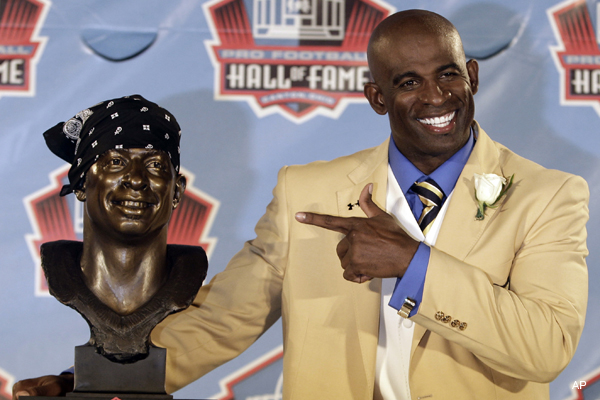
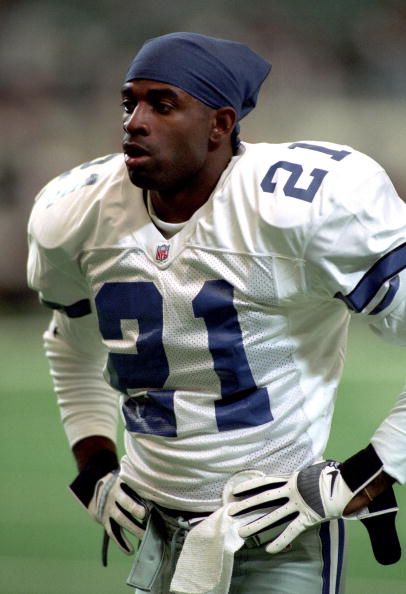
At the Pro Football Hall of Fame induction ceremony on August 6th, inductee Deion Sanders concluded his speech by placing his signature bandana on his Hall of Fame bust. Throughout Prime Time’s career the all pro defensive back wore a bandana under his helmet during games and often kept it on for the post-game interviews.

Over the years, many other athletes have been known for their use of a specific accessory, something above and beyond the normal uniform, which they regularly wore either during competition or on the sidelines.

These are the top ten trademark accessories in sports.

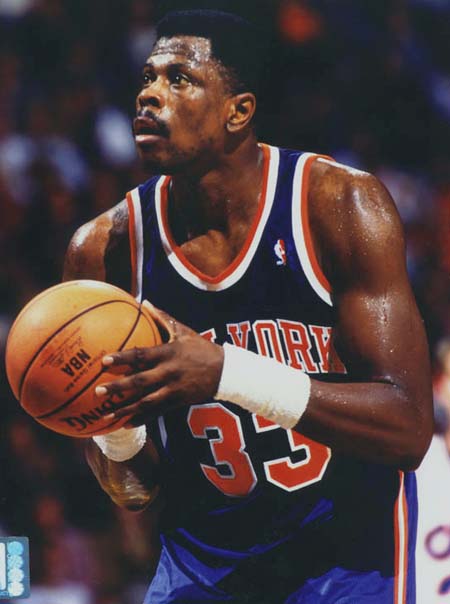
10) Patrick Ewing’s wrist bands

Ewing took the phrase “breaking a sweat” to a whole new level. Minutes after tipoff, the Knicks center would be as drenched as Ted Striker trying to touch down on the runway in the movie Airplane! Some players use a headband to stem the flow of sweat, but Patrick opted for enormous wrist bands. One of the most enduring images of Ewing’s career is him standing on the foul line, dabbing his forehead with those gigantic bands, while the sweat continued to drip from his chin.

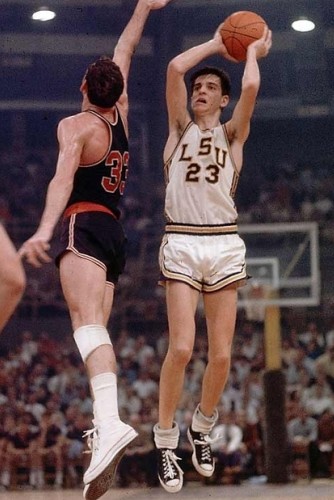
9) Pete Maravich’s socks


The Pistol was known for his flashy passing, infinite shooting range and dazzling ball-handling, though no description of the basketball prodigy would be complete without a reference to his floppy hair and scraggly socks. For a period during his time with the Utah Jazz  Maravich wore high socks with green, yellow and purple bands, though for most of his career he weaved his magic in raggedy loose socks that looked like they came off the feet of Woody Harrelson’s character Billy Hoyle in White Men Can’t Jump.

8)  Deion Sanders’ bandana

It wasn’t clear if Prime Time’s bandana served a purpose during the game, such as keeping the sweat out of his eyes, or was merely a fashion statement. Occasionally, Deion would change it up and arrive for an interview with a do-rag on or go Tupac style, with the backwards bandana, but he always returned to his signature look. The Hall of Fame should have left the bandana on Deion’s bust, which looks nothing like him and instead bears a strange resemblance to a mix between Vince Lombardi and Troy Aikman.

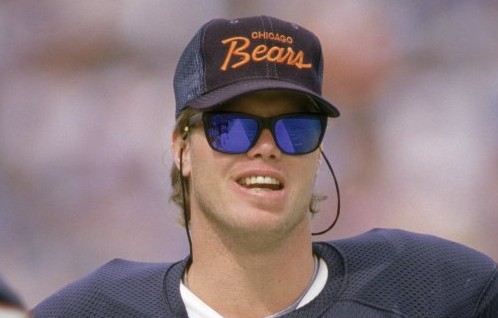
7) Jim McMahon’s shades

The colorful quarterback of the ’85 Bears developed an extreme sensitivity to light in his right eye after damaging his retina in a childhood accident. He became one of the first football players to wear a tinted visor on his face mask and often wore sunglasses on the sideline, which developed into a signature look for the rebellious signal caller. McMahon even sported his famous shades in the Bears epic Super Bowl Shuffle video (link below).

http://www.dailymotion.com/embed/video/x27ykw

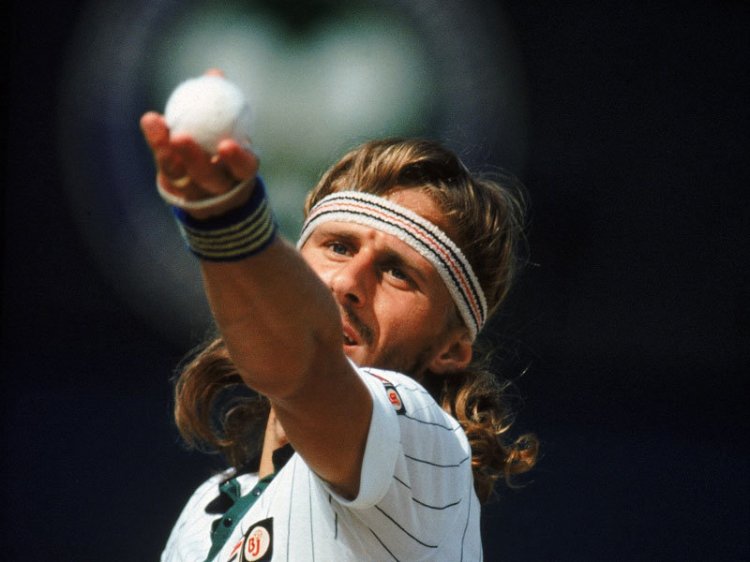
6) Bjorn Borg’s headband

Borg is probably one of the five greatest tennis players of all-time, though his personality on the court was as bland as rice cakes, especially when compared to his rambunctious rivals John McEnroe and Jimmy Connors. What sports fans remember most about the talented Swede is the striped headband he wore just above his eyes to keep his long blond hair in place. The image has been imitated by everyone from Luke Wilson’s character in The Royal Tannenbaums to my lovely goddaughter Janie Paisner.

5) John Olerud’s helmet

Olerud suffered a brain hemorrhage and aneurism in 1989 while a student at Washington State University. Doctors advised the first baseman to wear a helmet in the field for protective purposes and he continued to do so for superstitious reasons long after he needed to. Over his 17 seasons in the Major Leagues, he was the only non-catcher to wear a helmet in the field.

That brings me to the funny story about Olerud and the notoriously absented-minded Rickey Henderson. Supposedly, when Henderson and Olerud were teammates with the Mariners, Rickey asked Olerud why he wore a helmet, then told him that he had a teammate the season before who also wore a helmet in the field. Olerud responded, “That was me.” Sadly, sources have confirmed that the exchange never happened, but it’s still a great story.

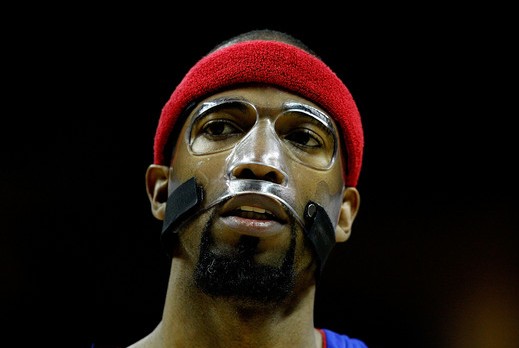
4) Richard “Rip” Hamilton’s mask

Hamilton broke his nose in 2002, then twice more during the 2003-2004 season, so a doctor recommended that he wear a customized plastic mask over his face to prevent it from happening again. The mask was certainly good luck, as Rip led the Pistons in scoring during the playoffs that season on their way to an NBA title. He’s worn it ever since. I always thought Jason’s mask from Friday the 13th would have been a lot more intimidating.

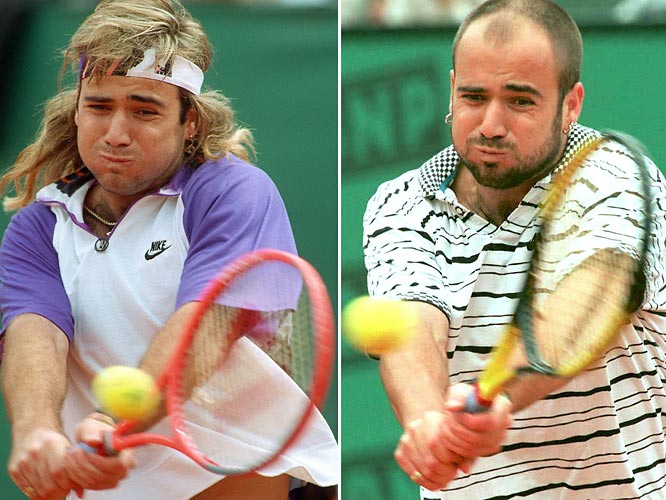
3) Andre Agassi’s hair piece

What makes this accessory so remarkable is that we had no idea it was an accessory at the time. Agassi’s long blond hair and his colorful clothes were the centerpieces of his rebel persona and “Image is everything” Cannon campaign. It wasn’t until the former tennis star’s autobiography Open was published in 2009 that we learned he was wearing a hair piece all along. We were duped!

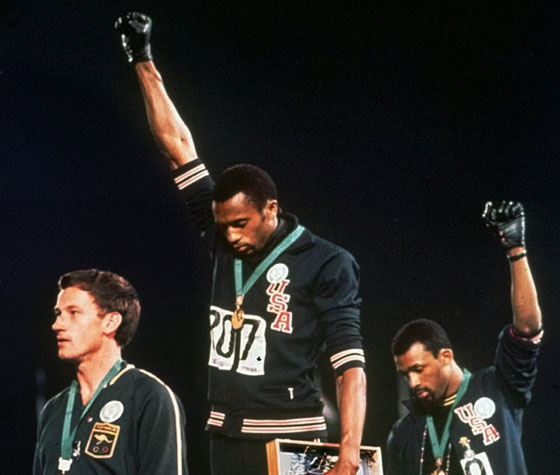
2) Tommie Smith and John Carlos’ black gloves

Americans Tommie Smith and John Carlos won the gold and bronze medals respectively in the 200-meter dash at the 1968 Olympics in Mexico City, though it was their courageous black power salute on the medal stand which lives on in the American consciousness. The black glove on their hands remains one of the enduring symbols of the African-American civil rights movement and their defiant salute was recently immortalized in the form of a statue on San Jose State’s campus.

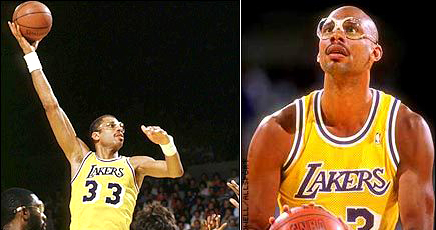
1) Kareem Abdul-Jabbar’s goggles

Plenty of basketball players have competed in sports goggles, though none embraced the look or became identified with them quite like Lakers great Kareem Abdul-Jabbar. He began wearing his specs while attending UCLA – when he was still known as Lew Alcindor – after scratching his cornea in a game against the University of Houston.

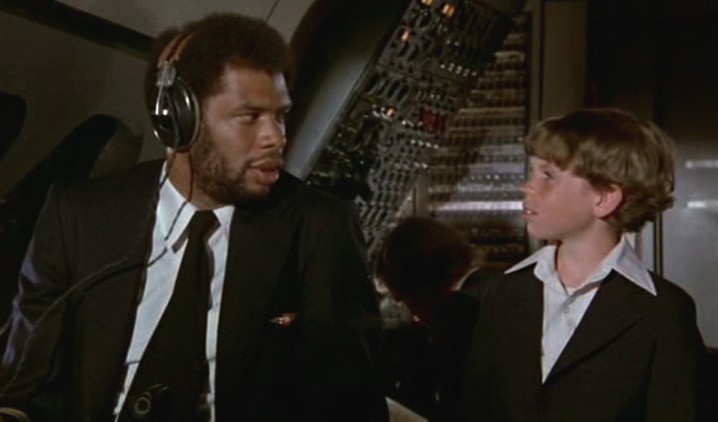
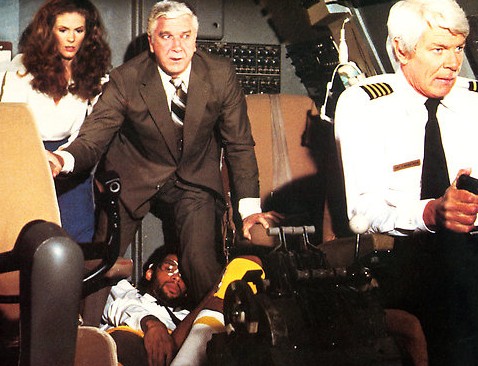
Abdul-Jabbar and his goggles reached a wider audience through his classic role as co-pilot Roger Murdock in Airplane! (Yes, that’s two Airplane! references in one article. I don’t care if I’m dating myself, it’s arguably the funniest movie ever made.)

Words of Wisdom from Carl Everett

At least once a baseball season I like to reflect on these words of wisdom from former center fielder Carl Everett:

“The Bible never says anything about dinosaurs.  You can’t say there were dinosaurs when you never saw them.  Somebody actually saw Adam and Eve.  No one ever saw a Tyrannosaurus Rex.”

Is Rodman Hall of Fame Worthy?

by Paul Knepper

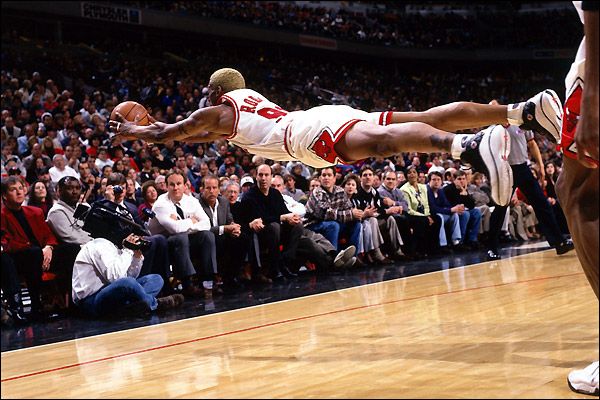
I’m having a hard time wrapping my head around the fact that Dennis Rodman is being enshrined in the Naismith Memorial Basketball Hall of Fame tonight. I usually have an intuitive sense as to whether a player belongs in the hall of fame or not, but in Rodman’s case I can’t decide. I just find the whole thing odd.

That may be the perfect word to describe Rodman’s career: odd. I’m not talking about the cross dressing, colored hair, assorted tattoos, kicking a cameraman in the testicles or run-ins with the law. I’m referring simply to his play on the court. His game was odd.

In a sport and society which places such a premium on scoring, Rodman shunned convention as he did in so many other aspects of his life and focused on rebounding and defense instead.

Traditionally, players who don’t score are described as role players. I’ve never liked that term because I believe every member of the team plays a role. The great players play a lead role, but it’s still a role. It was Larry Bird’s role to knock down shots, Michael Jordan’s to score and defend and Magic Johnson’s to initiate the offense. You didn’t see Shaquille O’Neal bringing the ball up the floor or bombing threes because that wasn’t his role.

Yet, I recognize that there is a pecking order, especially among championship teams. There’s a lead role or roles for the stars, often a supporting role or two and the rest of the team makes up the supporting cast. Rodman’s lack of scoring and his role as a defensive and rebounding specialist has relegated him to the supporting cast in many people’s minds, though that perception may be inaccurate.

By mastering his role, he played a greater part in his teams’ success than most scorers do. He led the league in rebounding by a significant margin seven years in a row, averaging at least 14.9 per game in each of those seasons and as high as 18.7 in ’91-’92. The Worm was named to the NBA’s All-Defensive first team seven times and the league’s Defensive Player of the Year twice. He brought an infectious energy to the floor and perfected the art of getting under his opponent’s skin.

Yet, it’s difficult to escape the notion that scoring, at least a little bit, is a prerequisite for being a great player. After all, the object of the game is to put the ball in the basket.

There have been other great defenders and/or rebounders who have also scored; Wilt Chamberlain, Moses Malone, David Robinson, Tim Duncan, Elvin Hayes and Hakeem Olajuwan to name a few. Even Bill Russell, who wasn’t known as a scorer, averaged in double digits every season of his career, except his last, in which he scored 9.9 points per game. Similarly, four-time Defensive Player of the Year Dikembe Mutombo scored in double digits every year he was in the league until the age of 36.

Rodman averaged 7.3 per game for his career and just 5.5, 5.7 and 4.7 during his three seasons with the Bulls. The only player I can think of who’s comparable in terms of numbers and influence on the outcome of a game is a member of another Pistons championship team, Ben Wallace. But while Wallace may have matched Rodman’s defensive prowess, he didn’t dominate the boards like the Worm did.

That’s part of what makes it so difficult to determine how good Rodman was and why there’s been so much debate about whether he belongs in the hall of fame. We usually determine an athlete’s worth by comparing his statistics and impact on the game to that of similar players, but nobody else played the game the way Dennis did, so there’s no one to compare him to.

Even the significance of his five championships is difficult to decipher. Rings can be misleading. Steve Kerr has five and he barely got off the bench for two of them. Robert Horry won seven for three different teams and nobody would argue that he was a great player. Was Rodman more Kerr and Horry – supporting cast members – or a great player like Michael Jordan and Isiah Thomas?

Rodman won his first two rings with the Bad Boy Pistons in ’89 and ’90 and the last three with the Bulls in ’96, ’97 and ’98. In both instances he played with two other hall-of-famers and for a hall of fame coach.

He was the third best player in Chicago behind Jordan and Scottie Pippen and in Detroit was the third most valuable player at best. Isiah and Joe Dumars were the two stars and you can argue that Bill Laimbeer, Marc Aguirre and Vinnie Johnson all played a greater part in those Pistons championships. Admittedly, he hadn’t reached his prime yet during the Pistons run.

Still, being the third best player on a championship team is impressive and is certainly not prohibitive to induction into the hall of fame. Hall-of-famer Bill Bradley was the fourth or fifth best player on the Knicks championship teams of the early 70’s and Russell’s Celtics teams of the 60’s went five or six hall-of-famers deep.

Nobody questions James Worthy’s hall of fame credentials even though he was number three behind Magic and Kareem. Bird, Kevin McHale and possibly Dennis Johnson were better players than their teammate, hall-of-famer Robert Parrish.

In recent years, a three-star lineup has become the model framework for a championship team. Ray Allen was the third best player on the Celtics 2008 team behind Paul Pierce and Kevin Garnett and he’s headed to the hall. Miami’s third option Chris Bosh may follow him to Springfield one day as well.

The difference is that Parrish, Worthy, Bradley and Allen all scored and were viewed as co-stars or at least supporting actors. They were building blocks to those championship teams. You didn’t build a team around Rodman; he was a supporting cast member for the stars you already had in place. At least that’s the perception.

In reality, if you were starting a team and had to choose between Rodman or hall-of-famers Parrish, Bradley, Worthy and Dumars, it would be a tough call. And even if the perception that Rodman was a supporting cast member is correct, then he was the probably the greatest supporting cast member to ever play the game.

Ultimately, the hall of fame should be reserved for great players. Dennis Rodman was great at what he did, but did that make him a great player? It’s hard to say. There’s never been anybody like him.

For David Stern This Lockout Is Personal

by Paul Knepper


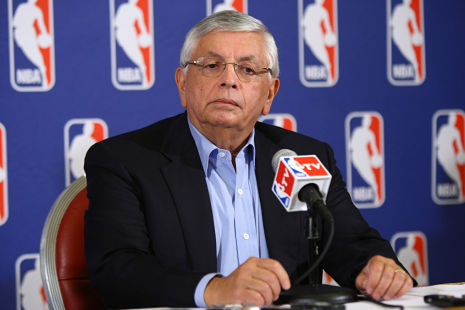
NBA Commissioner David Stern is often credited with rescuing the league from the dark days of the late 70’s and early 80’s and developing it into the prosperous enterprise it is today. During his 27 years on the job, he’s overseen the boom years of the 1980’s and has been instrumental in expanding basketball’s popularity around the globe.

Stern is so well respected within the game, by fans and the media that his reputation has remained unscathed, despite a lockout shortened season in 1999, the “Malice at the Palace,” a controversial dress code and perhaps most remarkably, a referee’s admission that he bet on games.

But the current lockout is different. The stakes are greater than ever for the commissioner as he faces the prospect of adding a lost season to his resume.

Many fans see Stern’s role as NBA commissioner as that of an independent guardian of the game, someone to oversee league issues, such as marketing, television rights, rules of the game, public relations, discipline and relations with the players’ union.

In actuality, Stern works for the owners.  Essentially, he’s the CEO of the NBA and the owners are the shareholders. They decide if he stays or goes and like any investors, their primary concern is their bottom line. His concern for the quality and growth of the product is based on its value to them.

Based on Stern’s recommendation, the owners locked out the players on July 1st, claiming that under the last collected bargaining agreement 22 of the 30 teams were losing money to the tune of over $300 million a year. Currently, 57% of “basketball related income” is going to the players and the owners want to grab a larger slice of that pie. They intend to do so by among other things, lowering maximum salaries and implementing a hard salary cap.

The players have contested the owners’ accounting and raised a question as to why so many investors are buying into the league if it’s in such financial trouble. Two teams have been sold since the lockout began. Hedge fund founder Joshua Harris bought the Philadelphia 76ers last month for $280 million and this week California businessman Alex Meruelo purchased an Atlanta Hawks franchise with some of the poorest attendance numbers in the league.

In May, billionaire Tom Gores bought the Detroit Pistons and their arena The Palace at Auburn Hills for $325 million, despite the near certainty of a lockout, and the Charlotte Bobcats, Golden State Warriors, New Jersey Nets and Washington Wizards also changed hands in the past two years.

At a press conference announcing his purchase of the Hawks Meruelo stated, “this is a tremendous opportunity for growth.” That’s a curious statement given the current lockout and the owners’ claim that they’re losing money.

Meruelo, like several owners before him, based his assumption on the word of the esteemed commissioner. Desperate to lure new investors, Stern made assurances that the lockout would lead to a new collective bargaining agreement much more favorable to the owners.

The commissioner pushed hard for the lockout and now he owns it. Failure to secure a deal to the owners liking would severely damage his credibility with current and future investors and could even put his job in jeopardy.

Stern’s legacy is also riding on the results of the lockout. Over the years, it’s the commish has made it apparent that he cares about how he’ll be remembered. Ultimately, his legacy will be shaped primarily by the media and fans, not the owners. A lost season on his watch may be in the owners’ best interest, but would do irreparable harm to his pristine image in the eyes of the public.

Reported schisms within the ranks of the owners have further complicated matters for Stern. Team owners have different priorities and in some cases conflicting interests based on their specific circumstances.

Owners of veteran teams capable of competing for a championship are less inclined to lose an entire season in an attempt to break the players union. The same can be said for profitable big city teams, which also raises the divisive issue of revenue sharing between big and small market teams.

Owners who bought into the league in the 80’s or 90’s and saw the value of their franchises multiply may not be as determined as the newer owners to break with the current system at all costs. Then there’s a group of owners who owned NHL teams when the hockey league lost the entire 2004-2005 season to a lockout and are convinced that sitting out an NBA season will lead to similar favorable results.

The recent success of the league places even more pressure on Stern to make a deal. The 2011 playoffs were riveting. Ticket sales and television ratings were up this past season and with several highly marketable young stars and a marquee team/villain in the Miami Heat, there’s a solid foundation for the league to continue to build on. An extended lockout would kill any existing momentum.

Well over a month into the lockout, the players and owners appear to still be miles apart and the owners have escalated the conflict by filing a claim of unfair labor practices against the players. National Basketball Players Association Executive Director Billy Hunter recently predicted that the entire season would be lost, which appears to be the common sentiment among the players, many of whom have explored alternative options overseas.

In the autumn of his career, the commissioner faces his greatest challenge. With his reputation on the line, he must appease several competing factions while pushing through wholesale changes to the revenue distribution system for a $3 billion a year business. It’s not surprising that he’s been uncharacteristically surly lately. David Stern owns this lockout, but it may end up owning him.

You’re a Real Man Deion!

In honor of Deion Sanders’ induction into the Pro Football Hall of Fame this evening, here’s a highlight reel of vintage “Prime Time” from his early years with the Atlanta Falcons.

And who can forget this classic confrontation with announcer Tim McCarver…

Is Brandon Marshall the Only Wide Receiver With a Personality Disorder?

by Paul Knepper

A week ago, Brandon Marshall was considered just your average egomaniacal wide receiver; self-centered, attention seeking, demanding, aversive to authority and inclined to engage in risky and/or violent activities off the field.
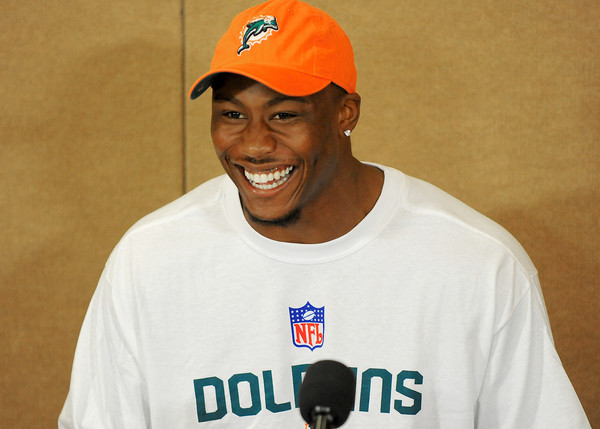
On Monday, the Miami Dolphins wide receiver took the courageous step of publicly revealing that he suffers from a serious psychiatric illness called borderline personality disorder (BPD). The diagnosis helps explain his history of domestic violence and disruptive behavior in the locker room.

But what does that say about all the other wide receivers in the league who share many of Marshall’s personality traits? Are several of the NFL’s elite wide receivers mentally ill?

The common characteristics of BPD are: a pervasive pattern of affective instability, severe difficulties in interpersonal relationships, problems with behavioral or impulse control (including suicidal behaviors) and disrupted cognitive processes. This instability often disrupts family and work life, long-term planning and the individual’s sense of self-identity.

There’s a long list of wide receivers who have severe difficulty with interpersonal relationships and problems with impulse control. I could rattle off countless examples of domestic abuse, confrontation with coaches and impulsive acitivities like running over a police officer or attempting suicide.

Perhaps more revealing is BPD’s not-so-distant cousin, narcissistic personality disorder (NPD). A diagnosis of NPD is based on the existence of at least five of these qualities:

·         Grandiose sense of self-importance

·         Preoccupied with fantasies of success, power, love, etc.

·         Believes that he/she is special

·         Requires excessive admiration

·         Has a sense of entitlement

·         Is interpersonally exploitive

·         Lacks empathy

·         Envious of others

·         Shows arrogance

People suffering with NPD often have unreasonable expectations of special treatment and tend to react to criticism with rage, shame or humiliation.

Of course, it’s possible to be narcissistic without having NPD. Narcissism is rampant in our society and appears to be more prevalent among athletes in general. We’ve grown accustomed to athletes speaking of themselves or “their talents” in the third person, referring to themselves as a brand or coming up with their own nicknames. Yet, wide receivers appear to take the concept of the narcissistic athlete to another level.

Their narcissistic tendencies have been enhanced by increased media exposure and reinforced by an escalation of in number and value of endorsement opportunities, however, the concept of the narcissistic wide receiver is not a new phenomena.

In 1973, Dr. Arnold Mandell, a team psychiatrist for the San Diego Chargers, created personality profiles for every football position. His analysis of the wide receiver was spot on and still rings true thirty eight years later.

“The wide receiver is a very special human being,” Mandell wrote. “He shares many features with actors and movie stars. He is narcissistic and vain and basically a loner.”

He added, “They love to be the center of attention. They need to be noticed. They have an imperviousness in that they don’t seem to mind criticism about being like that. All players want the respect of fellow players. Showing off usually is not an admired characteristic by most players, but by wide receivers it is very admired.”

“They are interested in looking pretty, being pretty. They are elegant, interpersonally isolated. Wide receivers don’t group, they don’t mob out. They are actors, uninflected about showing off, individualists, quite interested in their own welfare, their own appearance.”

Sound like somebody you know? How about Brandon Marshall, Terrell Owens, Randy Moss, Keyshawn Johnson, Braylon Edwards, Chad Ochocinco and Michael Irvin, to name a few.

Some may argue that there are players with big egos at every position in the NFL, it’s just more noticable with wide receivers because they play a high profile position. The hole in that argument is that quarterback and running back are also high profile positions, in fact, quarterbacks draw more attention than wide receivers, yet they don’t come across nearly as narcissistic.

Of course, that’s not to say that all wide receivers are narcissists. Jerry Rice and Marvin Harrison never drew attention to themselves on or off the field (prior to Dancing With the Stars) and the two top current wide receivers, Andre Johnson and Larry Fitzgerald, project an air of humility. Still, the percentage of narcissistic wide receivers seems disproportionately high.

So why are wide receivers so narcissistic?

There’s a chicken or the egg aspect to this question. Does the wide receiver position create narcissism or are narcissistic athletes drawn to wide reciever because of the nature of the position? It may be a little of both.

The wide receiver’s profile in relation to the quarterback may be part of the problem. Wide receivers are generally the best athletes on the field, yet they don’t receive as much attention or credit as the quarterback. Their production and profile is actually to a large extent dependent on the quarterback. Both of those facors can lead to resentment, which may manifest as narcissism. Consider Terrell Owens, who has thrown one quarterback after another under the bus, seemingly because he wanted to be the star of the team.

A possible explanation for the high rate of narcissism among wide receivers as compared to the other high profile positions is that narcissists are weeded out due to the demands of those positions. The quarterback is the team leader and if he puts his concerns and ego ahead of the team he won’t be in the league very long. Running backs are humbled by the constant pounding they take throughout the game. Narcissists are unlikely to seek that position or last at it if they do.

The wide receiver’s positioning on the field may be a factor as well. They line up alone on an island, which can foster a sense of distance from teammates or a feeling that one’s special. On the flip side, it’s very possible that loners or narcissistic personalities prefer wide receiver because of the isolation or high profile of the position, without the pressures or pouding that come with touching the ball more frequently.

Regardless of the cause, it’s diffficult to argue with the premise that narcissism is a common trait among NFL wide recievers. I’m not qualified to speculate as to whether the personality traits of specific receivers rise to the level of a disorder, or which disorder they may have. It’s an interesting subject for a psychological study.

Brandon Marshall deserves credit for recognizing his illness and seeking help. Maybe some other receivers will follow his lead. Then again, that wouldn’t be very narcissistic of them.

Clutching to Clutch

by Paul Knepper

A few days ago, members of my fantasy baseball league engaged in a heated discussion over whether there’s such a thing as “clutch” hitting in baseball. It’s been an ongoing debate within baseball circles since the sabermetrics revolution became mainstream in the past 20 years.

It’s a fascinating argument, beginning with how to define “clutch” – a word often loosely used to describe a player’s dependability or productivity in high pressure situations – then agreeing on a measurable criteria based on specific game situations. Once a definition is established a clash ensues, with proponents of statistical analysis on one side and those beholden to memory and perception on the other.

Even more intriguing than the debate itself (For the record, I’m not completely sold either way) is the passion it evokes in the debaters, especially those who believe that there are “clutch” hitters. Their outrage is a revealing window into the nature of fandom and the role that sports, in this case baseball specifically, play in the lives of sports fans.

I’m not talking about casual fans who watch or even attend a few games a year and check in on the standings now and then or fantasy leaguers who are more concerned with their imaginary teams than the real ones. I’m talking about the real fans, the die-hards.

For them sports are a religion, a source of structure and escape, a connection with other people and a feeling that they belong to something greater than themselves. Like any religion, sports have their own rules, regulations and etiquette, mantras and superstitions. They even have the requisite mythology and heroes to worship (think of all the plaques, statues, monuments and retired jerseys), along with villains to demean and disdain.

Mythology plays a greater role in baseball than any other major American sport because of its history. It wasn’t just America’s favorite pastime during the early and mid 20th century, it was more popular than all the other American sports combined. Before television and internet, radio and print shaped our images of giants of the game in a way no longer possible due to increased access to information.

Those heroes shared certain common characteristics, chief among them the almost super-human ability to raise their level of play in crucial situations, in other words, to be clutch. The concept was supported by references to specific instances or images, many of which have become imbedded in our collective memory, like Bobby Thompson’s home run or Carlton Fisk waving the ball fair.

Reggie Jackson rose to the occasion to hit three home runs in Game 6 of the 1977 World Series, earning the moniker Mr. October. More recently, he’s been joined on Mount Clutchmore by another Yankee, Derek Jeter.

These heroes have been passed down from generation to generation, along with the magical numbers, records and streaks which have been used to define greatness and shape “conventional baseball wisdom.” Williams .400 season, Henderson’s stolen bases, triple crown winners, DiMiaggio’s hitting streak, Ryan’s no-hitters and the greatest of them all, Aaron’s 755 home runs, represented the pinnacle of success.

The media continues to create and enhance these legends. The drama of heroes and goats make for great headlines and compelling story lines. The press caters to what their audience is comfortable with, the old myths and wisdom. Most television broadcasts still display a hitter’s batting average, home runs and RBIs when he comes to the plate, even though we now know there are more telling statistics than batting average and RBIs.

It’s important to note that fans follow the game for different reasons. Some are infatuated by the mythology, records and statistics, as they understand them. Others love the intricacies of the game itself, the grip on a curveball, a perfectly executed double play or a batter working the count. The vast majority of fans incorporate a little bit of both schools of thought; it’s a question of which way they lean.

The great myth buster, sabermetrics, represented a revolutionary way of examining a player’s productivity and worth, based on objective analysis of empirical evidence. Its followers ruffled many feathers by pointing out inefficiencies in conventional baseball wisdom and questioning the significance of many of the holy numbers associated with the game’s patron saints.

Sabermetricians argued that it never makes sense to bunt, that errors are an inadequate means for measuring a player’s defensive ability and that stolen bases are over-valued. They concluded that batting average RBIs are relatively ineffective means of evaluating a hitter and that a batter’s worth should be determined by more meaningful statistics, such as on his on-base percentage and to a greater extent, OPS (on-base percentage + slugging percentage.)

Most egregiously, the sabermetricians have produced study after study claiming that “clutch” hitting does not exist. They argue that there’s no empirical evidence to demonstrate that certain players elevate their performance in crucial game situations. Sure, some players’ numbers are greater in the post-season, but that’s based on a small sample size.

To delve into sabermetrics takes a curiosity to explore another way of thinking, devoid of myth and memory. Those who have embraced the statistical revolution and still enjoy baseball either love the game as played on the field, statistics in general or both. They may succumb to fairy tales now and then, but it’s not the essence of their connection to the game.

Many adherents to conventional baseball wisdom have laughed off sabermetric findings, choosing to rely on myths, memories and perceptions instead. Like any extremely devout person, they don’t pick and choose which parts of the religion to follow, they adhere to every aspect of it. They cling to the concept of “clutch” because to do otherwise would be to question their faith.

Baseball the religion, goes to the core of their very being, so their reaction to someone questioning the tenets of the game evokes a visceral response. It’s a defense mechanism against what they perceive as an attack against their sense of self.

If they were to explore sabermetrics, they might not like what they find. When the preconceptions and myths fade away, they may realize that they don’t love the game itself as much as they thought they did. Then they’d have to find a new religion to clutch.

Government Dropped the Ball On Steroids

In 2005, the House Government Reform Committee conducted a public hearing regarding the use of steroids and other performance enhancing drugs in Major League Baseball (MLB). Yesterday, a trial against former MLB star Roger Clemens based on his alleged perjury during that hearing ended in a mistrial, just a few months after a mistrial in the Barry Bonds case a few months ago, leaving the government looking incompetent and imprudent.

Contrary to popular opinion I believed that the unusual step of Congress intervening in the affairs of professional sports league was warranted. I didn’t buy the argument that Congress shouldn’t have gotten involved because they had more important things to do than hold congressional hearings on the use of performance enhancing drugs (PEDs) in baseball or that the U.S. Attorney’s office had more pressing cases to try than perjury charges stemming from those hearings and other investigations.

Obviously, Congress had more important issues to deal with, like the wars in Iraq and Afghanistan and the rising national debt, but that doesn’t mean that they shouldn’t have addressed the use of PEDs in baseball as well. Should a physician refuse to treat a patient with a cough or a sprained ankle because he has other patients with more severe conditions like chest pains or pneumonia?  Should the police ignore domestic violence and petty theft claims because they have rapes and murders to deal with? I’m sure there were also members of Congress who pushed the issue as a way to gain favor with their constituents, but that doesn’t mean their actions were unjustified.

The PED problem in baseball needed to be addressed by Congress. Their involvement was necessitated by the unwillingness of the people running MLB, from the commissioner’s office to the team owners, to deal with the problem. Steroid use in baseball is a serious issue, not only because of what PEDs do to the athletes’ bodies, but also because of the influence professional athletes have on children and the culture at large.

The major problem with the Congressional hearing was that six players testified, compared to just four baseball executives and zero team owners. The players who used PEDs were certainly culpable, but they received a disproportionate amount of the blame from Congress and the media. In order for an epidemic to become institutionalized, as PED use in baseball was, those in charge must be complicit in the conspiracy and should be held accountable.

The suggestion that the commissioner’s office and team management had no idea this behavior was going on is ludicrous. The players’ appearances changed, from their muscles to their hat size. Mediocre middle infielders began hitting 30-40 home runs a year and there were rumblings about steroid use inside several locker rooms. Jason Giambi’s agent insisted that the Yankees remove a boilerplate clause from his contract stating that it could be voided in the event that he tested positive for steroids.

Once the hearing was over, I believe the U.S. Attorney’s Office was warranted in pursuing a case against Roger Clemens and Miguel Tejada for lying to Congress (Clemens at the above-mentioned hearing and Tejada when speaking to the house committee later in 2005, regarding his connections to Rafael Palmeiro’s PED use. Tejada pleaded guilty to lying to Congress in 2009 and received one year of probation) and Barry Bonds for lying to a grand jury.

I’m well aware that trials such as the ones involving Clemens and Bonds require a substantial allocation of money and man hours, which could be used for other things, but the analogies I used earlier of the doctor and police officer still apply. Both alleged crimes were a direct challenge to the authority of institutions which are essential to the stability of our society and the perpetrators need to be held accountable in order to maintain the credibility of those institutions.

The catch is that the prosecution must be sure they have enough evidence to prove the charges before they bring a case and then try the case effectively. The U.S. Attorney’s Office typically clears those hurdles. With the power of the federal government behind them they have a tremendous number of resources at their disposal and don’t bring a case to trial unless they’re extremely confident they can secure a guilty verdict. According to the Department of Justice, 94.1 percent of federal prosecutors’ cases resolved in 2009 ended with a conviction.

The case against Barry Bonds stemmed from his grand jury testimony in 2003 regarding charges against a suspected steroid dealer, in which he allegedly lied about his use of PEDs. When the allegations against Bonds first became public he was viewed as a villain and Americans was engaged in the issue, but while the government took eight years to build their case, even sports fan grew indifferent towards the steroid scandal and the pending Bonds and Clemens trials.

The case against Bonds began to fall apart pre-trial, when crucial pieces of evidence were deemed inadmissible. Perhaps, the government should have cut their losses and dropped the case then, but they decided to go forward. Though Bonds was convicted on one charge of obstruction of justice, the prosecution failed to convince all 12 jurors that he was guilty on three counts of lying to the grand jury. The hung jury and resulting mistrial was a public relations nightmare for the U.S. Attorney’s Office.

The government’s second big perjury case against a baseball icon fell apart due to incompetence. The Clemens trial, which began on Wednesday, was declared a mistrial by U.S. District Court Judge Reggie Walton yesterday morning after the prosecution introduced evidence which had previously been deemed inadmissible by the court. We may never know how strong the government’s case against Clemens was.

One has to wonder if real or imagined pressure from Congress, the Justice Department, or a superior at the U.S. Attorney’s office influenced the attorneys on these cases to bring them to trial against their better judgment. Now they’re left to decide whether they should pursue a re-trial of Bonds, Clemens or both, as public opinion continues to mount against what’s perceived as a waste of time and taxpayer money during a recession.

The government’s immersion into the MLB steroid scandal did reap some positive results. Baseball was forced to adopt more stringent PED testing and disciplinary measures. It was the scope of the investigation and the botched aftermath which backfired in their face. Only the federal government could jump into a situation with the best of intentions and public support behind them and come out looking like fools.

Why No Golf?

by Paul Knepper

Over the past several weeks, a number of people have asked me why I don’t write about golf. I’ve heard, “You cover basketball, baseball, football , even tennis, but never any golf.” So, I’m setting the record straight; this site does not provide any golf coverage because it is a sports site and it’s this blogger’s position that golf is not a sport. All sports are games and athletic competitions, but not all athletic competitions and games are sports.

Before you golf lovers throw a fit, relax, I’m not going to go all George Carlin on you, ranting about golf being an elitist, silly waste of valuable real estate. I understand that it’s an extremely difficult game which requires tremendous skill, hand-eye coordination and years of practice in order to perform at a high level. I recognize that it can be very competitive, even addictive for some, and respect its value as a relaxing get away from the wife for a few hours.

I don’t begrudge those who enjoy playing and watching it or appreciate the technical, competitive and historical aspects of the game. I may even join you one day.

I’m also aware that golf is a “sport” as defined by standard dictionaries. Dictionary.com defines sport as, “An athletic activity requiring skill or physical prowess and often of a competitive nature such as racing, baseball, tennis, golf, bowling, wrestling, boxing, hunting, fishing, etc.”

But practically speaking, that definition is inaccurate and overinclusive. As it states in the examples provided, bowling, hunting and fishing are athletic activities which require skill or physical prowess and are often of a competitive nature, and they are certainly not sports.

My definition of a sport includes two key attributes which distinguish it from a game or competition: 1) There must be significant physical exertion and 2) There must be direct head-to-head combat, typically involving defense. By “direct head-to-head combat” I mean that one player or team’s actions is directly affected and countered by the opposing player or team’s actions.

Golf meets neither of those criteria. According to my definition, ping-pong is more of a sport than golf. At least ping pong involves direct competition, though it likely falls short on the physical exertion side.

On a side note, most sports involve a puck or ball, though it’s not required. Boxing and wrestling are sports. Track meets and competitive swimming are a bit tricky. Both require extreme physical exertion, but they don’t involve direct combat in the traditional sense of defense. Participants are confined to their own lanes and may not interfere with other competitors.

However, runners and swimmers do compete simultaneously, directly next to one another, so that the performance of one athlete is likely to evoke a mental and physical response from another athlete, which in turn affects the performance of the original athlete. At one time in our lives we’ve all run a little faster when we realized that somebody was running next to us or after us. Ultimately, given the indirect nature of the competition, I lean towards categorizing swimming and track meets as athletic competitions, rather than sports, though I leave that up for debate.

Golf fans are quick to argue that walking 18 holes, while carrying a bag of clubs is quite tiring and swinging an iron requires significant force, which takes a toll on the body. I don’t doubt that, but in the realm of athletic competition, walking a few miles and swinging a club several times is pretty minimal exertion. Any activity during which participants may smoke cigars while discussing a potential business deal cannot be too strenuous. 

Supporters of the game also claim that a golfer engages in direct combat with the rest of the field. A golfer may even choose to alter his approach based on the actions of a competitor. I recognize that there is a competition taking place, but the athletic interaction is indirect. There’s not another player in the golfer’s face attempting to block his shot, or prevent him from hitting it altogether. There’s not a goalie on the green trying to stop the ball from going into the hole or somebody on the other end of the course hitting the ball back at him, forcing him to react and counter.

I’ve even heard golf enthusiasts make the ridiculous argument that the number of sports fans who follow and play golf, combined with the coverage it receives from the sports media, is evidence that it’s a sport. The game’s popularity shouldn’t affect its classification. Poker is one of the most preferred games in the country, yet it’s not a sport, regardless of how many hours of air time ESPN2 fills with it. Nascar is another very popular competition which involves skill, but is not a sport.

My classification of golf isn’t based on my personal interest, or lack there of, in the game. I don’t follow hockey or volleyball, though I consider both of them sports. Nor is golf’s reputation as a “country club sport” a factor, since I believe tennis is a sport.

I’m not saying that sports are inherently superior to other types of games and competitions. I love watching Usain Bolt run and was a sucker for Hungry Hungry Hippos as a kid. I’m simply pointing out that there’s a difference between games, competitions and sports, and golf is a competitive game.

If you disagree with me, that’s your prerogative. I’d love to hear arguments for both sides. But if you’re looking for coverage of the upcoming British Open, new wonderkid Rory McIlroy or speculation as to whether Tiger used performance enhancing drugs, you can putt-putt your way to another website. This one’s reserved for sports.