Waiting For Lauryn

I know this is a sports blog, but the beauty of having your own blog is that you can branch out to other subjects every now and then.
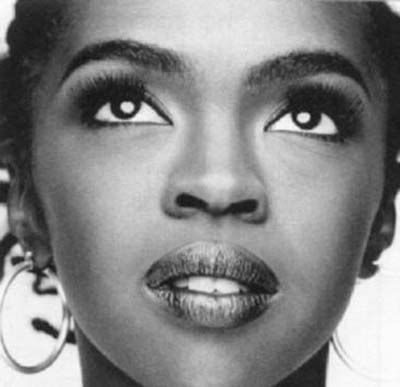
With all due respect to MC Lyte, Salt N Peppa  and Queen Latifah, Lauryn Hill is the greatest female rapper of all-time. She spit rhymes with a passion and purpose that penetrated your soul. Her lyrics were intelligent and profound, replete with biblical references, Greek gods, pop culture, and tributes to musicians from Stevie Wonder to Paul McCartney, Miles Davis to Nina Simone, The Doors to James Taylor.

Listen to her raw power as she tears up the mic on Fugees songs “Family Business” and “The Score,” with biting lyrics like, “So while you’re imitating Al Capone, I’ll be Nina Simone and defecating on your microphone.” She could also slow it down and smooth it out as demonstrated on tracks like “Fu-Gee-La.” Unlike many emcees of her day, Hill wrote her own lyrics and didn’t resort to sexual overtures to sell her rhymes.

Did I mention that L-Boogie had a beautiful, raspy singing voice as well? Sure, she was irreverent and fiery, but she had soul. She harmonized on Fugees songs and dropped the memorable hook on Nas’s “If I Ruled the World,” though it was remakes of “Killing Me Softly” and “Too Good to Be True” which really showcased her range.

Lauryn’s initial success came with The Fugees, a hip-hop trio, which included cousins Wyclef Jean and Praswel Michel. They struck it big with their second studio album The Score, released in 1996, with the hit single “Ready or Not” and remakes of Roberta Flacks’s “Killing Me Softly” and Bob Marley’s “No Woman, No Cry.”  In 1997,  Lauryn contributed to her then lover Wyclef Jean’s solo album The Carnival, lending her vocals to tracks “Guantanamera” and “Seng Fezi.”

A year later, L-Boogie displayed her versatility and creativity on her own solo album, The Miseducation of Lauryn Hill. The single “Doo Wop (That Thing)” brilliantly combined the Doo Wop melodies she grew up listening to with a hip-hop back beat. Coupled with a classic video depicting the two eras represented in the song, “That Thing” became a musical sensation.

Though Hill rapped on a few songs, even bouncing back and forth between rapping and singing on “Everything is Everything,” the album represented a shift towards her vocal side, most evident in the stripped down sound of “Nothing Even Matters.” Lauryn was nominated for 10 Grammy’s in 1999 for Miseducation, winning five of them.

In addition to her skills on the microphone, Hill possessed a simplistic beauty and undeniable charisma that was tailor-made for the big screen. She landed a starring role in the movie Sister Act 2: Back in the Habit and by 1999, the endorsement deals were rolling in. At age 22, she’d established herself as one of the most talented and versatile artists of her generation and appeared to be on the brink of superstardom.

Then… Poof… She was gone. The sultry songstress disappeared from the public eye.

She withdrew from projects she had committed to, including a prominent role in the film adaptation of Toni Morrison’s Beloved, turned down many other acting and endorsement opportunities, stopped recording and refused to grant interviews.

Like most of her fans, I waited for a follow-up to Miseducation, but there was no studio album to come. In 2002, Hill released a live album, MTV Unplugged No. 2.0, which contained moments of splendor, such as her fiery spoken words on, “The Mystery of Iniquity,” but the live performance was raw and choppy. Her voice cracked and lacked the confidence which had once punctuated her rhymes. She lost her place mid-song several times.

The lyrics and tenor of the songs were introspective and filled with despair, revealing a woman desperate to escape the trappings of fame, as reflected in the catchy tune “I Get Out.” Her rambling digressions between songs about God, freedom and following one’s own path fueled rumors that she had suffered a nervous breakdown.

Various theories surfaced to explain L-Boogie’s disappearance. The simplest explanations were that she was unable or unwilling to deal with fame or that she retreated from the spotlight in order to concentrate on motherhood. There were rumors that she fell under the influence of a cult-like religious figure. Some fans blamed her unconventional and reportedly volatile relationship with Rohan Marley, son of reggae legend Bob Marley, who fathered 5 of her 6 children.

Lauryn has been very reluctant to address her seclusion and lack of new material. The few times she has publicly discussed her isolation, she attributed it to her unwillingness to compromise herself for the superficiality of the industry, as well as a desire to grow as a person.

She has teased her fans with occasional performances, surprise appearances at other artists’ concerts and sporadic talk of a comeback album. In 2005, she briefly reunited with The Fugees for a European Tour, but before long Wyclef and Pras grew tired of her erratic behavior and decided they could not tolerate her any longer. She routinely skipped rehearsals, showed up late for shows and insisted on being called “Ms. Hill.” Clef publicly questioned her mental stability.
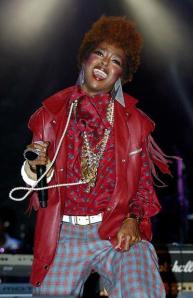
Lauryn’s physical appearance at public outings over the past several years lent weight to Wyclef’s claim. Several times she took the stage looking like a clown, with excessive amounts of make-up and bright, baggy clothing, or just appeared unkempt, in raggedy clothes, with her afro untamed.

Hill has indicated that a comeback album would be coming soon for a couple of years now, yet repeated delays and her strange behavior have led to a skepticism reminiscent of the muted anticipation of Guns N’ Roses long-awaited Chinese Democracy album. She attributed the latest delay in her comeback plans to the birth of her sixth child last fall.

As difficult as it is to believe, it has been 14 years since the release of Miseducation. Other virtuoso vocalists like Alicia Keys and Adele have filled the void left by Lauryn’s absence. Even if Hill is mentally stable and focused on a new album, there is no telling whether her voice has held up over the years or if she can still tap into the mystical ingenuity that burns inside the great artists. The odds are against it.

But, like many of her fans, I hold out hope that L-Boogie will breathe fire into a microphone once again. I’m still waiting for Lauryn.

Wining and Dining With Clyde
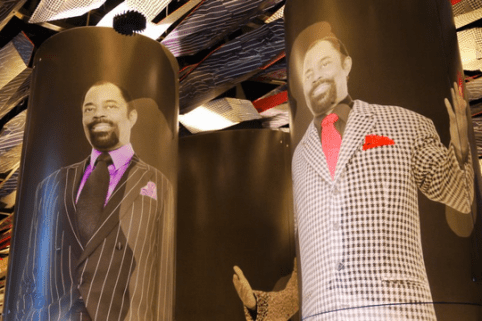
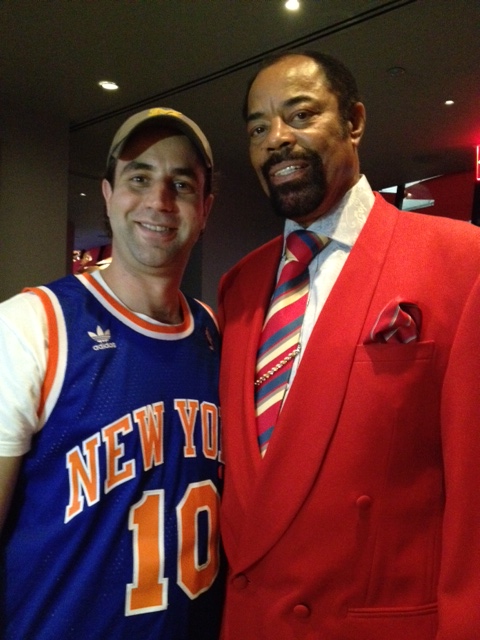
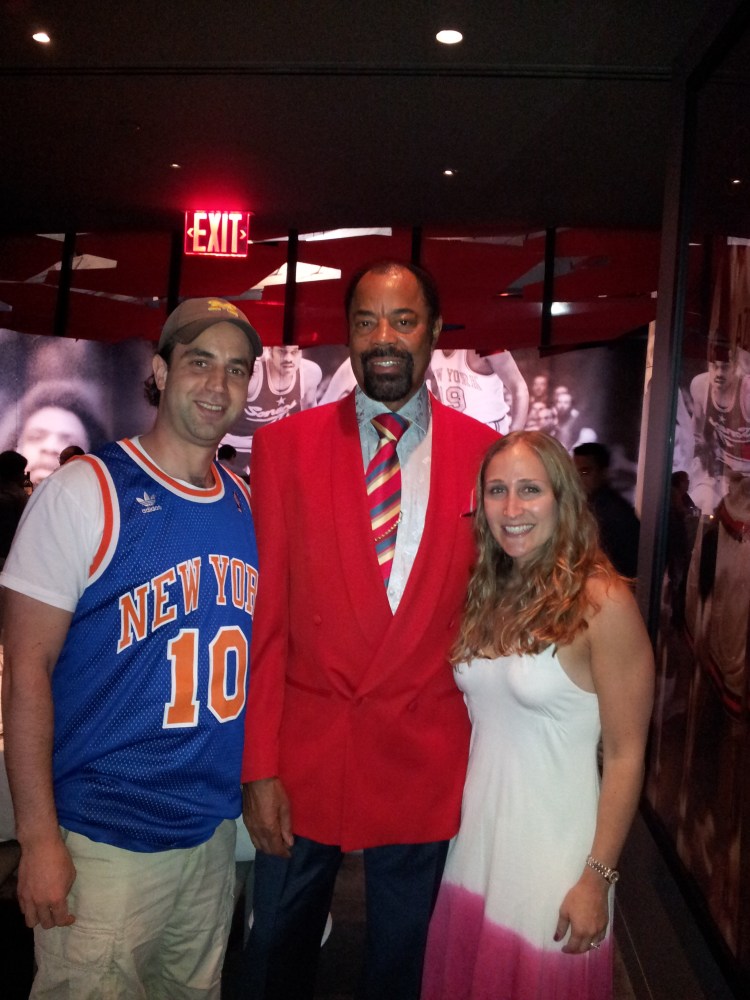
You won’t read too many restaurant reviews here at Through the Clydescope, but when the blog’s namesake Walt “Clyde” Frazier opens up his own eatery/sports bar, I feel the need to weigh in. Clyde Frazier’s Wine and Dine, a joint collaboration between Frazier and Michael Weinstein of Ark Restaurants opened two months ago on the west side of Manhattan.

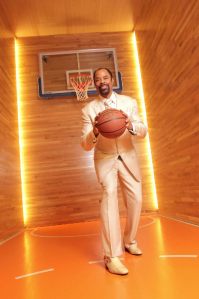
The restaurant is enormous, especially by New York City standards, taking up an entire city block (between 37th and 38th streets on Tenth Avenue). It includes a causal lounge area with a big screen TV, which is ideal for a small private party, a large bar area, tremendous dining area, with an exposed kitchen and of course, a mini basketball court where guests can shoot some hoops.
During an interview with Madison Square Garden Network Clyde said, “The essence of the restaurant is me” and he wasn’t kidding. If you enter from the uptown entrance you’ll be greeted by murals of Frazier on giant pillars. The walls on the left are covered with floor to ceiling images of Clyde from his playing days and the ceiling is adorned with several panels patterned after his eclectic suit collection.

That’s just the beginning of the homage to arguably the greatest Knick ever. The menu covers are also designed after Clyde’s flamboyant wardrobe and the drinks, referred to as Clyde’s Cocktails, are named after his favorite rhymes.

There’s Movin & Groovin, Posting & Toasting, Loosey Goosey, Winning & Grinning, Bounding & Astounding, Spinning & Winning, Swishing & Dishing, Hustling & Bustling, Stumbling & Bumbling and Dancing & Prancing. Unfortunately for Knicks fans, you won’t find a drink on the menu called Hacking & Whacking, Stylin & Profilin, Wheeling & Dealing, Swooping & Hooping, Penetrating & Devastating or Huffing & Stuffing.

The menu, developed by David Waltuck, the former owner and chef of Chanterelle in Tribeca, includes everything from pizza, burgers and sandwiches to more expensive items like seafood and steak, as well as ethnic appetizers such as steamed dumplings and knishes. Several items have a star next to them, indicating that they’re “Clyde’s Favorites.”

I’ve dined at Clyde’s on three occasions and have always been very pleased with my selection. In particular, I highly recommend the mussels appetizer, which are uniquely prepared with bread crumbs and soaked in garlic. The spaghetti with cheese-filled meatballs makes for a delicious main course and the burgers are quite tasty.

If there’s a downside to the Wine and Dine, it’s the spotty service. I visited for the first time with my wife on March 29th, proudly wearing my #10 New York Knicks jersey for the occasion. When we told our waitress that we were there to celebrate Clyde’s birthday she was a bit confused and asked if it was one of our birthday’s too.

Once we explained that it was not our birthday, we’re just big fans who wanted to celebrate Clyde’s birthday at his new restaurant she was very amused. She apologized for Clyde not being there in person, explaining that he was on the road with the Knicks (which of course we already knew) then took good care of us. She recommended the best dishes on the menu, including those superb mussels, and after dinner brought over a plate of complimentary cookies, with a candle in honor of Clyde.

I had no complaints after my second trip to the Wine and Dine, but the service was sub-par during my two subsequent visits. On both occasions, the restaurant experienced temporary problems with their televisions while I was watching a Knicks game and the amount of time I had to wait to order and receive a drink during my most recent visit, the afternoon of  the first game of the  Knicks-Heat playoff series, was simply unacceptable. Hopefully, these minor glitches are just the growing pains of a new restaurant and will get ironed out.

Clyde’s also seems to have a bit of an identity crisis. On the one hand, it has the characteristics of a classic sports bar, with about 50 flat screen televisions lined up above an extended bar area, a basketball hoop and murals of Clyde playing ball. Plus the essence of Clyde, just a few blocks from the Garden, is sure to draw plenty of sports fans.

On the other hand, the monochrome design, classy table cloths and smooth R&B music in the background, create the ambiance of an up-scale restaurant, with prices to match, which is a tough sell for a spot whose menu includes a cocktail called Stumbling and Bumbling. However, with a space that large, there’s no reason it can’t be used as a lounge, sports bar and upscale restaurant, possibly all at the same time, depending on the clientele and the occasion.

Perhaps, the best thing about the Wine and Dine is that unlike most athletes who lend their name to a restaurant, Clyde’s not an absentee owner. The Knick with the knack makes regular appearances when he’s in town, popping in after every Knicks home game to greet the guests.
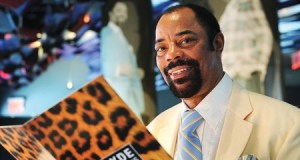
All in all, Clyde’s boasts a fun atmosphere for sports fans and non-sports fans alike and offers some excellent dishes. Whether you’re looking for a good meal, a spot to host a small outing, someplace to watch a big game or just feel like doing a little swishing and dishing, head on over to Clyde Frazier’s Wine and Dine. You may even get to meet the legend himself.

Jay-Z and the Branding of the Brooklyn Nets

Monday morning the Nets officially became the Brooklyn Nets, ending their 35-year tenure in New Jersey. The team celebrated the occasion by unveiling its new logos (there are two) at an event attended by center Brook Lopez, near their new arena, the Barclays Center,  in downtown Brooklyn. The logos and new colors ( black and white) were designed by hip-hop mogul and part-owner of the Nets, Jay-Z.

The Brooklyn native, whose given name is Shawn Carter, is part of the ownership group that purchased the Nets in 2004. A very small part of the group. Since the Nets are not a publicly traded company they’re not required to disclose Jay-Z’s ownership percentage, though reports indicate that his share stands at about 1.47%.

The group was headed by real estate developer Bruce Ratner, who from the moment he purchased the team, intended to move the Nets to a new arena in Brooklyn, which would serve as the centerpiece of a massive business and residential complex known as Atlantic Yards. In May of 2010, Ratner sold 80% of the team to Russian billionaire Mikhail Prokhorov, who provided a $700 million loan for the construction of the arena.

Despite Jay-Z’s minor interest in the team, he’s become the face of the franchise over the past several years. Ratner and Prokhorov have wisely used his status as a pop cultural icon to market their struggling franchise. Over the past two decades influential rappers, Notorious B.I.G. and Jay-Z chief among them, have raised New York’s biggest borough to a level of exposure it hasn’t experienced since the Dodgers left town. So who better to usher in a new sports franchise than Brooklyn’s own hip-hop royalty.

The Jigga Man’s face has been plastered on Nets billboards in Manhattan and Brooklyn. He can be seen during Nets telecasts interacting with the players from his courtside seat during and has accompanied Prokhorov and the team’s general manager on recruiting trips for superstar free agents, including his good friend LeBron James.

As the franchise’s move to Brooklyn has come to fruition, ownership has begun to utilize their famous minority owner in different ways. Previously, just a brand, used to generate interest in the team, Jay-Z is now playing a more active role in marketing the Nets and their new arena. He’s not just christening the Barclays Center with a series of concerts, beginning on September 28th, he designed the actual layout of the arena.

Jay-Z is the brainchild behind what will be known as “The Vault at Barclays Center,” 11 high-end luxury suites on the event level of the arena where New York’s social elite can take in a game. In addition to designing the layout and decor of “the Vault,” Jay-Z has provided input on everything from the champagne that will be sold (reportedly $300 bottles of Armand de Brignac), to the silverware.

The suites will cost an astronomical $550,000 a year, with a minimum three-year purchase. Tenants of each suite will receive eight tickets in the first 10 rows to all Barclays Center events, including Nets games, other sporting events, concerts and family shows.

The hip-hop mogul was also entrusted to design a new color scheme and fresh look for the team’s logo. Monday, team officially introduced two new logos, one, a shield with “NETS” inscribed above a basketball emblazoned with a “B” and a second logo with the words “Brooklyn New York” encircling a basketball containing an imprinted “B”. Thus far, the reaction to the NBA’s first black and white color scheme (The Spurs are close with their black, white and gray uniforms) has received mixed reviews, with some fans and critics touting the logos as hip/chic, while others have panned them as bland.

It was a savvy move by Nets ownership to turn the marketing reigns over to Jay-Z, as they attempt to lure fans and corporate dollars from the more established Knicks fanbase. Jay has driven his personal brand to international icon status and has repeatedly demonstrated that he has his finger on the pulse of pop culture by successfully marketing business ventures from his Rocawear clothing line to his 40/40 club.

However, in order for a product to sell, the brand must be backed by substance. Behind all of Jay-Z’s on-stage swagger is a genius on the microphone. His smooth flow, unique cadence between words and lines, tight lyrics and eclectic beats are what initially made him so marketable.

The Nets lack substance. They just concluded a 22-44 season and have been unable to lock up a marquee star to build a team. They struck out on LeBron, then went all in on Deron Williams, but may lose him to free agency this summer if they’re unable to pull off a trade for Dwight Howard.

Atlantic Yards is easily accessible to wealthy Manhattanites and Jay-Z’s swag may be able to sway the allegiance of some young fans. But the Nets need to put a competitive product on the court. As long as they keep trotting out Brook Lopez at team events, all the bling in Jay-Z’s vault isn’t going to fill up the Barclays Center.

NBA Playoff Preview

Through the Clydescope is proud to present a very talented young writer, Lucas Lovekin, from Mr. Portnoy’s fifth grade class at PS 217 in Brooklyn, New York. Read below to find out his predictions for the NBA playoffs, which begin this afternoon.

Ahh! It’s playoff time! The best time of the year. This year, the championship  winner is not easy to pick out of the 16 playoff teams. Can the stars in Miami win a ring (in year 2 of their push)? Do the Thunder have it in them to get that far? Can the injury-prone Bulls make it to the Finals (with possibly C.J. Watson as their starting point guard?) Will the Clippers and “Lob City” be denied by the better defensive teams? Find out who will win, and who will go home.

Eastern Conference

Favorites

The Miami Heat, after hyping themselves up on ESPN’s “the Decision” and then losing in the NBA Finals to the Dallas Mavericks last year, are still the favorites to win the Eastern Conference even though they are not the top seed in the East. Last year though, they weren’t either and still beat the Chicago Bulls in the Eastern Conference Finals 4-1. They seem to be able to “turn up the ‘heat’” during the playoffs.

This year, the Bulls have shown their true greatness by beating the Heat with their star Derrick Rose only scoring 2 points on 1-13 shooting. They also have added a scorer in Richard Hamilton and Luol Deng is having a superb defensive season (and scoring about 15 points a night), having received an All-Star nod. This year’s Eastern Conference Finals will be one to remember. That is, if this year’s favorites can get past the dark horses.

Dark Horses

Now this is what makes the playoffs exciting. The upsets. The teams that you never thought would make it that far.

Let’s start with the Indiana Pacers. Their record at the end of the regular season was 42-24 (the third best in the Eastern Conference). So wait, how is a 3rd seed a dark horse? Well, not many people realize that they have done so well this season. Their upside: they have 8 solid players that can play great team basketball – Danny Granger, David West, Roy Hibbert, Paul George, Darren Collison, Leandro Barbosa, Tyler Hansborough, and George Hill. Their downside: exactly that. They have no star player. This is what stops them from competing with the Heat and Bulls. Too bad the trade deadline passed. The Pacers could’ve become the #1 seed by adding someone like Joe Johnson or Zach Randolph.

The #4 seeded Boston Celtics are playing great basketball. They may not be the most athletic or youngest NBA team, (Allen-36, Pierce-34, Garnett-35) but they have a star point guard in Rajon Rondo and have beaten the favorite Heat three times this year.

Now we have our final team looking to upset an East favorite. (Yes, there are 3 dark horses in the East alone.) The Atlanta Hawks have the ability to beat some of the top teams. Early in the year, they beat the Heat because of great bench production by the veteran T-Mac. Joe Johnson can hit some clutch shots and Josh Smith should have been an All-Star this year. They may not be 100% because Al Horford has been out for almost the whole season with a torn pectoral muscle and will miss the first round of the playoffs. One thing slowing them down is playing the dark horse Celtics in the first round.

Western Conference

Favorites

All everyone has been talking about this year is the Oklahoma City Thunder. The #2 Thunder though, don’t have the best chance of winning the West. Kevin Durant, Russell Westbrook, and James Harden combine for an outstanding big 3, and Ibaka, well, what can’t this man swat? Kendrick Perkins’s defensive presence is great. Sadly though, there is a flaw. James Harden has a concussion. Who knows how long he will be out for? A balanced offense and defense in the starting 5 is key (technically, Harden isn’t a starter but he gets a lot more minutes than Thabo Sefolosha). The Thunder must find a way to stay strong without Harden.

The #3 seed Lakers also have a balance of offense and defense in the starting 5. Andrew Bynum and Pau Gasol can block shots and grab boards. And of course Kobe Bryant. You want offense? He’s the best in the business, hitting game winners year after year. But, Ron Artest’s (World Peace, ha!) elbow to James Harden’s head (out for 7 games) might put a dent in the Lakers’ playoff hopes. But, didn’t the Lakers rally back from 17 down in the 4th quarter for a double-OT win against the Thunder last Sunday? I can’t see Kobe giving up too easily.

So right now you’re probably thinking that the Thunder just had a bad day, giving up a 17-point 4th quarter lead to the other L.A team. The Thunder is 3-1 against the Clippers this season. This side of the Staples Center has been getting a lot of attention all this year. With Chris Paul (and back-up Mo Williams) throwing alley-oops to Blake Griffin and Deandre Jordan and Randy Foye raining threes, Clipper fans might be asking, who’s Chauncey Billups?

Now you might be wondering, what about San Antonio, the #1 seed in the Western Conference? Remember last year, when San Antonio had the #1 seed in the West and couldn’t defeat the 8th seeded Memphis Grizzlies in the first round (more on Memphis later)? This year they’ve added Stephen Jackson and Boris Diaw to help the bench (which had been spectacular this year before the additions of Stephen Jackson and Boris Diaw). Even though they can beat teams with their big 3, they don’t have the talent and athletic ability of younger teams like the Clippers and Thunder. So where does this drop them, the second round? That’s my prediction. Who knows, it might be Battle L.A in the Conference Finals, and who doesn’t love a Hollywood ending?

Dark Horses

Only one team comes to mind. The Memphis Grizzlies. Last year, they beat the #1 seed San Antonio Spurs in the first round, only the fourth time in NBA history that the 8th seed beat the 1st seed in the NBA playoffs. They also took the Oklahoma City Thunder to seven games in the conference semifinals. What’s different this year? Rudy Gay, (Memphis’s star), did not play for the entire playoffs last year. So Memphis, without their star, took down the #1 seed in 6 games and battled Oklahoma City (this year’s favorite to win the West, not mine though) to seven games before finally falling. If they can beat the Clippers in the first round, which they have a good shot of doing, I’m asking myself, “What can’t they accomplish this year?”

Here’s how I see it going down:

Playoff Bracket Predictions

E    (1) CHI > (8) PHI (4-1)

                                                       (1)CHI > (4) BOS (4-3)

A    (4) BOS > (5) ATL (4-3)

                                                                                       (2) MIA> (1) CHI (4-3)

S     (2) MIA >(7) NYK (4-2)

                                                       (2) MIA > (3) IND (4-1)

T     (3) IND > (6) ORL (4-0)


MIAMI HEAT 

MIA > LAC (4-2)

2012 NBA CHAMPIONS


W   (1) SAS > (8) UTA (4-1)

                                                     (5) LAC > (1) SAS (4-2)

E     (4) MEM > (5) LAC (4-3)

                                                                                       (4) LAC > (3) LAL (4-3)

S      (2) OKC > (7) DAL (4-2)

                                                    (3) LAL > (2) OKC (4-3)

T      (3) LAL > (6) DEN (4-2)

The Most Over-Hyped Day in Sports

It’s that time of year again, the holiest of holy days for hardcore football fans, the first day of the NFL Draft. Millions of fanatics around the country have spent the past few weeks reading mock drafts, blog posts and articles in an attempt to figure out which players their team should and will select. Tonight they’ll don their jerseys and get together with their buddies to wait in breathless anticipation for the selection of the player that will change the course of their franchise.

After following the NFL for many years and attending several draft viewing parties myself, I can’t help but wonder, why all the fuss?

Don’t get me wrong, I understand the allure of the draft. It’s developed into a holiday, an oasis from the drought of five months between the Super Bowl and training camp. Unlike the Super Bowl, the commercialization of which has drawn all sectors of society, the draft is reserved for serious football fans. Hope springs eternal for supporters of all teams as they look towards the future. In fact, the more a fan base has suffered, the greater the excitement, as the teams select in inverse order to last season’s standings.

The draft also appeals to the widespread interest in fantasy football in this country. What are mock drafts, but fantasy additions to real rosters. ESPN has been tweeting mock draft picks for each team, one at a time, as if they’re actually occurring. Speculating as to which player will go where provides a fun diversion from work and other boring or stressful aspects of life.

Then there’s the reality show aspect of the draft, as we watch the 20 or so players in attendance sweat it out as they wait to be selected. There’s the built-in drama of the last player present to be selected. Who can forget watching the expression on Brady Quinn’s face change from excitement to despair as he slipped to the 22nd pick in the 2007 draft? ESPN works the emotional angle with feature pieces on a few of the players who persevered through particularly trying childhoods in pursuit of their dream to play in the NFL.

I also appreciate the importance of the draft for its impact on the future of a franchise. Due to restrictions on player movement created by the salary cap and franchise tags, management must acquire young, relatively low-cost talent through the draft in order to field a competitive team. If a franchise misses badly with their selections, it will come back to haunt them in years to come, whereas, selecting a stud player in the first round or a diamond in the rough later on can make a team a perennial contender.

Sports networks and publications, ESPN chief among them, have preyed on fans enthusiasm and unquenchable thirst for information about their teams to convince them that they 1) have the inside scoop on who their team is going to select and 2) are qualified to make an informed judgment as to whether that selection is a wise one. Those assumptions lead fans to read a new mock draft every day, watch hours worth of draft specials in the weeks leading up to the draft and devour every review of their team’s selections. The problem is, for the most part, those assumptions are incorrect.

While there are some exceptions, the so-called draft “experts” don’t have any better idea than you or I which player a team will select. Teams guard their interest in players as if they’re matters of national security. In fact, much of the information leaked and reported on by the media is disinformation generated by teams with the intent to mislead other teams as to their intentions.

Much of the draft-related news the sports media reports isn’t news at all. For example, various media outlets noted this week that the New York Jets contacted highly coveted running back Trent Richardson. The Alabama product is a beast and every team in the league would love to acquire his services. The fact that the Jets contacted him provides no indication as to whether they will trade up to select him as many analysts have suggested. They may simply be doing their due diligence, collecting as much information as they can on every draftee.

There are only two players in this draft whose destination the draft “gurus” can predict with any degree of certainty, Andrew Luck and Robert Griffin III, and fans don’t need an expert to tell them where those guys are going. Luck has been the presumptive number one pick in this year’s draft since he announced that he would be returning to Stanford for his Junior season over a year ago and the Colts publicly confirmed that they’ll be selecting him this past Monday. It was also evident that the Redskins intended to select the only other franchise quarterback in the draft, Griffin III, the moment they traded four picks to move up to the number two spot. The known destinations of Luck and Griffin III, the only two superstars in this draft, only removes suspense from the evening for the casual NFL fan.

Despite what ESPN draft gurus Mel Kiper Jr. and Todd McShay want you to believe, nobody, including the so-called “experts” has any idea how successful an individual draft pick or a team’s draft on the whole will be. History has proven that at best, the experts’ predictions are a little better than fifty/fifty. That’s the case across positions, for the highest picks, up to and including the first overall selection.

For every Peyton Manning – the 11 time Pro-Bowl quarterback selected first overall by the Colts in 1998 – there’s a David Carr – the first overall pick by the Texans in 2002 who settled in as a career back-up – or JaMarcus Russell – the first pick of the 2007 draft who was out of the league after three years with the Raiders. And those are players who were picked first overall. For those chosen in the later r0unds, it’s a complete crapshoot. So what’s the point of listening to a panel on ESPN or the NFL Network break down a team’s pick?

I’m not trying to dissuade anybody from watching the draft. It’s a great opportunity to hang out with the guys while getting your football fix. Any serious fan would want to know about the newest additions to his team’s roster and how those players may be able to help. Just remember that some of the guys your team picks will pan out and some won’t and regardless of what the blowhards at ESPN say, you won’t have any idea which category your team’s selections fall into until they strap on the pads for real in September. Until then, don’t believe the hype.

Ten Funniest Sports Comedy Routines

As sports fans, we tend to take the games very seriously, investing a great deal of emotional in the wins and losses of our favorite players and teams. Occasionally, it’s nice to step away from the action and look at how silly these games really are. For decades, comedians have used athletic competition as fodder for their stand-up acts. Here’s my list of the Ten Funniest Sports Comedy Routines.

10) “Sports” – George Carlin

9) “The Silver Medal” – Jerry Seinfeld

8)  “The Chair Umpire” – Joe Matarese

7)  “Boxing” – Richard Pryor

6) “Golf Courses” – George Carlin

5) “Slavery and Sports” – Chris Rock

4) “Football” – Bob Nelson

3) “The Invention of Golf” – Robin Williams

2) “Baseball and Football” – George Carlin

1) “Who’s on First” – Abbott and Costello

Honorable Mention:

“Golfers” – Lewis Black

“Sports” – Cedric the Entertainer


Brooklyn vs. Kate

Kate Upton on the left and Brooklyn Decker on the right
Kate Upton (left) and Brooklyn Decker

Today is model turned actor Brooklyn Decker’s 25th birthday. The blonde bombshell is best-known for gracing the cover of Sports Illustrated’s 2010 Swimsuit Issue. Like Brooklyn, this year’s covergirl Kate Upton is one of the sexiest models to appear in SI in recent memory, which raises the question: Who’s hotter, Brooklyn or Kate?

Tale of the Tape

                                      Brooklyn                                        Kate

Age                                   25                                                  19

Height                            5 ft 9 in                                         5 ft 10 in

Hair Color                      Blonde                                           Blonde

Eye Color                        Blue                                            Blue/green

Measurements           34-24.5-35                                       33-25-36

Sports Illustrated Video Comparison

Kate

Brooklyn

Bonus Video Comparison

 Brooklyn

Kate

Reflections on the Basketball Hall of Fame

The Hall Dropped the Ball

Last week, the Naismith Memorial Basketball Hall of Fame announced seven new members of it’s 2012 class, including; former NBA sharp-shooter Reggie Miller, the league’s all-time winningest coach, Don Nelson, University of Virginia standout Ralph Sampson, two-time Olympic gold medalist Katrina McClain, four-time NBA champion Jamaal Wilkes, longtime college referee Hank Nichols and the All-American Red Heads — the female version of the Harlem Globetrotters.

The newcomers are joined by five members of the class who had already been announced: Nike co-founder Phil Knight, ABA star Mel Daniels, seven-time NBA All-Star Chet Walker, Olympian Don Barksdale and Lydija Alexeeva, who led the Soviet Union to two Olympic gold medals.

Once again, the Hall dropped the ball.

Inexplicably, Louisville coach Rick Pitino failed to make the cut. By any objective criteria Pitino is one of the best college basketball coaches of the past twenty-five years. An innovator, who was one of the first coaches to build an offense around the three-point shot at both the collegiate and professional level, he’s made six trips to the Final Four, winning the National Championship with Kentucky in 1996.

Pitino’s exclusion was particularly glaring since the announcement came a week after he led a third program to the Final Four, becoming the first coach to officially do so (Calipari’s Final Four appearances with the University of Massachusetts and Memphis were vacated due to NCAA violations) when his Louisville Cardinals defeated the Florida Gators in the Elite Eight. (Pitino also went to the Final Four with Providence and Kentucky).

Unfortunately, such peculiar omissions have become commonplace for the Basketball Hall of Fame. It should be noted that unlike the Baseball Hall of Fame and the Pro Football Hall of Fame, the Naismith Memorial Hall of Fame includes high school and college coaches, as well as professional players and coaches who thrived in other countries. Over the years, the Hall’s inclusion of what was perceived as an abundance of collegiate coaches and foreign players while former NBA stars have been denied entrance has led many basketball fans and insiders to question the Hall’s credibility.

The issue came to head in 2005, when the Hall inducted three college coaches (Sue Gunter, Jim Calhoun and Jim Boeheim), longtime NBA coach and commentator Hubie Brown and female Brazilian star Hortencia Marcari, without admitted one former NBA player. Fans were particularly outraged that Dominique Wilkins, then the NBA’s ninth all-time leading scorer and two-time NBA Champion Joe Dumars were denied admission.

The omission of Wilkins in particular was so disturbing that NBA Commissioner David Stern felt compelled to publicly express his c0ncern over the Hall’s selection process. Seeing as though Stern and the NBA are the Nasimith Hall of Fame’s greatest benefactor, the Hall was forced to take notice. Dumars and Wilkins were admitted the following year and the percentage of inductees has noticeably swung in favor of former NBA players since then.

Perhaps Pitino’s exclusion is the result of a backlash against collegiate coaches, though if that’s the case then the committee has swung too far the other way. The inclusion of Jamaal Wilkes, in this year’s class, a three-time NBA all-star, though certainly not a star player (Wilkes averaged 17.7 points and 6.2 assists over a twelve-year career), indicates that the selection process has shifted and voters are much less selective regarding former NBA players. Wilkes’ selection could also be seen as a product of fans and voters tendency to overvalue members of championship teams. (Wilkes won a ring with Golden State in 1975 and three with the Lakers in ’80, ’82 and ’85.)

First Ballot Hall-of-Famers

Another possible explanation for Pitino’s exlusion from the Hall of Fame is that the committee members may have determined that he’s not a “first ballot Hall-of-Famer,” a random distinction used to distinguish between different tiers of Hall-of-Famers and most commonly applied to candidates for election to the Baseball Hall of Fame. The problem with this approach to voting is that the Hall-of-Fames make no such distinction between inductees, so it’s illogical for the voters to do so.

ESPN’s Bill Simmons has proposed a pyramid-shaped tier structure to the Basketball Hall of Fame, with the greatest of all-time, such as Michael Jordan and Kareem Abdul-Jabbar making up the top tier and borderline inductees such as Dumars and Wilkes on the bottom level. If the Hall instituted such a system or another tiered approach then gradations of evaluation by voters would be relevant, but as the Hall is currently constructed, voting should be based on whether a player is worthy of induction, regardless of how many years he’s been on the ballot.

Hall of Fame caliber players shouldn’t have to pay their dues in order to be admitted. They did that already; it was called their career. If voters believe that a player should wait a year or more before being inducted then maybe that player doesn’t deserve to be inducted in the first place.

Is Reggie Miller Really a Hall-of-Famer?

The biggest name in this year’s Hall of Fame class is long-time Indiana Pacer Reggie Miller. To most basketball fans Miller was a no-brainer for election. A deadly three-point shooter, he led the Pacers deep into the playoffs on several occasions, including a trip to the NBA Finals in 2000, while earning a reputation as one of the most clutch performers in the NBA. His late-game heroics during the epic playoff battles between the Pacers and Knicks are legendary.

Forget the late-game theatrics for a moment and let’s break down his game. Miller was one of the best three-point shooters the league has ever seen and he was very effective at drawing contact and getting to the foul line, where he was regularly among the league-leaders in shooting percentage, but that was basically all he did. He was a one-dimensional player. Miller didn’t grab rebounds. He failed to use his size to exploit smaller guards in the post. He wasn’t a particularly good passer and didn’t create opportunities for his teammates off the dribble. On the defensive side of the ball he was simply average. And for all his scoring prowess, Reggie averaged just 18.2 points per game for his career.

Miller was never selected to an All-NBA First or Second Team (he was selected to the All-NBA Third Team three times) and the highest he ever finished in MVP voting was 13th in ’99-’00. The Pacers all-star was selected to five all-star games, which while impressive hardly screams “Hall-of-Famer.” His statistics and accolades are most comparable to players like Mitch Richmond (21.0 points per game, six all-star teams and All-NBA Second Team – ahead of Miller – three times), Tim Hardaway (five-time all-star, All-NBA First Team once and All-NBA Second Team twice, 17.7 points and 8.2 assists per game) and Kevin Johnson (three-time all-star, 4x All-NBA Second Team and 17.9 points and 9.1 assists per game), all of whom are considered long shots for the Hall of Fame.

The mercurial Hall of Fame selection committee obviously didn’t view Miller as a lock either. Last year, his first on the ballot, he wasn’t a finalist for induction. I don’t have a problem with Miller being elected, especially given the Hall’s ambiguous standards and its consideration of collegiate and international performance, but let’s not let his spectacular moments on the big stage of Madison Square Garden obscure the truth that Reggie Miller was a very good player for a long time. He was not elite.

Phil Knight?!?

phil_knight1.jpg

The most surprising member of this year’s class is co-founder of Nike Phil Knight, who was selected for his “significant contributions to the game of basketball.” At first glance it seems absurd that a man who has never owned, played or worked for an amateur or professional basketball league or team in any capacity should be inducted into the Basketball Hall of Fame. He doesn’t seem to belong with many of the recent “contributor” inductees like Jerry Buss, Hubie Brown, Jerry Colangelo and Meadowlark Lemon.

However, the business mogul’s impact on the sport is immeasureable. Nike’s sponsorship of individual basketball players, most notably, Michael Jordan has been highly instrumental in catapulting the NBA from a league whose finals games were aired on tape delay in the late 1970’s to a world-wide international brand, and increasing the popularity of basketball to the point that it’s challenging soccer for the most popular sport in the world.

What makes his induction somewhat difficult to swallow is the suspicion that his corporate dollars played as much of a role in his selection as his contribution to the game. For example, in 2009, the summer Michael Jordan was inducted into the Hall, Jordan Brand, a premium division of Nike, invested approximately $250,000 into a vast exhibit which commemorated Jordan’s career.

Knight personally is worth several billion dollars. He’s donated hundreds of millions of dollars to his alma mater, the University of Oregon, and has made substantial contributions to the Stanford Graduate School of Business (also his alma mater) and the Oregon Health and Science University Cancer center. It’s not much of a stretch to consider that the cash-strapped Naismith Hall of Fame may be hoping for a handout from Knight in return for his induction.

The suspicion of impropriety is enhanced by the lack of transparency within the Hall’s selection process. Whereas selection committee members for Halls of Fame in other sports openly debate their selections, the public doesn’t even know who the members of the selection committee are for the Naismith Hall, nevermind who they voted for.

The King of New York

Like Pitino, former Knicks star Bernard King didn’t get the call he was hoping for last week. Unlike Pitino, this was the ninth time King was nominated and the second time he was named a finalist for induction. His situation poses an issue that’s often debated regarding Hall of Fame candidates in all sports. How do you weigh dominance against longevity?

King was one of the elite players in the NBA during the mid 1980’s as a member of the New York Knicks, winning a scoring title in 1985 and being selected to the First All-NBA Team in consecutive seasons. His quick first step and devastating arsenal of low-post moves rendered him virtually unguardable. However, his prime was cut short by a gruesome knee injury, and though he returned to average twenty points per game, he was no longer the dominant force he once was. Also working against King is his failure to achieve significant success in the post-season, though he was surrounded by marginal talent at best throughout his career.

Generally, I don’t like to weigh in on topics such as a player’s Hall of Fame candidacy when I didn’t see that athlete play in his prime, which is the case with King. However, I believe that there’s no greater indication of a player’s worth than the impressions of his peers. The feedback I’ve heard from those that played with and against King is that he unequivically should be in the Hall of Fame. Hall-of-Famers Larry Bird and Dominique Wilkins are among those who have said that he was the most difficult player for them to defend. Sure, King’s prime was cut short, but he still averaged 22.5 points per game for his career, scoring over 20 points per game 11 times, while shooting a staggering .518% from the field.

International Candidates

King’s candidacy is particularly difficult to evaluate in light of the Hall’s consideration of international competition. If the Hall of Fame was simply an NBA Hall of Fame then King’s exclusion would certainly at least be arguable based upon his lack of longevity as an elite player. The problem is, the Hall has inducted so many international stars who didn’t compete against the best players in the world on a regular basis, while not admitting a player who was one of the most dominant scorers in the most talented league in the world.

The trouble with evlauating international candidates is that the standard for evaluation has changed. Years ago, when the best European or South American players only competed against players in their region it made sense to include the elite players in those regions in the Hall. Now that the best international players play in the NBA we can compare them to the best players in the world and their dominance in their native region isn’t quite as relevant.

Take a player like, Tiago Splitter. The Spurs forward is one of the best Brazilian players of his generation (along with Nene and Leandro Barbosa) and was named MVP of the Spanish League in 2010. In previous generations he may have been well on his way to a Hall of Fame career as a star in the Euroleague or South America and theoretically still could if he continued to play overseas, but the big man is averaging just 9.6 points and 4.5 rebounds in his second season in the NBA.

Splitter hasn’t accomplished enough overseas to warrant Hall of Fame consideration, though there are international players whose candidacy is more difficult to decipher, specifically those who came to the U.S. later in their careers when the migration of international talent to the NBA picked up steam in the ’90’s like Dražen Petrović, Vlade Divac, Toni Kukoč and Arvydas Sabonis. All four were superstars overseas and very good players in the NBA, though none of them should be Hall-of-Famers based solely on their NBA careers. The question is, How much weight should be given to their performance in their native country, the Euroleague or their level of play in the Olympics and other international tournaments?

Sabonis seems to be a no-brainer for the Hall of Fame. It was apparent when he led the Soviet Union to the Gold Medal in the ’88 Olympics, destroying future Hall-of-Famer David Robinson of the U.S. in the process, that he was one of the best players in the world. His skill level and production in the NBA with clearly diminished mobility after several major injuries was a testament to how great he once was. Fittingly, Sabas was inducted into the Naismith Hall last year.

The case for former Yugoslavian National Team teammates, Petrovic, Divac and Kukoc isn’t quite as clear. Drazen was named Euroleague Player of the Year four times before joining the NBA and had emerged as one of the best long distance shooters in the NBA before he died tragically in a car accident in 1993 at the age of 28.

In addition to his accomplishments with the Yugoslavian National Team, Divac was named one of the Euroleague’s 50 Greatest contributors and made an all-star team during an impressive 16-year NBA career. Kukoc won the Euroleague Final Four MVP award three times and was an integral part of a Chicago Bulls team that won three consecutive championships from ’96-’98, winning NBA Sixth Man of the Year in 1996.

Petrovic was inducted into the Naismith Hall in 2002. Divac and Kukoc haven’t been elected and most likely won’t be. Based solely on their NBA careers none of the three are worthy of induction. If they had played ten years earlier before European players joined the NBA they would have certainly been inducted based on their international credentials and if they played ten years later and joined the NBA at the age of 19, they wouldn’t even be up for consideration. The Hall’s inability to establish a consistent standard for international players causes further damage to the credibility of its selection process.

Collegiate Accomplishments

Ralph Sampson’s NBA career is certainly not Hall of Fame worthy. He was a great player over his first few seasons with the Rockets and along with Akeem Olajuwan led Houston to the 1986 NBA Finals, but Sampson’s knees were shot by his mid 20’s and he only played more than 50 games in a season once after the age of 25.

Sampson’s NBA credentials don’t compare to King’s, but the Hall considers players’ collegiate careers as well and Sampson is considered one of the greatest college players ever. He was named the Naismith College Basketball Player of the Year three times (He and Bill Walton are the only players to win it more than once and they both won it three times) while playing for the University of Virginia and led the Cavaliers to the Final Four in 1981. But why should a player’s college credentials be considered for the Hall of Fame? Isn’t that what the College Basketball Hall of Fame is for? Who’s going to be inducted into the Naismith Hall of Fame next, Christian Laettner?

An NBA Hall of Fame

One way to solve many of the problems discussed above regarding the confusing and often changing standards of the Naismith Memorial Basketball Hall of Fame would be for the NBA to create its own Hall of Fame, which would inductee players, coaches and other contributors based solely on their performance in or contributions to the NBA. The accomplishments of outstanding international coaches, players and contributors have been and will continue to be recognized by the FIBA Hall of Fame and standout collegiate athletes, coaches and contributors will continue to be immortalized in the College Basketball Hall of Fame and great female ballplayers can be inshrined in the Women’s Basketball Hall of Fame.

Commissioner Stern has repeatedly expressed his support for the Naismith Memorial Hall of Fame and stated that he’s not interested in creating an NBA only Hall of Fame. It may simply be an issue of finances. The NBA currently helps keep the Naismith Hall afloat and perhaps Stern is worried that a Hall financed completely by the league would be a poor investment. Regardless of the reason, it appears there won’t be an NBA Hall of Fame any time in the near future and the Naismith Hall will continue to make perplexing errors in their selection process in the future.

Athletes Who Looked Strangest in New Uniforms

Peyton Manning

The Peyton Manning saga has finally come to an end (at least until it’s time to see whether he can actually still throw the ball) and the Colts legend will conclude his career as a Denver Bronco. If you find it difficult to picture Manning in a Broncos jersey, you’re not alone. Manning’s the latest in a long line of superstars who became so identified with the team and city they played for, only to conclude their careers in a foreign jersey.

This is a list of the 15 ballplayers who looked most out of place in new uniforms at the end of their careers.

Top 15 Strangest Looking Uniforms

15. Karl Malone – Los Angeles Lakers

The rest of the country was barely aware that there was a professional basketball team in Utah until Karl Malone and John Stockton arrived in the mid ‘80s. Malone scored more points than any player other than Kareem Abdul-Jabbar, while building the Jazz into a perennial playoff contender. However, in ‘03, he signed with the Lakers in hopes of winning the championship that had eluded him throughout his career. Unfortunaetly, he fell just short once again as the Lakers lost to the Pistons in the NBA Finals.

14. Duke Snider – New York Mets and San Francisco Giants

The Duke with Willie Mays

The Duke was a mainstay in centerfield for the Dodgers for 16 seasons, powering the team to two championships (One in Brooklyn and one in L.A.) During the 1962 season, the Dodgers sold him to the Mets, where he was instantly a crowd favorite from his days in Brooklyn. After one season in New York, though, he asked to be traded to a contender and was sold to the Giants. Years earlier, his teammate Jackie Robinson retired rather than play for the Dodgers’ arch rival, but Snider accepted the move and concluded his career with one unproductive season in San Francisco.

13. Franco Harris – Seattle Seahawks

Harris was an important component of all four of the Steelers’ championship teams in the 1970s, and in ‘72 he won a playoff game in stunning fashion with his “Immaculate Recpetion.” The Steelers cut the popular veteran before the ‘84 season after he threatened to hold out for more money. He signed with the Seahawks and ran for a few hundred yards in his lone season with the team.

12. Hank Aaron – Milwaukee Brewers

“Hammerin Hank” smacked home runs for the Milwaukee/Atlanta Braves organization for 20 years. In 1974, just months after he broke Babe Ruth’s record, the team traded him to the Milwaukee Brewers so he could prolong his career in the American League as a designated hitter. His numbers significantly declined over his two seasons with the Brewers, though he was selected to his 21st All-Star Game in 1975.

11. Emmitt Smith – Arizona Cardinals

Smith ran for more yards than any running back in NFL history during his 12 years with America’s team and was arguably the Most Valuable Player on their Super Bowl teams of the mid ‘90s. After his record-breaking 2002 season, the Cowboys hired Bill Parcells to rejuvenate the floundering franchise and he  promptly cut Smith, who then signed with the Cardinals where he languished behind a weak offensive line for two seasons.

10. Patrick Ewing – Seattle Supersonics and Orlando Magic

Ewing was the centerpiece of the New York Knicks franchise from the moment they selected him with the first pick in the 1985 draft. He led them to two NBA Finals, but by 2000 the Knicks had transitioned into an up-tempo team, ill-suited for his aging knees. Unwilling to meet his demands for a contract extension, the Knicks traded Ewing to the Seattle Supersonics where he played for one season before riding the bench for the Orlando Magic the following year.

9. Ray Bourque – Colorado Avalanche

The all-time leading scorer for NHL defensemen suited up for the Boston Bruins for 21 seasons. In 2000, the team was in rebuilding mode and Bourque asked to be traded to a contender. Management honored their captain’s request and shipped him to Colorado, where he capped off his career by winning the Stanley Cup with the Avalanche in his final season. He brought the cup to Boston to celebrate at a rally with Bruin fans.

8.  Joe Montana – Kansas City Chiefs

“Joe Cool” quarterbacked the 49ers to four Super Bowl victories while earning a reputation as one of the greatest clutch performer in football history. After he missing the entire ‘91 season and most of ‘92 with an elbow injury, the team decided to go with the younger Steve Young at quarterback and traded Montana to Kansas City. At 37 years of age, he still had something left in the tank and he led the Chiefs to the AFC championship game in January 1994.

7. Bobby Orr – Chicago Blackhawks

During his 10 years with the Boston Bruins, Orr won three MVP awards and scored the winning goal in the Stanley Cup Finals in ‘70 and ‘72. Then, in ‘76, he turned down a lucrative offer from the team, which included part ownership, to sign with the Chicago Blackhawks. Crippled by knee injuries, he played in only 26 games in three seasons with the Blackhawks and famously never cashed a check from the team, because he felt he hadn’t performed up to expectations.

6. Willie Mays – New York Mets

The “Say Hey Kid” roamed centerfield for the New York/San Francisco Giants from 1951-72. Widely considered the best all-around player in the game, he led the team to victory in the 1954 World Series. At 41 years of age, Mays was washed up when the Giants sold him to the Mets in 1972. The hearts of baseball fans sank to the floor when he misplayed two fly balls in the World Series during his final season in 1973.

5. Brett Favre – New York Jets and Minnesota Vikings

Favre wasn’t just Mr. Green Bay, he was the face of the league during his tenure with the Packers. The Mississippi gunslinger created countless indelible images in that green #4 jersey and though he began his career with the Falcons, after 16 seasons with Green Bay it seemed inconceivable that he could ever play for another team. But as Favre contemplated retirement in 2008, the Packers committed to Aaron Rodgers and shipped Favre to the Jets. He suited up for New York for one season before closing out his Hall of Fame career with the Packer’s rival Minnesota Vikings.

4. Johnny Unitas – San Diego Chargers

Unitas was the field general of the great Baltimore Colts teams of the late 1950s and one of the individuals responsible for the surge in popularity experienced by professional football in the United States. From 1956-72, he led the team to two championships and won three MVP awards. By 1973, his body had broken down and the Colts traded him to the San Diego, where he played five games for the Chargers before retiring after the ‘73 season.

4. Joe Namath – Los Angeles Rams

No athlete was more associated with the spotlight of New York than “Broadway” Joe. He was the Jets’ quarterback from 1965-76 and led the team to a legendary upset over the Baltimore Colts in Super Bowl III. By the mid ‘70s, knee and hamstring injuries had sapped him of his mobility, and in May ’76, the Jets waived him so he could sign with the Los Angeles Rams. Broadway Joe just didn’t look right in a blue and yellow jersey, playing in only three games for the Rams before calling it a career.

3. Babe Ruth – Boston Braves

Though he began his career in Boston, the Babe was so synonymous with Yankee baseball that Yankee Stadium became known as “The House That Ruth Built.” In the twilight of his career he desired that he wanted to manage, but the Yankees had no intentions of replacing skipper Joe McCarthy, so they sold Ruth to the Boston Braves in 1935. Overweight and broken down, the Great Bambino played less than two months for the Braves before walking away from the game.

1. Michael Jordan – Washington Wizards

When we envision M.J. soaring through the air with his tongue wagging or knocking down a game-winning shot, he’s wearing a red Chicago Bulls jersey. However, three years after retiring from the Bulls, discontent as co-owner of the Wizards, Jordan came out of retirement at the age of 38 to play for his new team. Though he still performed at an All-Star level, the air was out of his game, and the Wizards failed to make the playoffs both seasons he took the floor.

Manute, Muggsy and Spud

The Washington Bullets/Wizards have been a dismal franchise for the past thirty years (currently 9-30 this season) though at least in the 1980’s they were entertaining. Here’s a shot of the tallest and shortest players ever to play in the NBA when they were teammates with the Bullets during the ’87-’88 season, 7’7” Manute Bol and 5’3” Muggsy Bogues.

These are a couple shots of Manute with 5’7” 1986 Slam Dunk Contest Champion Spud Webb.