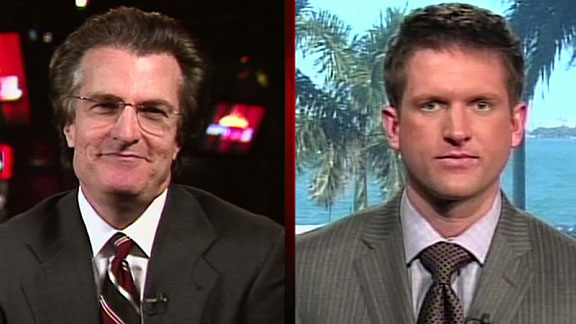
The NFL draft is underway and that means ESPN’s two prominent draft analysts Mel Kiper Jr. and Todd McShay will undoubtedly be engaging in heated debates over the next few days. If you’ve ever noticed, they’re never in the same place at the same time. That’s because they would likely tear each others heads off if they ever crossed paths. Every time I see the two arguing over a prospect I wonder what would happen if they ever did throw down.
Kiper is the original draft guru and has fought off countless up-and-comers who’ve attempted to unseat him from the top spot. He’s broader than McShay, probably has at least 30 pounds on the junior analyst and is the feistier of the two. He made his bones by refusing to back down when Colts general manager Chris Polian went on the offensive after Kiper criticized him for not selecting Trent Dilfer in 1994 draft.
McShay is likely quicker than Kiper, 16 years his elder and is probably the more athletic of the two, having played quarterback at the University of Richmond. Don’t underestimate his resiliency either. He’s spurned King Kiper’s attempts at intimidation and has yet to wither in the shadow of the do, like so many before him.
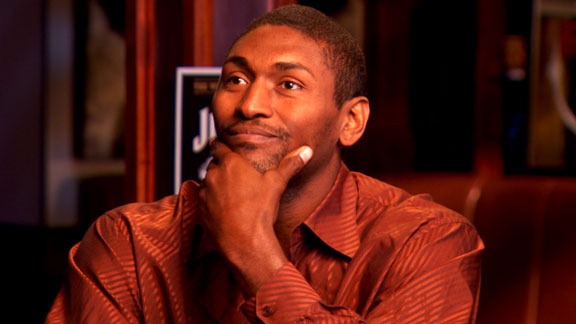
Tuesday afternoon Lakers forward Ron Artest was named this year’s recipient of the NBA’s J. Walter Kennedy Citizenship Award. I know that sounds like a headline from The Onion, but it’s no joke.
The citizenship award is presented annually by the Professional Basketball Writers Association and is named for the second commissioner of the league. It honors an NBA player or coach for outstanding service and dedication to the community. Artest received the award in recognition of his support for mental health awareness.
He began his public crusade by thanking his psychiatrist in a post-game interview after the Lakers won the championship last year. A few months ago he auctioned off his championship ring for $650,000, with the proceeds going to mental health awareness. He’s appeared before Congress to support the Mental Health in School Act, made Public Service Announcements and regularly speaks at schools about the importance of counseling.
Artest wasn’t always a model citizen. He was known as a loose cannon during the early part of his career with the Bulls and Pacers, most notably for igniting the notorious melee known as “the Malice at the Palace,” when he attacked a fan in the crowd during a game between the Pistons and Pacers in 2004. He was also suspended on multiple occasions for other altercations on the court and was arrested in March of 2007 for domestic abuse.
Somewhere along the way Artest decided to get help. He underwent marital counseling and anger management, and while he still picks up his share of technical fouls and says some zany things, he’s refrained from violence and appears to have his life in order. After playing for the Bulls, Pacers, Kings and Rockets, he’s finally found a home in Los Angeles, where he won a championship last season.
It’s a wonderful story of redemption, second chances and the potential impact of celebrity. Yet, I can’t help think that Ron Artest was a better ballplayer when he was “crazy.”
The small forward was entering the prime of his career and was one of the top 10-15 all-around players in the league when the Malice in the Palace occurred. He took the ball to the basket with reckless abandon, overpowered smaller players in the post and used his unusual combination of quick feet, quick hands and strength to blanket scorers at various positions. He was selected to the All-Star team and named the Defensive Player of the Year the season before the brawl.
Artest played just seven games during the 2004-2005 season before being suspended for the rest of the season after the melee and half way through the following season the Pacers dealt him to Sacramento. He continued to put up impressive numbers in relative obscurity for a poor Kings team over the next two and a half seasons before signing a one year deal with the Rockets.
It was around that time that Artest began to turn his life. During that same period his game began to slip. He accepted being the third option and was a solid team player in Houston, but he lost his aggressiveness offensively, settling for outside jumpers, and was no longer an elite defender. Sure, he was getting older, but at 29-years-old and relatively injury free, he should have still been in his prime.
After one season in Houston, Ron signed a five-year deal with the Lakers where his play has continued to deteriorate. He averaged just 8.5 points per game this season and shot under 40% from the field. He’s been forced to defer to more talented players and the triangle offense is at least partially responsible for turning him into a spot-up shooter, but he doesn’t play with the same abandon he once did and no longer imposes his will on his opponents. He’s not angry anymore.
I don’t question the merit of his progress. Artest has made great strides as a person. I admire the way he has transformed his life. I also recognize that his transformation enabled him to serve as a role player and contribute on a championship team.
I mention his decline in performance to raise the complicated issue of emotion, particularly anger, in sports. To an extent we want our athletes to play “with a chip on their shoulder,” to impose their will on their opponents and intimidate them. Management and fans want players who are “warriors” even “assassins” (A word often used to decsribe Michael Jordan) and consider the word “crazy” to be a positive attribute.
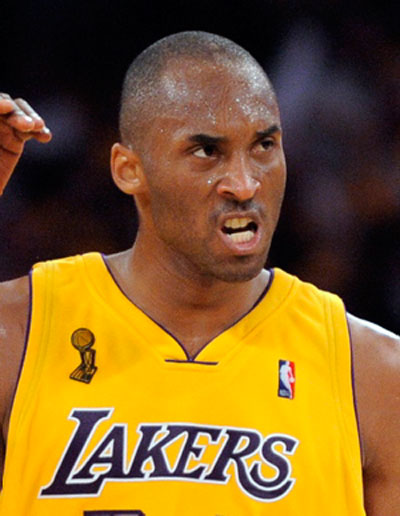
Watch Kobe Byrant’s face throughout the next Lakers playoff game. It’s not a coincidence that the best player in the league is also the angriest. That type of emotion can serve as fuel for ballplayers. Unfortunately, it can also cause them to self-implode. Athletes try to tip-toe a fine line of emotion, which extends beyond the court into their personal and social lives.
Many athletes fueled by anger are able to flip the switch when they step off the court. Michael Jordan is perhaps the best example. For Artest and many others that emotion isn’t confined to the arena and may be a symptom of a larger problem.
Lawrence Taylor was one of the fiercest players to ever step on the gridiron. He used to say that his cocaine use and womanizing was part of the L.T. persona that was so feared on the field and he believed L.T. the quarterback killer couldn’t have existed without those reckless off-the-field activities. Clearly, it would have been in the best interest of Taylor the man to seek professional counseling, but the Giants and their fans may not have been pleased with the results. What’s in the best interest of the person isn’t necessarily in the best interest of the athlete.
Artest was forced to sit out an entire season, his reputation and career in shambles after the incident in Detroit. For him it was no longer a matter of weighing personal improvement against athletic success. He had to work on Ron Artest the man, in order to salvage his career. For most athletes consumed by emotion the right path isn’t always so clear.
Artest still had to take the courageous step to seek help. His advocacy for mental health awareness is laudable and will have a positive impact on many people’s lives. His transformation may have taken the edge off his game, but it’s made him a better and happier person. It’s a path more athletes should choose.
I’ve spent the past 24 hours reflecting on the Knicks season that came to a bitter end at the hands of the Boston Celtics Sunday night and there’s one image that sums it up for me. It’s not Amar’e standing in front of the Garden, arms spread wide, embracing the challenge of bringing basketball back to New York City, nor is it the press conference when Carmelo Anthony and Chauncey Billups were introduced as Knicks.
The defining moment of the season was a packed house at Madison Square Garden giving the Knicks a standing ovation during the closing seconds of Game 4 of a playoff series in which their team was swept. Fans were obviously disappointed with the poor showing, but they understood the big picture, as Amar’e Stoudemire aptly stated the following morning: “The goal was set at the start of the year to make the playoffs, have a winning team and winning mentality. We accomplished that.”
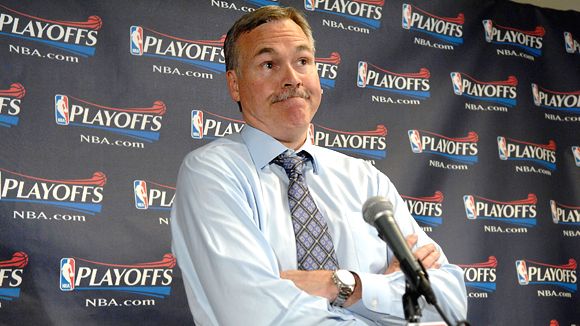
That’s why I find it so surprising that there’s been so much speculation about the job status of coach Mike D’Antoni. The Knicks coach has one year remaining on the four year contract he signed in 2008 and based on the progress the team has made he deserves the opportunity to remain the coach for next season, at the least.
D’Antoni’s first two years in New York were a wash. He was handed a roster of unmotivated players who were accustomed to losing and ill-fitted for his style of play. They knew they weren’t part of the Knicks long term plan and abandoned team basketball in pursuit of individual gain. Whenever D’Antoni’s team built some momentum, general manager Donnie Walsh traded his best players.
This was the first season in which D’Antoni had some semblance of a team to work with, with defined roles and leadership on the court. He was finally able to institute his fast-paced spread offense, built around star big man Amar’e Stoudemire and the Knicks took the league by surprise, jumping out to a 21-14 record. New point guard Raymond Felton elevated his game in D’Antoni’s system and youngsters Wilson Chandler, Danilo Gallinari and Landry Fields blossomed.
Then D’Antoni’s team was uprooted once again, when the Knicks shipped four of his core players to the Nuggets in the deal for Carmelo Anthony and Chauncey Billups. With just 27 games left in the regular season, D’Antoni and his coaching staff had to start all over again, without the benefit of training camp. The team struggled early on, but eventually developed enough chemistry to win eight of their last 11 games and secure the Knicks first winning season in 10 years.
The Knicks drew an experienced Celtics team in the first round. Boston’s core of Garnett, Rondo, Pierce and Allen have been playing together for four years, won one championship and came within a game of another. The Knicks team on paper fueled expectations for D’Antoni’s squad, but it was unrealistic to expect a team that had been playing together for 27 games to compete with the Celtics.
Boston eked out victories in the closing seconds of Games 1 and 2 on their home court. Many fans and members of the media were quick to criticize D’Antoni for the losses and in some cases fairly so. He should have saved a timeout for the final possession of Game 1 and drawn up a better play for the Knicks in the closing seconds of Game 2, preferably one that did not include the offensively challenged Jared Jeffries. However, D’Antoni made plenty of successful decisions in the series as well, such as putting Anthony Carter into the game to provide a spark.
Ultimately, the Celtics players executed better than the Knicks players. You can chalk that up to coaching if you like, but the deciding factor was the Celtics experience playing in big games together. If it was the other way around and the Celtics were down two in the closing seconds of Game 1 they would have known a play to run on their own because they’ve been in the situation so many times before.
Then of course there were the injuries. The Knicks likely would have executed better down the stretch of Game 1 if Billups was in the game. Neither he, nor Amar’e played in Game 2 and the team was still in position to steal the game. Billups missed the rest of the series and though Amar’e played in Games 3 or 4 he clearly wasn’t any where near himself. Whatever depth D’Antoni had was sent packing to Denver. His team played virtually the whole series without a true point guard and there were times in Games 3 and 4 when the five Knicks on the court were Shawne Wiliams, Bill Walker, Anthony Carter, Roger Mason and Jared Jeffries. Not exactly Frazier, Monroe, Bradley, DeBusschere and Reed.
The biggest knock on D’Antoni is that he’s an offensive-minded coach who doesn’t place enough emphasis on defense. Once again, it’s difficult to judge him on those grounds given the Knicks current personnel. There’s not one great defensive player on the roster and the team is most vulnerable at the two most important defensive positions, point guard and center. Chauncey no longer has the lateral agility to guard quick ball handlers and while Turiaf filled in admirably, the Knicks didn’t have a true starting center to defend the paint. Take Kevin Garnett and Rajon Rondo away from the Celtics and see how great their defense is.
D’Antoni may need to place greater emphasis on defense, though the perception that he doesn’t care about defense is misguided. His Suns teams didn’t win 60 games without stopping anybody and it was typically tough breaks, rather than poor defense that kept them from advancing to the NBA Finals. Still it may be time for D’Antoni to bring in a defensive coordinator, like Doc Rivers did in Boston, first with Tom Thibodeau and now Lawrence Frank.
Over the past few weeks there’s been a lot of talk about D’Antoni’s weaknesses, while journalists and fans have glossed over his strengths. The Knicks coach has a brilliant offensive mind and a positive outlook that will continue to attract players to New York. The Knicks now have two alpha males in Amar’e and Carmelo who demand the ball and think shoot first. D’Antoni is well equipped to generate a system that will enable them to gel and maximize their potential.
If the Knicks don’t retain D’Antoni, who would they replace him with? It would need to be a veteran coach that Stoudemire, Anthony and Billups (assuming the team picks up the option on his contract) would respect. Phil Jackson’s name is being thrown around already because he said this is his final season with the Lakers, but why would he leave a great personal and professional situation in L.A. to join the Knicks? The same can be said for Doc Rivers in Boston.
Knicks fans will undoubtedly clamor for the return of Jeff Van Gundy, though he seems to be content commentating for ESPN. There are re-treads like Rick Adelman, Mike Fratello and Mike Brown, but are any of them so clearly better than D’Antoni that he shouldn’t be given the chance to build on what he’s done with the team?
D’Antoni’s fate may be linked to Walsh. The Knicks have until April 30th to pick up the option on the last year of Walsh’s contract. D’Antoni is his guy and it’s highly likely that he’d keep him for another season. Even if Walsh doesn’t return, the looming lockout is a deterrent to firing D’Antoni because a new coach would have less time to implement his system in a shortened season.
Of course, ultimately, the decision is in the hands of the team’s egomaniacal owner James Dolan and that terrifies every Knicks fan. The specter of Isiah Thomas continues to loom over the franchise. Hopefully, when Dolan decides D’Antoni’s fate he’ll think about the way this season ended, with a standing ovation from the Garden faithful.
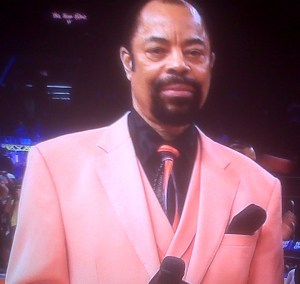
The Knicks didn’t look very smooth in Game 3 of their series against the Celtics Friday night, but Clyde sure did. The legendary point guard always stepped up his game in the post-season, so you had to know he was going to dig deep into his eclectic wardrobe for the first playoff game at the Garden in seven years. But nobody saw the pink flamingo coming.
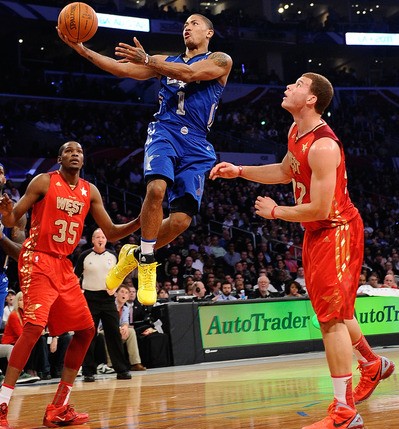
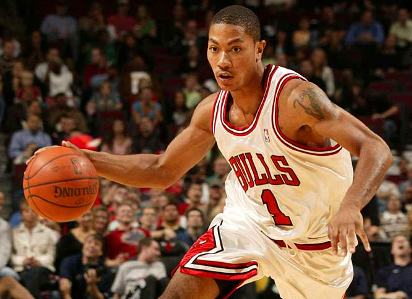
It’s NBA playoff time, when legends are born. Some young players are taking the opportunity to cement their reputations as superstars in the league. Kevin Durant won his second consecutive scoring title this season at the age of 22 and continued to sizzle, dropping 41 points in the Thunder’s Game 1 victory over Denver. Teammate Russell Westbrook has been no less spectacular, with his athleticism and play making in the regular season and playoffs. Derrick Rose has dazzled with speed and elusiveness, building on his MVP campaign by willing the Bulls to two victories in the playoffs. Blake Griffin was an All-Star in his rookie season and though the Clippers didn’t advance to the playoffs he captivated our imaginations with several sensational dunks.
Those are just four of the budding stars who will dominate the league for years to come. Who do you think is the most exciting young player in the game?
After being assessed a technical foul during a game against the Spurs Tuesday night Kobe Bryant was caught on camera mouthing “fucking faggot” at referee Bennie Adams. I won’t take the sting out of it by replacing those words with “homophobic slur,” or censoring video of the incident as many news sources have done. Kobe’s comment was ignorant, malicious and deplorable.
Throughout the 20th century sports were at the forefront of social change in this country. Athletes like Joe Louis, Jackie Robinson and Roberto Clemente dispelled racial stereotypes and broke barriers. Billie Jean King and other female athletes pushed for Title IX legislation, which led to equal opportunity and pay between the sexes. However, when it comes to the rights of homosexuals, the sports world lags far behind.
Locker rooms are a world unto themselves. The competitive environment fosters a kill or be killed mentality in which athletes’ “manhood” is regularly tested and often questioned. Homophobic slurs such as faggot and homo are commonplace. Kobe’s comment wasn’t an aberration, he just happened to get caught on camera.
Michael Jordan was notorious for using words like faggot to chide his teammates during practice. Others have been more public with their anti-homosexual sentiments. Allen Iverson released a rap album rife with homophobic lyrics. Tim Hardaway was suspended from All-Star festivities a few years ago for saying on a radio show that he “hated gay people” and LeBron James once stated that he wouldn’t be able to trust a teammate who came out of the closet.
Of course, homophobia isn’t restricted to basketball. Former San Francisco 49er Garrison Hearst once said, “I don’t want any faggots on my team!” Jeremy Shockey is among several other football players who expressed that they wouldn’t feel comfortable playing with a gay teammate. Former relief pitcher Todd Jones went on the record that he wouldn’t “want a gay guy around me.” One can only imagine what’s said behind closed doors. Is it any wonder that not one male professional athlete in a team sport has come out during his career?
I don’t mean to portray sports as the last bastion of homophobia in this country. Homosexuals are denied rights in most states that we take for granted, like visiting a loved one in the ICU, and are routinely victims of hate crimes and vitriolic slurs. It’s customary in certain social circles for males to insult friends and foes alike with words like “faggot” and “homo” and to refer to something that isn’t popular or tough as “gay.” However, the collective mentality in sports appears to be especially antiquated, which is particularly disturbing because professional athletes are role models for so many of our youth.
Ideally, a martyr in the mold of Jackie Robinson will begin to change the culture from within. The NBA and other leagues aren’t going to address the issue unless homophobia begins to impact their revenue. NBA Commissioner David Stern issued a swift response to Kobe’s remarks stating, “Kobe Bryant’s comment during last night’s game was offensive and inexcusable,” Stern said. “While I’m fully aware that basketball is an emotional game, such a distasteful term should never be tolerated. Kobe and everyone associated with the N.B.A. know that insensitive or derogatory comments are not acceptable and have no place in our game or society.”
Yet the punishment the league meted out was not commensurate with the Commish’s words. Kobe was fined $100,000, a hefty sum for most of us, but pocket change for a player earning $27 million this season. If Stern wanted to send a message that such language is truly intolerable he would have suspended Kobe for at least one playoff game, regardless of the impact on TV ratings.
If leagues and their players aren’t willing to change then it’s incumbent upon us as a society to push them to do so. That’s easier said than done. The lack of consensus on gay rights is further complicated by the reality that unlike women, African-Americans and Latinos, it’s within the power of each individual homosexual to hide or reveal his minority status. Homophobia also isn’t as blatantly institutionalized as other forms of discrimination. There’s no de facto barrier as was the case with African-Americans or differing pay scale, like women had to confront.
Consequently, in the absence of players or coaches publicly condemning homophobia in the locker room, it’s difficult to prove that discrimination exists, no matter how prevalent it is. That is, until somebody like Kobe Bryant or Tim Hardaway state their feelings publicly or are caught on camera making a homophobic slur. Then the gay rights and human rights organizations and the rest of society can spring into action.
GLAAD and The Human Rights Campaign were two of several organizations that condemned Bryant’s behavior. The Lakers and GLAAD have since announced a joint initiative to curb anti-gay comments during Lakers home games and the NBA has indicated that it intends to work with GLAAD to come up with ways to discourage homophobia among fans. As GLAAD President Jarrett Barrios said, “In light of this slur, there is a real opportunity to build support for our community and educate fans of Kobe Bryant, the Los Angeles Lakers, and the NBA about the use of such words.”
Bryant’s slur didn’t just open the door for human rights organizations; the media and public have seized the opportunity to discuss homophobia as well. William Rhoden of the New York Times is one of many writers who have criticized the NBA for not punishing Bryant more severely and used the opportunity to denounce the homophobia that exists within sports. Openly gay ex-basketball player John Amaechi wrote an op-ed piece for the New York Times in response to Kobe’s remark. Sports fans and non-fans alike are discussing the incident over water coolers and at the bar. Many of us have been forced to look in the mirror and question the impact of the words we use.
For the most part, the widespread homophobia in sports is confined to the practice court and locker room. Yet, every so often, a temporary lapse of discretion by an athlete shines light on the ugly hatred that persists in this country and in sports particularly. Homophobic slurs like the one uttered by Kobe are despicable, vile and hurtful. Yet, sadly, we need more of them. It seems to be the only way we’re going to change the sports culture and in turn ourselves.
This is the easiest ROY vote in a long time. The most explosive player in the league averaged 22.4 points and 12.1 rebounds per game for the lowly Clippers and the scary thing is he has so much room to improve.
Fields led all guards in rebounding (not just rookies) and was a solid contributor for a playoff team. Not bad for a second round pick.
Quote of the Year
Winner: David Stern
After a Magic game last month coach Stan Van Gundy criticized referees for not calling flagrant fouls on players who whack his star Dwight Howard and singled out Commissioner Stern, who he referred to as a dictator.
The commish fired back:
“I see somebody whose team isn’t performing, whose star player is suspended, who seems to be fraying,” Stern said of Van Gundy. He then added, “I would venture a guess that we’re not going to be hearing from him for the rest of the season,” Stern said.
He added, “I think when he stops and reads what he said, realizes what he did, he will say no more. … I have a feeling some modicum of self-restraint will cause Stan, and the team for which he works, to rein in his aberrant behavior.”
Modest Melo’s take on the trade rumors swirling around him: “I take my hat off to myself for dealing with all this stuff that’s going on and still be able to go out there and play at the high level that I can play at. I really don’t think an average person can walk in my shoes. I don’t think that.”
MVP candidates aren’t generally considered for this award, but why shouldn’t they be. Last year Rose was a very good player on an average team; this season he emerged as a superstar and carried his team to the best record in the NBA. His vastly improved his defense and three-point accuracy have made him an all around threat and one of the top six or seven players in the league.
In his third season, Westbrook made the leap to NBA All-Star and at times was the best player on the floor for a Thunder team that includes Kevin Durant. His scoring average jumped from 16.1 to 21.8 points per game and he significantly improved his shooting percentage from the field, the line and behind the arc.
Aldridge was the Blazers go-to player in the absence of Brandon Roy and was probably the biggest All-Star snub, while Love averaged an eye-popping 15 rebounds per game.
Where have you gone Moochie Norris? It was a weak season for hair dos in the NBA, so Jennings is the winner by default. The Bucks point guard has worked several old school styles this season, from the mohawk to the fade.
The Bulls were a .500 team last year and the only major addition they made was Carlos Boozer. Thidodeau brought his defensive approach and winning attitude with him from the Celtics and the Bulls vaulted to 62 wins and the best record in the NBA.
Runner-up: Gregg Popovich
Everybody thought the Spurs were on the decline. They hadn’t one a championship since 2007 and the Big 3 are getting up their in years, especially Tim Duncan. Pop changed things up by making Parker and Ginobili the focal point of the offense and pushed the tempo, resulting in the best record in the Western Conference.
Honorable Mention: Doug Collins and George Karl
Nobody picked the 76ers to make the playoffs this year, but Collins’ young team to played hard every night and he managed to get something out of Elton Brand. Karl kept the Nuggets focused despite the Melodrama hanging over their head all season and quickly assimilated the new parts together after the big trade.
Executive of the Year
Winner: Pat Riley
Riles pulled off the biggest free agency coup in NBA history, landing LeBron, Wade and Bosh last summer. Unfortunately he wasn’t able to provide additional pieces around them, but hey, nobody’s perfect.
Runner-up: Donnie Walsh
Walsh’s patience and long term plan to get the Knicks under the cap finally paid off when he landed Amar’e last summer and Carmelo at the trade deadline. Chauncey is nothing to sneeze at and don’t forget his selection of starting shooting guard Landry Fields in the second round.
Best Fans: Portland
The Trailblazers have endured devastating injuries to two potential franchise players in Greg Oden and Brandon Roy, yet their fan never wavered in their support. The Blazers are the only professional team in town and the fans embrace them with a vigor typically reserved for college crowds, making the Rose Garden one of the biggest home court advantages in the league.
Runner-up: Chicago
There’s a buzz in the United Center this season reminiscent of the Jordan era. There may be other cities that show their teams greater love in difficult times, but these awards are for this season only and no arena has been louder than the United Center this year.
Honorable mention: Oklahoma City and Boston
OKC knows they have something special in Kevin Durant and Russell Westbrook. Boston fans are among the most knowledgeable fans in the league and have embraced the historic significance of watching the Big Three in action.
Worst Fans: Miami
Miami simply doesn’t deserve the “Big three.” It’s not a basketball town. They have two of the three best players in basketball, one of which is possibly the greatest athlete to ever step foot on a court and they don’t even fill the arena. Those that do show up are about as rowdy as the fans at Wimbledon’s All England Club.
Runner Up: Atlanta
The Hawks won 44 games this year, are the fifth seed in the Eastern Conference and the city of Atlanta barely noticed. There are loads of empty seats during almost every Hawks home game and the only time there’s any noise in Philips Arena is when the public address announcer chants “De-fense.”
Best Trade
Winner: Oklahoma City Thunder
OKC knew they needed to get tougher and improve their interior defense and that’s exactly what they did when they acquired Kendrick Perkins from the Celtics. Now Ibaka can play the four, where his athleticism is better utilized. The Perkins acquisition was the final piece that will eventually put this team over the top. Don’t be shocked if they make the NBA Finals this year.
Runner-up: New York
The Knicks gave up three very good players for Carmelo Anthony, in Wilson Chandler, Danilo Gallinari and Raymond Felton, but they had to assume that Anthony wouldn’t make it to free agency. Management was all in the moment they signed Amar’e and his creaky knees to a five year $100 million contract. Melo and Amar’e give them a formidable duo to contend with the Heat and Bulls in the years to come.
Worst Trade: New Jersey Nets
I understand why the Nets gambled on Deron Williams. They need a marquee player for their move next year and are hoping that other players will want to come to Brooklyn to play with one of the best point guards in the league. The problem is it’s unlikely that D-Will will re-sign next year when his contract expires, in which case they’ll have traded solid building blocks in Derrick Favors, Devin Harris and two first round draft picks and have nothing to show for it.
Runner-up: Boston
Doc Rivers was fond of saying that the Celtics hadn’t lost a series over the past few seasons when their five starters were healthy. Then they traded starting center Kendrick Perkins, ostensibly to improve in the future. When your three stars are in their mid thirties you play for now. The Celtics calling card was tough interior defense and they gave up one of their two best inside defenders.
Statistics alone don’t capture Odom’s value to the Lakers. He was the second most valuable player on the team this year and played at an All-Star level when starting in place of an injured Andrew Bynum. His versatility enables him to guard multiple positions, rebound, shoot from outside and bring the ball up the floor.
Terry keeps rolling along at age 33. The sixth man plays starter minutes and is one of the leaders of the Mavericks. He’s the second scoring option on the team and takes his game to another level in the fourth quarter.
Pop’s favorite player has improved every year he’s been in the league and provided the Spurs with a spark off the bench all season.
Dunk of the Year
Winner:Blake Griffin‘s dunk over Timofey Mozgov in November. Griffin had several highlight reel dunks this season, though this was the most impressive.
McGee dunking on two different baskets at the same time during the Slam Dunk Contest was much more difficult than most people realize. It also get’s a high grade for originality.
Honorable mention:
A slew of Blake Griffin dunks, most notably his 360 slam over Danilo Gallinari in the same game as the dunk over Mozgov. Derrick Rose also victimized the Knicks with a monster two-hand jam early in the season and Serge Ibaka‘s foul line dunk during the dunk contest didn’t receive enough love.
Pass of the Year
This is no contest. I’ve never seen anything like D-Wade’s full court alley-oop to LeBron against the Indiana Pacers.
The big man will bring home the award for the third year in a row. He averaged 2.4 blocks a game and that doesn’t include the shots he alters through sheer intimidation. His impact is all the more impressive because the rest of the players in the Magic’s rotation are decent defenders at best and there’s no other big man to help him protect the rim.
Allen is the unsung hero of the Grizzlies success this season. He brings an intensity level on that side of the ball that is contagious among his teammates and Coach Hollins matches him up against the opponent’s best perimeter player night after night.
Rose ran away with the MVP as the Bulls surged ahead of Miami and Boston to secure the number one seed in the Eastern Conference. He’s one of the quickest players in the league and a master of improvisation around the basket. This year his dramatically improved shooting, made him virtually unguardable. Rose also sets the tone for the Bulls with his tireless work ethic. His true value was most apparent when Joakim Noah and Carlos Boozer missed significant amounts of time early in the season and the team didn’t miss a beat.
It’s easy to take the Big Man for granted and his team did drop off a bit this season, but look at who he’s playing with. Who’s the second best player on the Magic, Hedo Turkoglu? Jameer Nelson? Jason Richardson? It’s his presence in the middle that enables those shooters to spread the floor and knock down threes and other than Howard the Magic have no inside presence whatsoever. Take Dwight off this team and they’re in the lottery.
Similar to Howard, Dirk doesn’t have another great player on his team. He carries the scoring load for a team that often seems to be playing three against five offensively.
Least Valuable Player
Winner: Eddie Curry
The last holdover of the Isiah era, Curry made over $11 million this season and didn’t suit up for one game for the Knicks before he was traded to Minnesota who quickly released him. He wasn’t hurt, he just didn’t care enough to get himself in shape.
It’s clear that there’s no explosiveness or elevation left in Agent Zero’s surgically repaired knees. Arenas averaged a paltry eight points per game and shot 34% from the field and 27% behind the arc since joining the Magic. That’s not the kind of production you expect in return for over $17 million. The Magic are on the hook for $60 million more over the next three years.
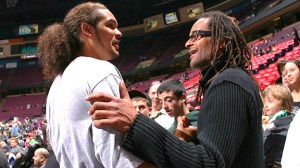
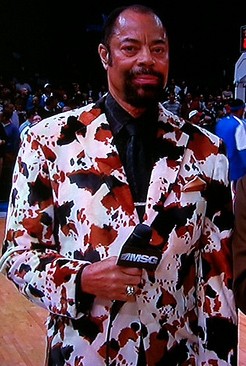
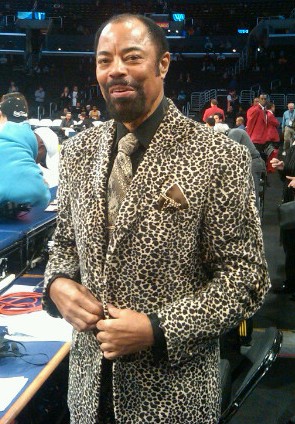
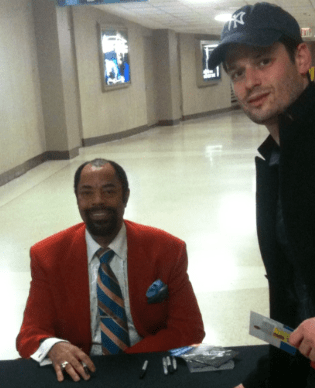
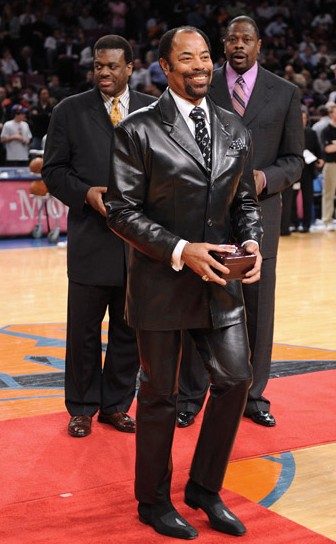
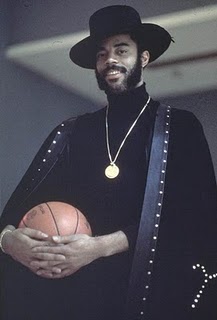
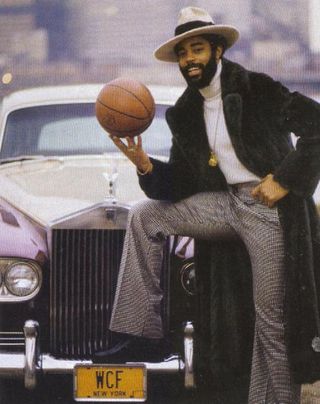
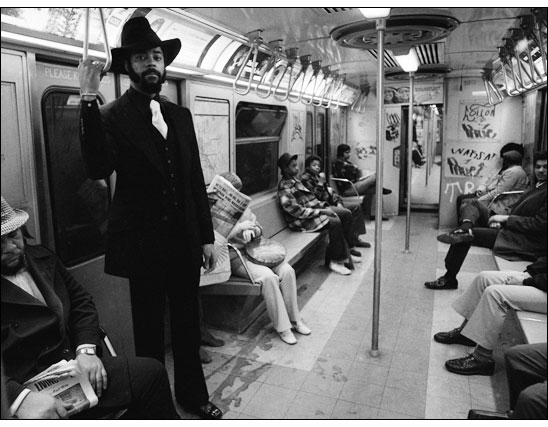
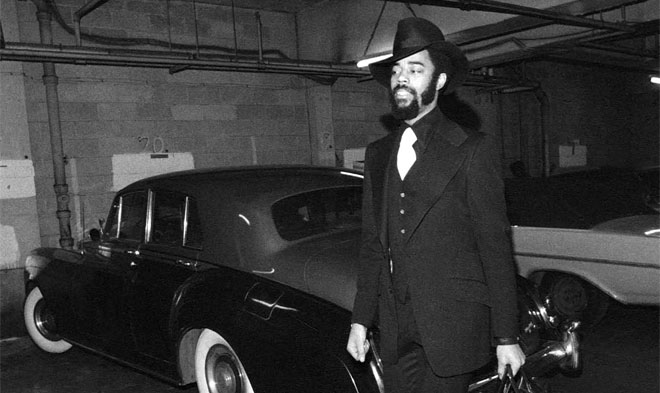
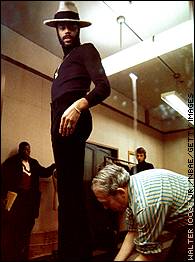
Walt “Clyde” Frazier retired from the NBA over 30 years ago and he’s still the coolest cat in New York City. The Knicks’ commentator is a maestro on the mic and his impeccable sense of style is as sharp as ever. Here’s a look at Clyde’s top five outfits from this season, plus some bonus shots.
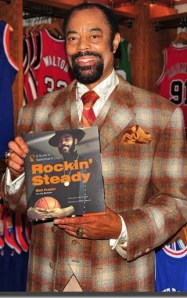
5) Looking dapper in plaid, as he promotes the re-release of his book Rockin’ Steady
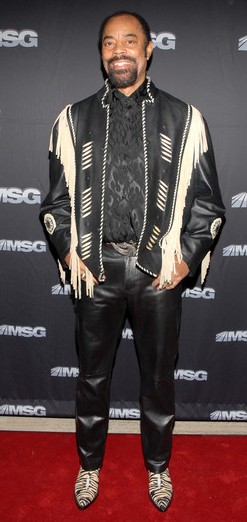
4) Rocking the tassels and zebra-striped shoes at a movie premiere
3) Clyde brought out his tiger style for Melo’s Knick debut
2) They’re not saying boo, they’re saying moo.
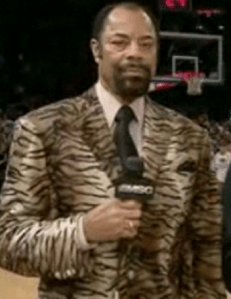
1) And Clydes’s number one look of the season… the leopard-print suit
A few bonus shots…
Rex wearing Clyde's jersey as he pays his respects to the manClyde and my cousin JustinClyde in all leather for Knicks Legends Night last year, with Bernard King and Patrick Ewing looking on.
Ever wonder what Amar’e Stoudemire is talking about when he refers to “Immortal swag?” I give you “old school” Clyde…
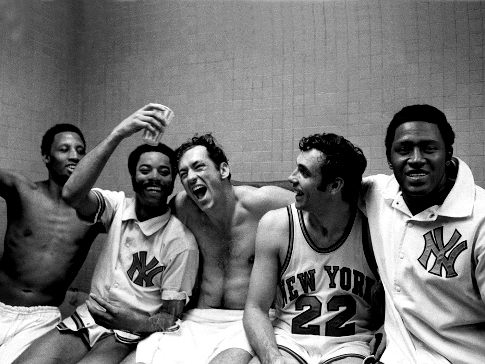
Clyde and his teammates…
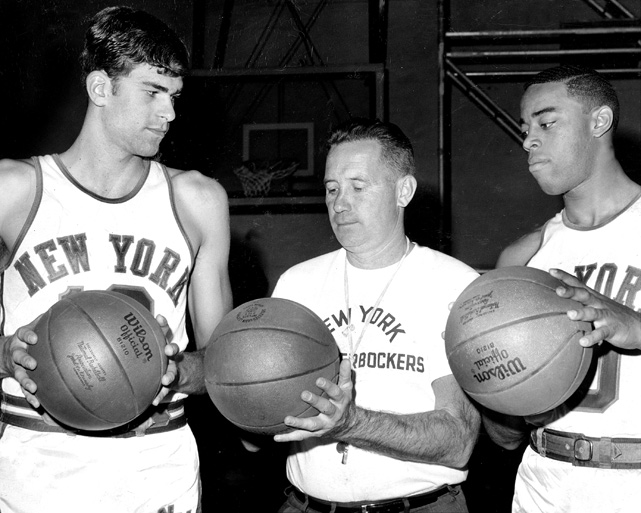
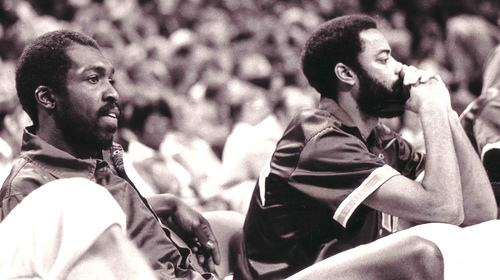
Knicks Coach Dick McGuire with rookie roommates Phil Jackson and Walt FrazierThe starting five from the 1970 Championship team. From left to right: Dick Barnett, Walt Frazier, Bill Bradley, Dave DeBusschere and Willis ReedThe greatest backcourt ever? The Pearl and Clyde
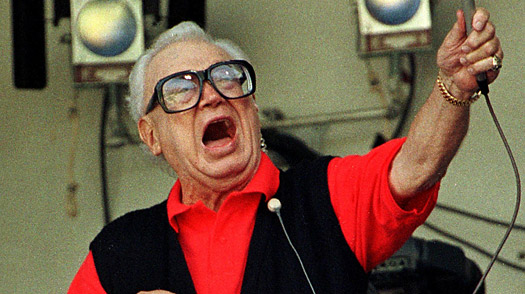
There’s no better way to kickoff a new baseball season than by reminiscing about the late Harry Caray. Here’s a classic quote from the legendary announcer about his beloved Cubs.
“What does a mama bear on the pill have in common with the World Series?”
Over the past twenty-five years there have been numerous incidents in sports that completely floored us, from an untimely death, to a gruesome injury, to a stunning upset, to the simply bizarre. Many of these moments have become universal experiences, memories shared by sports fans every where. As you head towards the top of the list, I guarantee many of you will remember exactly where you were when some of those shocking events occurred.
Here’s my list of the 50 most shocking moments in sports over the past 25 years. As always, let me know if you think there’s something I left out.
50) Dale Hunter viciously crosschecked Islanders’ center Pierre Turgeon in the back, separating his shoulder, while Turgeon was celebrating a goal in the decisive game of a 1993 playoff series with the Capitals.
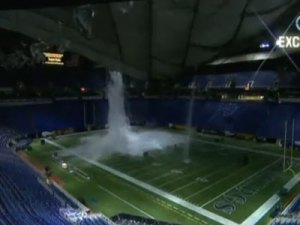
49) The Metrodome roof collapsed during a snowstorm this past winter.
48) Nets star Drazen Petrovic was killed in a car accident during the prime of his career.
47) Fans at the Alamodome got drenched when the sprinkler system malfunctioned during the opening game of the Spurs season in 1994.
46) Thirteen-year-old Brittanie Cecil died after getting struck in the forehead by an errant slap shot off the stick of Columbus Blue Jacket center Espen Knutsen.
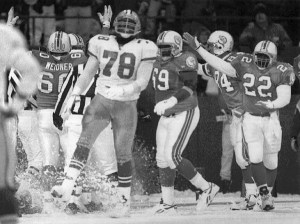
45) When the Cowboys blocked the Dolphins potential game-winning field goal attempt on Thanksgiving Day 1993, all the Cowboys needed to do was stay away from the ball and they would win the game. But Leon Lett came flying in and dove on the ball, giving the Phins another attempt, which they capitalized on. Of course, this wasn’t Lett’s first major blunder.
44) Marty McSorley struck Canucks forward Donald Brashear on the head with his stick in a game between the Bruins and Vancouver.
43) Jose Offerman hit the pitcher and catcher with a bat in an independent league game after being plunked by a pitch.
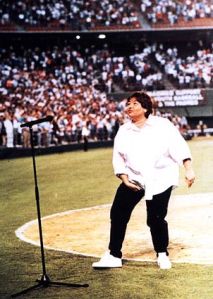
42) Roseanne Barr spit and grabbed her crotch after being booed for her pathetic version of the Star Spangled Banner at Jack Murphy Stadium.
41) Unprovoked, NBA “Bad Boy” Dennis Rodman kicked a cameraman in the nuts after tumbling out of bounds during a Bulls game.
40) Todd Bertuzzi brutally sucker punched Steve Moore, then slammed his head into the ice in a game between Vancouver and Colorado in 2004.
39) In 1989 the all-time hit king, Pete Rose, was banished from baseball for life.
38) Maple Leaf enforcer Tie Domi squirted water at a Flyers fan and then pummeled him when he jumped into the penalty box.
37) Oliver McCall started crying and refused to enter the ring for the fifth round of his Heavyweight title bout with Lennox Lewis.
36) Izzy Alcantara kicked the catcher in the facemask before charging the mound after being brushed back by a pitch in a minor league game.
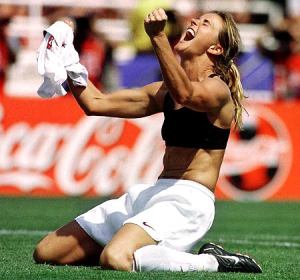
35) Brandi Chastain took off her jersey after striking the winning goal against China in the final game of the 1999 Women’s World Cup.
34) In a 1993 game vs. the Nets, Shaquille O’Neal dunked the ball so hard that he brought down the entire backboard.
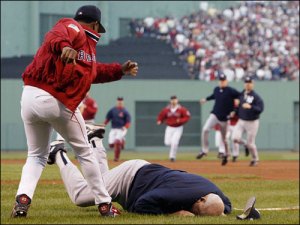
33) Pedro Martinez threw Don Zimmer to the ground by his bald head after Zim charged him during a brawl in the 2003 ALCS.
32) Less than a year after surgery to remove cancer from his pitching arm, Dave Dravecky’s arm snapped as he threw a pitch.
31) The Andrew Golota – Riddick Bowe fight turned into a brawl when Bowe’s people attacked Golota after he was disqualified for repeated low blows.
30) Millions of tiny bugs called midges swarmed Jacobs Field during Game 2 of the 2007 ALDS between the Yankees and Indians.
28) Roger Clemens threw a piece of Mike Piazza’s shattered bat at the Mets catcher during the 2000 Subway Series.
27) Double-A manager Phillip Wellman’s legendary tirade included crawling on the field, hurling bases into the outfield and throwing the rosin bag at the umpire as if it were a grenade.
26) Knicks coach Jeff Van Gundy ended up swinging from Alonzo Mourning’s leg when he tried to break up a fight between the Heat and Knicks during the 1998 playoffss.
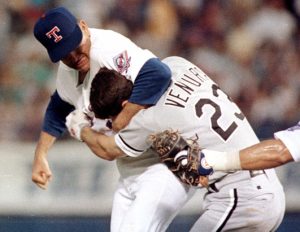
25) Twenty-six-year-old Robin Ventura was beat down by Nolan Ryan, 20 years his elder, when he charged the mound after being beaned.
24) Rosie Ruiz appeared to have won the 84th Boston Marathon, but was later exposed as a fraud who jumped out of the crowd near the end of the race.
23) After disposing of Lou Savarese in the first round, Mike Tyson turned his attention to the heavyweight champion: “Lennox Lewis, I’m coming for you man. My style is impetuous. My defense is impregnable, and I’m just ferocious. I want your heart. I want to eat his children. Praise be to Allah!”
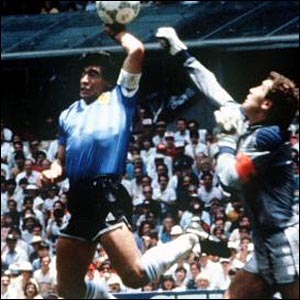
22) Replays confirmed that Diego Maradona used his hand to score a goal to secure Argentina’s victory over England in the 1986 World Cup quarter-finals, but the referees didn’t see it. After the game Maradona coyly stated that the goal was scored by “the hand of God.”
21) Michael Jordan retired from the NBA for the first time at the age of 30 after back-to-back-to-back championships.
20) Minor league right fielder Rodney McCray ran through the outfield wall in pursuit of a fly ball.
19) A dove exploded on impact when it flew in the path of a Randy Johnson fastball in a spring training game.
18) Days after being drafted #2 overall by the Boston Celtics, Len Bias died of a cocaine overdose.
17) Warriors guard Latrell Sprewell savagely choked his coach P.J. Carlesimo at practice.
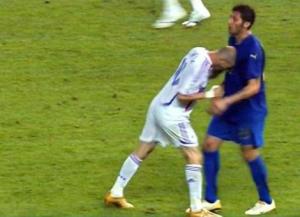
16) French midfielder Zinedine Zidane was given a red card after headbutting Italy’s Marco Materazzi in the finals of the 2006 World Cup.
15) Loyola Marymount star Hank Gathers collapsed and died on the court during a game.
14) Colombian defender Andrés Escobar was shot and killed in Medellin, presumably for inadvertently scoring on his own goal in the 1994 World Cup.
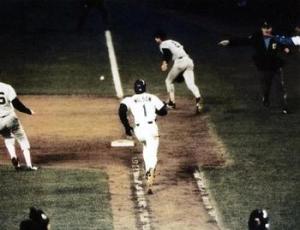
13) Mookie Wilson’s slow roller to first went through the legs of Bill Buckner to win Game 6 of the 1986 World Series.
12) “Fan Man” paraglided into the ring during a title fight between Evander Holyfield and Riddick Bowe.
11) Royals’ first base coach Tom Gamboa was randomly jumped by two fans at Comiskey Park.
10) Blood poured from Sabres goalie Clint Malarchuk’s throat after it was accidentally slit by an opposing players skate.
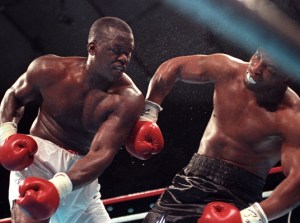
9) In perhaps the greatest upset in sports history, Buster Douglas knocked out Mike Tyson on February 11, 1990.
8) Michael Sergio parachuted onto the infield at Shea Stadium during Game 6 of the 1986 World Series.
7) An earthquake rocked Candlestick Park minutes before Game 3 of the 1989 World Series between the Giants and Athletics.
6) On November 7, 1991 Magic Johnson announced that he was HIV positive and was retiring from basketball immediately.
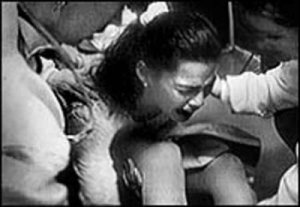
5) A crazed Steffi Graf fan stabbed Monica Seles in the back during a break in the action of her match at the 1993 Citizen Cup in Hamburg.
4) Tonya Harding’s ex-husband enlisted thug Jeff Gillooly to attack Harding’s rival Nancy Kerrigan.
3) Ron Artest started a melee when he attacked a fan in the stands at the Palace in Auburn Hills in what came to be known as the “Malice at the Palace.”
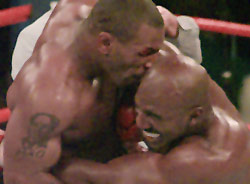
2) Mike Tyson took a bite out of Evander Holyfield’s ear. Then chomped down on the other one moments later.
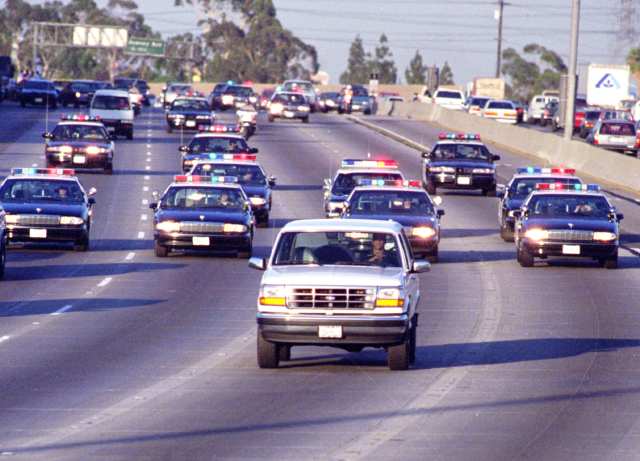
1) Game 5 of the 1994 NBA Finals was interrupted to show football Hall-of-Famer O.J. Simpson fleeing from the police in a white Ford Bronco.
Honorable mentions:
– Chris Webber called timeout in the closing seconds of the 1993 NCAA Tournament Championship game.
– Roberto Alomar spit in the face of umpire John Hirschbeck.
– Carl Lewis’ ceremonial first pitch in Seattle actually rivaled his unforgettable rendition of the national anthem.
– Browns tackle Orlando Brown knocked down the ref after being hit in the eye with a penalty flag.
– Donnie Moore committed suicide a few years after giving up the game-winning home run in Game 5 of the 1986 ALCS.
– Barry Sanders walked away from football in his prime.
– Serena Williams threatened a lineswoman after being called for a foot fault during her semifinal match at the U.S. Open.
– Wayne Gretzky was traded from Edmonton to the Los Angeles.
– John Chaney threatens John Calipari
– Gilbert Arenas and teammate Javaris Crittenton pulled guns on each other.
– The tragic deaths of Reggie Lewis, Nick Adenhart, Darryl Kile and Korey Stringer
– Notre Dame student Declan Sullivan died after falling from a lift while filming football practice.