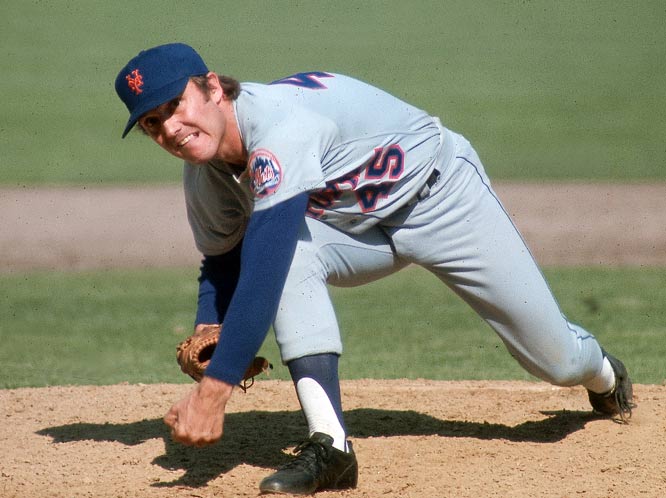
This is one of my all-time favorite sports quotes. When asked by a reporter if he preferred grass or turf, former Mets hurler Tug McGraw famously responded,
“I dunno. I never smoked any Astroturf.”
This is one of my all-time favorite sports quotes. When asked by a reporter if he preferred grass or turf, former Mets hurler Tug McGraw famously responded,
“I dunno. I never smoked any Astroturf.”
by Paul Knepper
 Basketball fans generally embrace Cinderella stories in the Big Dance. George Mason became the darling of the 2006 tourney, when they shocked the nation by advancing to the Final Four. Last year’s bracketbuster Butler captured the hearts of fans during their magical run, which fell a few inches short of a championship.
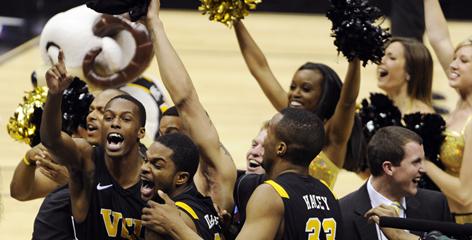
Oddly, this year’s Cinderella VCU hasn’t conjured up the same emotion. The dark horse Rams are an 11 seed and had to beat USC in a play-in game just to get into the tournament. Then they won their next four games, culminating in a stunning upset of #1 seeded Kansas on Sunday, which landed them in the Final Four.
Second year coach Shaka Smart built the team around defensive ball pressure and ball movement. Ignited by their scrappy, diminutive point guard Joey Rodriguez, they play with an intensity that is all too uncommon in today’s collegiate game. They have a legitimate inside-outside threat in forward Jamie Skeen and Smart has instilled the confidence in his team that they can beat anybody.
One would think that basketball fans and reporters would be climbing over one another to jump on the Rams bandwagon, but since their victory over Kansas all I’ve heard is negativity and cynicism about their success. It seems as if most fans are annoyed that VCU is in the Final Four, for any number of reasons.
America likes to root for David against Goliath, but in this case the Rams are playing another David in long shot Butler, take two. The drama and intrigue surrounding an underdog requires a nemesis in the form of a national powerhouse like Duke or Ohio State. VCU already beat their Goliath in Kansas. Two David’s clashing doesn’t carry much sizzle.
Many members of the media have speculated that VCU’s presence in the Final Four will lead to low TV ratings and merchandise sales. According to Darren Rovell of CNBC, since this past weekend’s games the average price for a three-game ticket strip on StubHub for the two Final Four games and Final game has dropped from $748 to $631.
There’s also a chorus of voices arguing that the Rams didn’t deserve to be in the tournament in the first place. They point to their underwhelming 23-11 record in the Colonial Athletic Association (CAA) and that they lost five of their last eight games prior to the tournament. ESPN “bracketelogists” were stunned when the Rams were selected to participate in the tournament and some analysts like Jay Bilas were outraged by the decision. Shaka Smart was surprised himself. His team didn’t even watch the selection show because he didn’t want the disappointment of not being selected to be the defining moment of their 23 win season.
There are also fans and analysts who are rooting against VCU because they opposed the addition of eight teams and four play-in games to the tournament. They believe that the tourney was perfect with 64 teams and fear that VCU’s success as a play-in team will propel the push to expand the tournament to 96 or even 128 teams.
Several members of the media have sought to minimize the Rams accomplishments on the court during this stellar Final Four run. Certain analysts contend that VCU’s success is evidence that the quality of play in college basketball has deteriorated. Others argue that reaching the Final Four this year wasn’t that impressive because there weren’t any great teams in the tournament.
The most blatant disrespect thrown VCU’s way has been attacks on the quality of the competition they’ve faced. Many people believe that their first round opponent USC didn’t deserve to be in the play-in game. Georgetown, who they met in the second round, had been in a free-fall since losing their best player Chris Wright to injury.
The Purdue team they defeated in the third round was also playing without their star Robbie Hummel, though critics failed to mention that the Boilermakers played well enough to earn a #3 seed and were still one of the best defensive teams in the country without him. Plus, VCU didn’t just beat Purdue, they trounced them. The Rams then “squeaked by” a mediocre Florida State team in the fourth round to advance to the Elite Eight.
Even after beating Kansas, the #2 overall seed in the tournament, the Rams received minimal credit. Postgame analysis focused on why Kansas lost, not how VCU won. Rather than discussing the Rams sensational three-point shooting, analysts zeroed in on Kansas’ inability to make shots and their lack of rhythm offensively, as if VCU’s pressure defense had nothing to do with it.
Soon after VCU’s victory over Kansas, Las Vegas released the odds for each of the four remaining teams to win the tournament. Not surprisingly, VCU’s are by far the highest, at 13-2. If I were a betting man I’d jump all over that. You know the Rams are going to bring it on the defensive end, they’re not turning the ball over and if they remain hot from behind the arc, where they’re shooting 44% for the tournament, they’ll be very difficult to beat.
The funny thing is, Shaka Smart loves every one of these disparaging remarks about his team. It’s fuel for them. Smart’s been playing the underdog card all tournament. Now with people rooting against VCU, they’re not just an underdog, it’s them against the world. In yesterday’s press conference Smart summed up VCU’s situation by quoting another underdog, Jake Taylor, from the movie Major League:
“There’s only one thing left to do. Win the whole f-ing thing!”
Call me a curmudgeon, but it seems as if every time I watch a ballgame I develop a new pet peeve. There’s a countless number of things in sports which piss me off. I intended to make this a top ten list, but it just kept growing. Ultimately, I capped it at the top 25. Feel free to share your sports pet peeves with me.
This is a list of the top25 things in sports that piss me off.
25) People who wear suits to hockey games
I silently hope for these guys to get pummeled by the blue collar fans.
24) Yankee jerseys with names on the back
Any self-respecting baseball fan knows that the Yankees don’t have names on the back of their uniforms. Yet if you go to a game at Yankee Stadium you’ll see hundreds of fans with Jeter, Posada or Rodriguez on the back of their jerseys. If you don’t know who the jersey belongs to you shouldn’t be wearing it in the first place.
23) Tennis players apologizing after a net ball
Why do tennis players apologize when they hit a shot that clips the top of the net and falls on their opponent’s side of the court? They didn’t do anything wrong. Fortuitous breaks are part of every sport. You don’t see hitters apologize to the pitcher when they mishit a ball, but it bloops in for a hit.
22) Flopping in soccer
Nobody likes a flopper and soccer players have made an art form of it. It disrupts the fluidity of the game and far too often ends up determining the outcome.
21) Politically correct college team names
I grew up a fan of the St. John’s Redmen. About a decade ago the school changed their name to the Red Storm. I support ending the use of racist team names, but what the hell is a red storm? A few years ago Syracuse dropped the “men” from Orangemen. As if Orangemen wasn’t bad enough, they’re now just the Orange.
20) Players that celebrate when their teams are way behind
We’ve all seen these guys in action; the receiver who dances in the end zone when his team is down 28 points in the fourth quarter; the selfish shooting guard who does a little shimmy after dunking the ball with his team trailing by 20. Hand the ball to the referee and get your ass back on defense!
19) The charge-block call in college b-ball
It’s the most difficult and arbitrary call in basketball. A couple of weeks ago I saw a player on Carolina take off a few feet from the basket, dunk the ball and get called for a charge. Why doesn’t the NCAA just add that dotted line the NBA uses?
18) Fans who talk above their knowledge level
I don’t discriminate against non-sports fans. It’s not your thing, that’s cool. However, I will hold it against you if you pretend to know more than you do. When you make comments or argue a point and don’t have a solid grasp on what you’re talking about, the people who do will sniff you out immediately and you’ll look like a fool.
17) Athletes who thank god
If there is a god, he’s got a lot more to worry about than the outcome of a game. Narcissistic athletes who point to the sky after every base hit are trivializing the very god they’re thanking. Keep your religion to yourself pal.
16) Baseball fans who reach onto the field and touch a fair ball
Not only should they be kicked out of the game, they should be banned from the stadium for the rest of the season.
15) When football announcers don’t know anything about the teams they’re covering
The NFL is aired exclusively by major networks so unlike other leagues there aren’t regular home team announcers. There can be a difficult color man doing the game every week. The broadcasters read up on teams before they cover a game, but it’s often apparent that they don’t know the intricacies and patterns of the team and its players as well as hardcore fans do. Some broadcasters fake it better than others. Phil Simms is not one of them.
14) Using correlated statistics to prove causation
For example, an announcer may conclude that since a team has a great record when their running back gets 25 carries, they won those games because the back got 25 carries. To the contrary, very often that back had 25 carries because his team was up big and he just ran out the clock in the fourth quarter. The carries could be a product of the win, not the cause.
13) Calling teams “World Champions”
When the Lakers won the NBA championship last year they weren’t “World Champions.” They were NBA champions. Period. They didn’t compete against any European, Asian or South American teams. The same goes for the league champion of every other major sport in this country.
12) Fraternizing with opponents
If you want to get dinner with your opponent the night before the game or give him a hug during warm-ups that’s your business, but anything more than a quick hello is fraternizing with the enemy. Once the whistle blows I don’t want to see so much as a smile between opponents. Pat Riley had the right idea when he fined his players for helping their opponents up off the floor.
11) The smelly guy in pickup ball
At the end of a long run everybody stinks, but sometimes on the first possession of the first game you find yourself fighting for position with a guy who wreaks before even working up a sweat. As Keyshawn would say, “C’mon man.”
10) Shooting shirts into the crowd
I paid to watch a ballgame, not the circus.
9) Hockey teams get a point when they lose in overtime or a shootout
And people wonder why nobody follows hockey anymore.
8) Timeouts before field goals
I don’t have statistics on this, but I don’t think freezing the kicker by calling a timeout at the last second before he attempts a field goal makes a difference. The pressure on the kicker is the same after the timeout and sometimes the strategy backfires because the kicker misses the first attempt, then makes it after the timeout.
7) Slapping five after free throws
This began in the last ten to fifteen years and I can’t get used to it. What exactly is the purpose of the other four players on the floor slapping a guy five between his foul shots? These are free throws we’re talking; If the shooter makes the first one it’s not a big deal and if he misses he’ll be okay. He doesn’t need encouragement from teammates before shooting the next one.
6) Guys who don’t run out ground balls
What, they don’t get paid enough?
5) The BCS
I know I speak for the whole country on this one. The champion should be decided on the field, not by a computer.
4) People who say “You don’t make that call at that point in the game.”
This one infuriates me. Some people say that certain fouls should not be called late in a basketball game. Their argument is that the refs should leave it up to the players to decide the outcome. I say the player decided the outcome when he committed the foul. The refs would be deciding the outcome if they ignored the rules and swallowed their whistles. The most important aspect of officiating is consistency. If it’s a foul early in the game, it’s a foul in the closing minutes too.
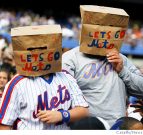
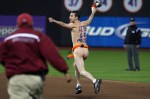
3) Mets fans
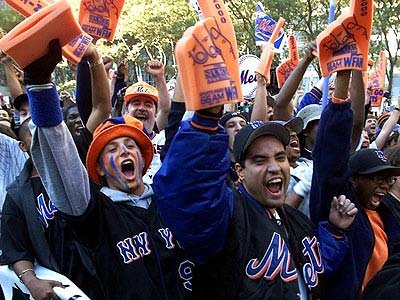
There’s no need to elaborate on these goofballs, their inferiority complex, delusional expectations or ridiculous mascot. They speak for themselves. Exhibits A, B and C…

2) Too many men on the field
Jim Bouton said it well…“Baseball players are smarter than football players. How often do you see a baseball team penalized for too many men on the field?”
Is there any stronger evidence as to the damage caused by concussions? Kids in Pop Warner know how to count to eleven. I get aggravated whenever one of my teams commit a stupid penalty or foul, but this one makes me ANGRY.
1) “We’re doing this for the fans”
Whenever the owner of a sports team utters this phrase he’s lying through his teeth and dipping deeper into your pocket. It’s condescending and insulting to our intelligence. Using my tax dollars to build a new stadium in order to charge ticket prices I can’t afford and install luxury boxes I’ll never step foot in is not in my best interest.
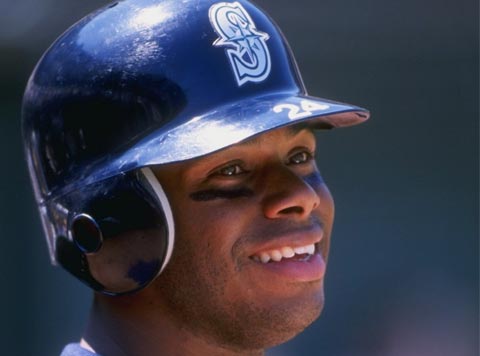
After ten years in Seattle, Junior signed with the Cincinnati Reds following the 1999 season. That’s where the story took a dark turn. In what later came to be known as the steroid era, home run totals spiked and Mark McGwire’s Popeye-esque forearms were the rave. But as sluggers like McGwire, Sammy Sosa, Barry Bonds and Rafael Palmeiro grew stronger with age, Griffey began to break down. It’s a cruel reality which athletes face on the other side of 30, their bodies, the core of their identity, vocation, fortune and fame, slow down and eventually fail them. Some athletes break down younger than others. Griffey’s body began to give out at the age of 31.
by Paul Knepper
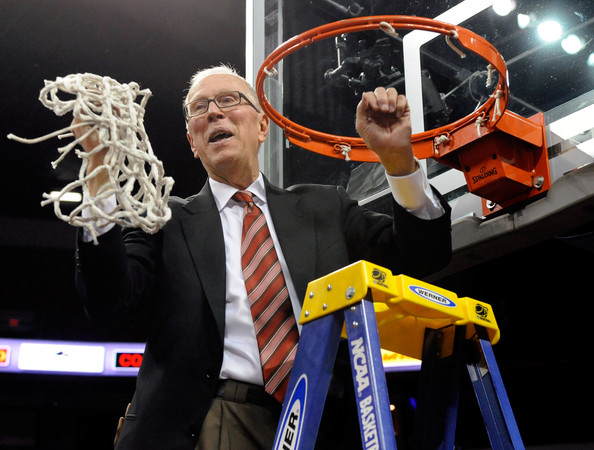 San Diego State was the surprise team in college basketball this season, compiling a 32-2 record and securing a two seed in the NCAA tournament. Of course, Aztecs Coach Steve Fisher is no stranger to success, having coached in three NCAA Tournament Finals while at Michigan in the late 80’s and early 90’s. But this time around is different because Coach Fish is the one in the spotlight.
Fisher’s foray into big time college coaching was rather abrupt. He replaced Bill Frieder as Michigan’s head coach just days before the NCAA Tournament in 1989. Frieder had announced that he would be leaving Michigan for Arizona State at the end of the season and Michigan’s Athletic Director Bo Schembechler responded by famously stating that “a Michigan man is going to coach Michigan.” He fired Frieder immediately.
Fisher was handed the job on an interim basis and Schembechler intended to hire a big name coach after the season. Nobody expected Michigan to advance very far in the tournament after changing coaches days before it started, but a funny thing happened. The Wolverines won the whole thing behind the sweet shooting of Glen Rice and two clutch free throws by Rumeal Robinson and Bo removed the interim tag from Fisher’s title.
Still, the ’89 championship team was viewed as Frieder’s guys and after two disappointing seasons Fisher’s job was believed to be in jeopardy. Then he landed perhaps the greatest recruiting class in the history of college basketball, five extremely talented and athletic kids who came to be known as “The Fab Five.”
Chris Webber, Jalen Rose, Juwan Howard, Jimmy King and Ray Jackson all started as freshmen and shocked the college basketball establishment by advancing to the finals of the NCAA Tournament before being trounced by a more experienced Duke team. The following year they returned to the championship game only to suffer a heartbreaking defeat at the hands of North Carolina, in a game best remembered for Chris Webber‘s ill-fated timeout call.
Despite recruiting the Fab Five and leading them to unprecedented success, Fisher received more criticism than credit for their tenure in Maize and Blue. It has often been portrayed, as was the case in the Fab Five documentary which recently aired on ESPN, that Fisher got Howard to commit and then Howard took care of the rest, convincing the other four to join him in Ann Arbor.
Fisher also never received any credit for the team’s accomplishments. Their wins were attributed to the players, yet he took a large share of the blame for the losses. There was a common perception that the Fab Five were undisciplined and that Fish just rolled the balls onto the floor and told the talented youngsters to play. Anybody who follows basketball closely knows that’s ridiculous. No matter how much talent a team has that talent must be directed and molded into a cohesive unit on the court.
Very few sportswriters addressed the unique challenges that Fisher faced in dealing with five freshmen starters or praised the coach for channeling their creativity, individualism and swagger into production on the court rather than stifling it as many coaches would have. The only time the media discussed Fisher’s coaching ability was in the context of explaining why the Wolverines fell short of that elusive National Championship, especially in the game against North Carolina.
After the loss to the Tarheels, Webber left for the NBA. The following year the remaining four members of the Fab Five advanced to the “Elite Eight”, then Howard and Rose followed C-Webb to greener pastures. Fisher recruited several more highly touted freshmen over the next few years, but they yielded mediocre results on the court, the pinnacle being an NIT Championship in 1997.
In light of a growing scandal centered around Michigan booster Ed Martin, Fisher was abruptly fired prior to the 1997-98 season. The investigation continued until 2003, when the NCAA concluded that Martin had given over $600,000 total to Webber and three other Wolverines coached by Fisher, Robert “Tractor” Traylor, Louis Bullock and Maurice Taylor. The NCAA’s report indicated that Fisher had left complimentary tickets to a game for Martin and that the coach failed to promote an atmosphere of compliance within the program. The university removed the 1992 and 1993 Final Four banners from the ceiling of Crisler Arena.
After being fired by Michigan Fisher took a year off and then worked as an assistant coach for the Sacramento Kings for one season. In 1999, he took over as the head coach of San Diego State where he inherited a program that hadn’t been to the NCAA tournament in 17 years, suffered 13 losing seasons over the previous 14 years and won just four games the season before.
Coach Fish quickly turned the program around, building them into a .500 team in his second season. In his third year on the job the Aztecs won 21 games and earned a trip to the NCAA tournament. Since then, they’ve made four appearances in the NIT and returned to the Big Dance in 2006 and 201o. Still the school has never won an NCAA tournament game, though that may be about to change.
San Diego State returned five starters this season from a team that came within three points of knocking off Tennessee in the first round of last year’s tournament and were considered the favorites in the Mountain West Conference, but nobody expected them to be this good. The Aztecs won 32 games and lost just 2, both to BYU, and they avenged those losses in the finals of the Mountain West Conference Tournament. That earned them the second seed in the West Region, where they’re set to open with a first round matchup against the University of Northern Colorado.
Unlike, Fisher’s Michigan teams San Diego State’s roster isn’t replete with bluechip prospects. The Aztecs are comprised of kids that other teams didn’t want and Fisher has coached them up. They’re tough upfront with Kawhi Leonard, who averaged 15.2 points and 10.7 rebounds per game and Malcolm Thomas and Billy White. The Aztecs also have the balanced scoring, depth and coaching experience to make a run deep into the tournament.
Steve Fisher’s head coaching career started with a blast, morphed into a national phenomenon and then crash landed in scandal. Now, at 65-years-old, he has a major player in the Big Dance once again and this time there’s no star on the team for the media to shine the spotlight on. The name mentioned in the lead-in to Aztec games is the coach’s. This is Steve Fisher’s team.
by Paul Knepper
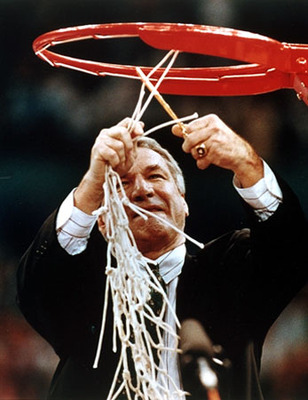
Former North Carolina coach Dean Smith was one of the greatest basketball coaches of all-time. He won 879 games, 17 regular-season ACC Championships and made 11 trips to the Final Four, winning two championships. Strangely, both championships were won on two of the greatest blunders in the history of the NCAA Tournament.
Smith’s first championship came in 1982, when his Tarheels defeated John Thompson’s Georgetown Hoyas 63-62, in what is commonly known as Michael Jordan’s coming out party. The game was replete with star-power, with Sam Perkins and the tournament’s Most Outstanding Player James Worthy joining the freshman Jordan in the starting lineup. Georgetown countered with a freshman phenom of its own, seven-footer Patrick Ewing, and slick point guard Eric “Sleepy” Floyd.
The game was tightly contested from start to finish, with the lead changing hands several times. Floyd put the Hoyas ahead 62-61 with just over a minute to play. Then as a foreshadow to a legendary career to come, Jordan swished a shot from the wing with 17 seconds remaining to give the Tarheels a one point lead.
Hoyas guard Fred Brown brought the ball into the frontcourt and dribbled for a few seconds before he threw the ball right to James Worthy, on the other team. Worthy had been overplaying the passing lane and his man went back door. Brown didn’t realize and thought Worthy was his teammate. Georgetown fouled Worthy, and though he missed both free throws, the Hoyas were out of timeouts and had to heave a desperation three, which was off the mark at the buzzer.
Brown’s gaffe was the most memorable blunder in college basketball lore until eleven years later when Coach Smith and his Tarheels once again found themselves in the Championship Game. This time Carolina faced a brash Michigan team coached by Steve Fisher, known as the “Fab Five.” Led by All-American Chris Webber, the Wolverines were anxious to atone for the drubbing they received in the Championship Game the previous season at the hands of the Duke Blue Devils.
Carolina was an experienced team led by Donald Williams, Eric Montross and George Lynch and they jumped out to an early lead, behind Williams hot-shooting, but the Wolverines slowly clawed their way back. T
he Tarheels led 73-71, with 19 seconds remaining when Webber grabbed 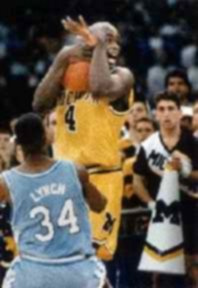 the rebound off a missed free throw by Carolina’s Pat Sullivan. What happened next remains indelibly embedded in the memory of every college basketball fan.
C-Webb didn’t know what to do after he snatched the board. He looked like he was about to call time out and then clearly traveled as he looked to the bench for guidance, but the referees didn’t call it. Unable to get the ball to point guard Jalen Rose, he dribbled into the frontcourt and then signaled for a timeout. The problem was the Wolverines were out of timeouts. They were assessed a technical foul, giving Carolina two free throws and the ball. That was the game. Eighteen years later, Webber hasn’t lived it down and the average basketball fan doesn’t remember anything about that game other than his timeout call.
Brown and Webber’s blunders in the closing seconds of those two championship games in no way tarnish the accomplishments and legacy of Dean Smith or those Carolina teams. The Tarheels deserved to win both games. Smith’s good fortune is just an interesting quirk in college basketball history for you sports conspiracy theorists out there to ponder as we dive head first into another year of March Madness.
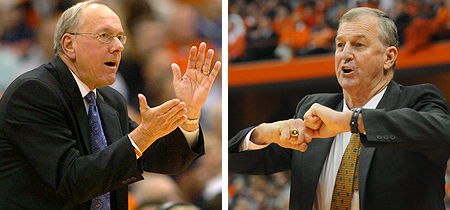
Syracuse coach Jim Boeheim and University of Connecticut’s Jim Calhoun are two of the best coaches in college basketball and they’ve been matching wits in the Big East since Calhoun took the coaching job at UConn in 1986. They’ve each won at least one National Championship and are two of only eight Division I coaches to win 800 games. Fittingly, the two Jims were inducted into the Naismith Memorial Basketball Hall of Fame together in 2005.
So I ask you, which one is the better coach?
TALE OF THE TAPE
National Championships
Boeheim – 1 (2003) (and a Keith Smart jump shot away from a 2nd)
Calhoun – 2 (1999 and 2004)
Final Four Appearances
Boeheim – 3 (1987, 1996, 2003)
Calhoun – 3 (1999, 2004, 2009)
Regular Season Big East Titles
Boeheim – 8
Calhoun – 9
Big East Tournament Championships
Boeheim – 5
Calhoun – 7
Players Sent to the NBA
Boeheim – 29
Calhoun – 23
20 Win Seasons
Boeheim – 33 in 35 seasons
Calhoun – 18 in 25 seasons at UConn
Career Wins
Boeheim – 855
Calhoun – 840 (601 with UConn, 239 with Northeastern)
Big East Coach of the Year Awards
Boeheim – 4
Calhoun – 5
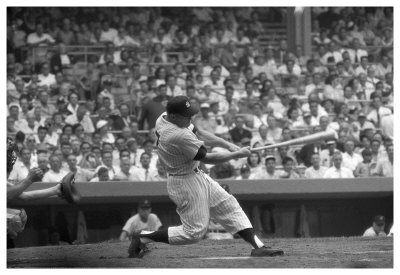
Ever hear your father or grandfather speak in a reverential tone about an athlete from their generation and wish that you could have seen that guy play in his prime? Ever hear a ballplayer you really admire talk about the players he idolized when he was a child, with the same sparkle you have in your eye when talking about Jordan’s shot over Bryon Russell or Barry Sanders juking three guys before breaking a touchdown run? There are countless great athletes that I wish I could have seen play in their prime, but I narrowed it down to a list of the top ten.
Let me know which ballplayers you wish you could have seen play.
10) Julius Erving
I’m talking about the mid 70’s Dr. J, the virtuoso with the sick afro, soaring through the air with that red, white and blue ball and winning ABA championships with the New York Nets. Doc transformed the game by taking it above the rim, where he was a master of improvisation. I wish I were in the crowd when he first took off from the foul-line in 1976.
9) Ted Williams
It’s said that there’s nothing more difficult in sports than hitting a baseball and Teddy Ballgame did it better than anybody. I know the joy of watching great hitters like Don Mattingly, Wade Boggs and Alex Rodriguez approach their craft on a regular basis and I can only imagine what it would have been like to see Williams work a count.
8) Walt Frazier
He’s the namesake of this blog, my former neighbor and I own his jersey; you had to know he was making the list. Clyde was as cool on the court as he was off it. He didn’t receive one technical during his entire thirteen-year-career and was unflappable in the clutch. Watching Clyde would come with the added bonus of seeing the other Hall-of-Famers he shared the ball with, especially in his later years with the Knicks when he and Earl “the Pearl” worked their magic in the same backcourt.
7) Satchel Paige
Satch was one of the most dominant pitchers of any color to ever toe the rubber and perhaps the game’s greatest showman. He was known to intentionally walk the bases loaded and then strike out the side, or tell his fielders to either sit down in the field or go to the dugout while he made a batter swing and miss.
6) Pete Maravich
Speaking of showmen, Pistol Pete was a wizard on the court. Magic Johnson said he learned his signature no-look passes from the Pistol and the great John Havlicek recently said Maravich was the greatest ballhandler of all-time. Oh and by the way, he averaged a mind-blowing 44.2 points per game over his four years at LSU.
5) Bill Russell
If I could watch any basketball player for one game I’d probably choose Wilt, but over a season or career I’d pick the greatest winner in team sports. It would be a pleasure for a basketball junkie like me to watch Russell lead his team into battle and control game after game from the defensive end of the floor.
4) Jim Brown
By all accounts, Brown was the greatest running back and possibly the greatest football player of all-time. His devastating combination of speed and power put the fear of god into opposing linebackers and he averaged a staggering 5.2 yards per carry for his career. Brown retired at the height of his powers, so fans never saw him at anything less than his best.
3) Mickey Mantle
Of the four greatest Yankees Ruth was the most awe-inspiring, Gehrig the most admired, DiMaggio the most revered and Mantle the most loved. The Mick was a product of his time, before cable or the internet, and no athlete will ever capture people’s imagination or conjure up such emotion in fans again. Every baseball fan my age whose father is a Yankee fan has heard countless tales about his blazing speed and tape measure home runs.
2) Babe Ruth
No athlete ever dominated his sport like the Babe did. One season he hit more home runs than every other team in the American League and he still ranks number one all-time in OPS. The Bambino’s larger than life personality added to the show. You never knew when he was going to go into the stands and grab a couple of hot dogs during the game.
1) Muhammad Ali
Muhammad Ali was a warrior in the ring and a poet who had mastered the art of trash talking. He divided the nation with his principles, yet captivated the world through the courage and ingenuity he displayed against pugilists like Joe Frazier and George Foreman. Those battles with Frazier were some of the greatest fights ever and I would have killed to be in attendance for any one of them. Fittingly, yesterday was the 40th anniversary of their legendary first bout.
Honorable mention:
Sandy Koufax, Oscar Robertson, Pele, Joe DiMaggio, Bjorn Borg, Willie Mays, Wilt Chamberlain, Jesse Owens
by Paul Knepper
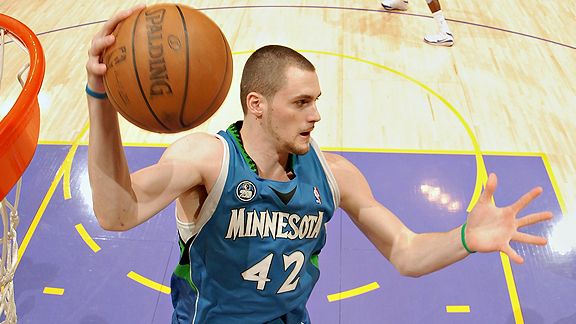
Last night, Timberwolves forward Kevin Love scored 26 points and grabbed 17 rebounds to extend his double-double streak to 51 consecutive games, tying Moses Malone for the NBA’s longest streak of double-doubles since the NBA-ABA merger in 1976. Wilt Chamberlain’s streak of 224 consecutive double-doubles, which will likely never be touched, occurred prior to the merger.
Love’s statistics this season have been eye-popping. He’s averaging 20.9 and 15.7 points per game and leads the league in both offensive and defensive rebounds. Since the NBA added the three-point shot in 1979, only Moses Malone has averaged over 20 points and 15 rebounds over an entire season and he won the MVP that year. There have been 12 20 points and 20 rebound games this season and Love has 11 of them. He even posted 31 points and 31 rebounds in a game against the Knicks in November.
It may come as a surprise to some that the Wolves forward has plenty of naysayers. Some players, coaches and members of the media have dismissed his double-double streak on the grounds that he’s compiled these numbers playing for an awful Timberwolves team that has the second worst record in the league at 15-50. Love himself said after last night’s game, “I’m just going out there and playing hard and it is just kind of happening for me. But it is kind of an afterthought because we aren’t winning.”
Some NBA players and coaches have alluded to Love being a stat-stuffer, a guy who racks up meaningless numbers for a bad team. The league’s leading scorer, Kevin Durant recently commented, “Video-game numbers. Thirty rebounds is unheard of around this day. For him to get 30 rebounds, at his height, he’s not as athletic as other players at his position, but he is just playing for numbers.”
That last line about him “just playing for numbers” is the rub. The argument goes that if he were on a contending team he’d have to refine his game to mesh with teammates and win ballgames and wouldn’t produce those kinds of numbers. Phil Jackson even accused Love of padding his stats by grabbing every missed foul shot and shots at the end of quarters.
Just being on a terrible team creates opportunities for good players to juice their stats. The Timberwolves take and miss more shots than any team in the NBA and give up the third most shots, so Love has more chances to grab rebounds than players on other teams. Plus, when your two best teammates are Michael Beasley and Luke Ridnour, you’re going to have less competition for shot attempts and rebounds.
David Lee is a good example of a player in recent years whose numbers were inflated because of the team he played for. Last year, Lee scored 20.2 points and grabbed 11.7 rebounds per game on a dreadful Knicks team and benefited from Mike D’Antoni’s wide open system. This season, on a mediocre, though still fast paced, Golden State squad he’s averaging a more pedestrian 16.2 and 9.7. Put him on the Celtics, Heat, or Durant’s Thunder and those numbers would drop further, at least the points would.
There’s another argument that Love’s streak is meaningless because he hasn’t helped his team win ballgames. The Timberwolves are 11-40 during the streak. Last season, LeBron James led the now dismal Cavs to the best regular season record and Chris Bosh carried a pretty poor Raptors team to the playoffs. If Love were that good, and his streak that significant wouldn’t the Timberwolves at least be mediocre?
One counter argument is that the cast around LeBron in Cleveland and Bosh in Toronto was more talented than what Love is working with. However, nobody is saying that Kevin Love is in the same class as LeBron James, or the next Moses Malone. He’s a good, exciting, young player in the middle of a remarkable streak.
No matter what the circumstances, 51 consecutive double-doubles is very impressive. There have been plenty of good players whose production spiked while playing for bad teams, but none of them approached numbers like this. Sure, somebody has to do the scoring on a terrible team, but the flip side is that opposing coaches gameplan around stopping Love because he’s the T-Wolves best player.
It’s also not as if the California native is launching wild shots to stuff his numbers. He’s shooting a very efficient 47% from the field and 86% from the line. His 15.7 rebounds per game are over two more than the closest competitor. Even if we knock off a few a game for being on a terrible team he’d still pull down 12 to 13 boards a night, which is incredible considering he’s only about 6’8 (Don’t buy his official listing of 6’10), and wasn’t blessed with the muscular build of Dwight Howard or hops of Blake Griffin.
What’s most remarkable about Love’s streak is his consistency. In a demanding, physical league, with an 82 game schedule, long road trips and back-to-back games, he’s brought tremendous effort and desire every single night. Even the great ones have a few off nights during the season. Love hasn’t, and the fact that he’s maintained that level of commitment and focus despite all of the losing makes it all the more impressive.
If you’ve seen him play, you know he’s not merely a stat stuff; he competes to win. His 31-31 game was the one of the most dominating performances I’ve seen on a basketball court in the past several years. He’s also one of the most unique players the NBA has to offer. He throws the best outlet pass, is a fierce rebounder and shoots 42 percent from behind the arc.
Love will attempt to surpass Malone’s mark on Wednesday night when the Timberwolves host the Pacers. This isn’t DiMaggio’s hitting streak or Abdul-Jabbar’s scoring record, but it’s a tremendous accomplishment by an exciting young player. Show the kid some Love.
by Paul Knepper
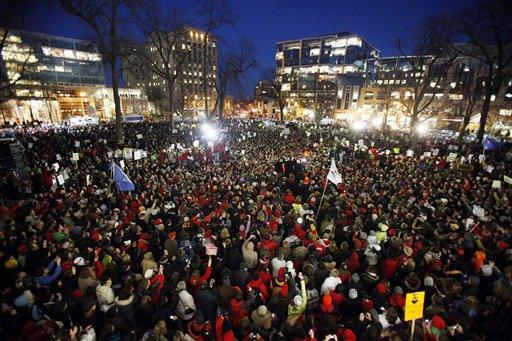
For the past few weeks thousands of Wisconsin residents have swarmed the state Capitol in protest of a proposal by Governor Scott Walker which would require public employees to pay more for their health insurance and pensions, and severely diminish their ability to collectively bargain. The National Basketball Players Association (NBPA), National Football League Players Association (NFLPA) and individual members of sports teams in Wisconsin have issued press releases backing the protesters, but their support stops there.
During the 1960’s athletes like Muhammad Ali, Bill Russell and Wilma Rudolph were at the forefront of social and political change in this country. Two of the most enduring political statements from that tumultuous period in American history came from athletes, when John Carlos and Tommy Smith raised their black fists on the medal stand and Muhammad Ali stated, “I ain’t got no quarrel with them Vietcong…They never called me nigger.”
Over the past quarter century player salaries and individual endorsement deals have skyrocketed, leaving athletes with a lot more to lose and reluctant to take a political stand. There are some current ballplayers who speak out for what they believe in, like Saints linebacker Scott Fujita, Ravens linebacker Brendon Ayanbadejo and Hawks forward Etan Thomas but they’re few and far between, and you’d be hard pressed to find a superstar willing to take the lead on a political or social issue.
The prevailing political statement by a professional athlete of the past 25 years was Michael Jordan’s refusal to make any statement at all. When asked why he doesn’t support Democratic causes MJ replied, “Republicans buy sneakers too.”
Given the current climate, at first glance it would appear unusual for the NFLPA and NBPA to publicly support the protesters in Wisconsin, but their motives are clear. Both parties are currently involved in heated negotiations for a new collective bargaining agreement and face a potential lockout by their league’s owners. They’re trying to establish solidarity with laborers in an attempt to gain public support for their own clashes with management. Interestingly, the NHLPA and MLBPA – who aren’t embroiled in labor negotiations – haven’t issued an official press release on the subject. The lone statement on MLBPA’s website is from an individual, Craig Counsell, of the Milwaukee Brewers.
The statements issued by the NFLPA and NBPA are perfunctory in addition to self-serving. If the associations are truly concerned about the potential law in Wisconsin, they should be sending their members to Madison in droves. Their unwillingness to make a meaningful sacrifice for the protesters’ cause merely calls attention to the growing divide between athletes and other laborers in this country. Public employees are storming the Capitol while the wealthy ballplayers issue press releases.
The battle in Wisconsin, like any labor dispute is a dichotomy of “us verses them.” For the working man and woman, “us verses them” morphs into “the haves and the have-nots.” Today’s athletes are wealthy to a degree that public employees can’t relate to and they hide behind gated mansions and traveling entourages from the laborers they’re now trying to cozy up to.
To the average American, athletes are the “haves.” They’re the “them” in “us verses them.” It’s irrelevant that ballplayers are also laborers who have a legitimate gripe with ownership. Most Americans see the labor strife in the NBA and NFL as billionaires fighting millionaires over billions of dollars. If there’s a lockout in either sport the fans may blame one side more than the other, but ultimately they’ll be bitter towards both.
To an extent, Wisconsin residents are an exception. The Green Bay Packers are the last “small town team,” the lone community owned professional sports franchise in America, and their players do make an effort to embrace that community. For example, as part of a tradition dating back to the days of Vince Lombardi, the Packers ride to practice on the bicycles of local children during training camp. So when Charles Woodson and other Packers issued statements of support, it may have resonated with the protesters, but any public relations boost for the NFLPA failed to extend beyond the Wisconsin border.
The ironic thing about the chasm between fans and athletes is that athletes now have a greater ability to mobilize people and bring about social and political change than ever before. High salaries, the branding of individual athletes and a plethora of communication mediums provide them with a tremendous amount of power.
Some former athletes have called out today’s pros for not using that power to bring about positive change. Jim Brown has been particularly critical of Michael Jordan and Tiger Woods. While I agree that athletes have a unique opportunity to make a positive impact on society, I don’t believe Brown or anybody else has the right to tell another man how to spend his time or allocate his resources, regardless of his status.
I also recognize that great athletes like Jordan who come across as charismatic in commercials and rehearsed responses to simple interview questions don’t necessarily have the tools or the desire to lead a movement. In fact, based on the one time we heard MJ give a real speech (his Hall of Fame induction speech) evidence is to the contrary.
I’m not arguing that the NFLPA, NBPA or individual athletes have a responsibility to support the protesters in Wisconsin. I’m simply saying that if athletes want to be taken seriously as advocates for a cause and develop camaraderie with other advocates they need to be willing to make a significant sacrifice. If they’re sincerely interested in protecting the rights of laborers in Wisconsin, they should put their reputation on the line and join the demonstrators on the front line. Self-serving press releases are a nice gesture at best. They don’t bring about meaningful change or win hearts and minds.

 Paul Knepper