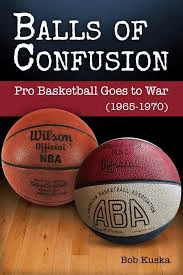
Podcast with Bob Kuska, author of Balls of Confusion: Pro Basketball Goes to War (1965-1970)

https://newbooksnetwork.com/balls-of-confusion

Balls of Confusion: Pro Basketball Goes to War (1965-70) is the first of a two-part story about one of the most transformative events inpro basketball history: the war between the National Basketball Association and its challenger the American Basketball Association (ABA).From this nine-year battle for the heart of the game, modern pro basketball emerged in the mid-1970s and grew into today’s global, multibillion-dollar sports industry. Part One takes a definitive behind-the-scenes look at both leagues marching to war, their marketing schemes, their labor woes, their legal challenges, and their coming to terms with the 1960s and the nation’s changing attitudes on race. If you love sports history and pro basketball’s throwback days of Wilt Chamberlain, Jerry West, Connie Hawkins, and Julius Erving, this is a book for you, with part two soon to follow.

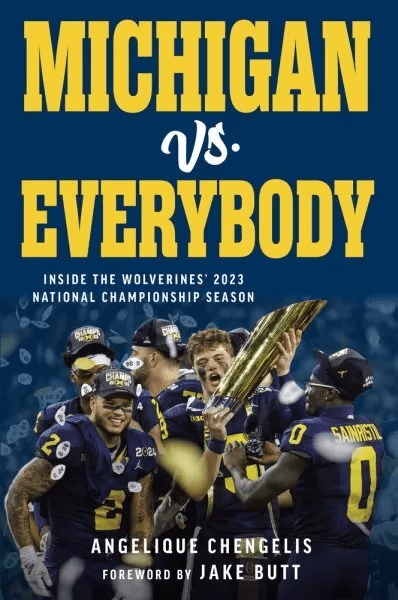
Podcast with Angelique Chengelis about her book Michigan vs. Everybody: Inside the Wolverines’ 2023 National Championship Season

https://newbooksnetwork.com/michigan-vs-everybody

In Michigan Vs. Everybody: Inside the Wolverines’ 2023 National Championship Season (Triumph Books, 2024), The Detroit News‘ Angelique Chengelis expertly retraces an unforgettable championship season. Featuring in-depth reporting and an unforgettable cast of characters including Jim Harbaugh, J.J. McCarthy, Roman Wilson, and Junior Colson, this is the story of how the Wolverines rallied together amid adversity, silenced their critics, and returned championship glory to Ann Arbor.

Podcast with Mirin Fader about her book Dream: The Life and Legacy of Hakeem Olajuwon

https://newbooksnetwork.com/dream

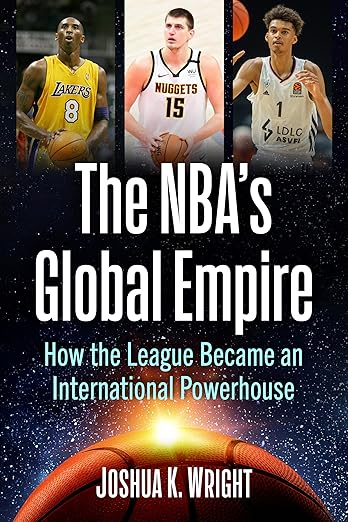
It’s now the norm for NBA and collegiate teams to have international players dotting their rosters. The Olympics are no longer a gimme for Team USA. Both via fans streaming from all over the globe and leagues starting in countries throughout the world, the international presence of the game of basketball is a force to be reckoned with.

That all started with Hakeem “the Dream” Olajuwon. He was the first international player to win the MVP, which is hard to believe now considering the last time an American‑born player won it was in 2018. Award-winning hoops journalist Mirin Fader explores this phenomenal shift through the lens of what Olajuwon accomplished throughout the 1980s and ‘90s. Dream ignites nostalgia for Phi Slama Jama and “the Dream Shake,” while also exploring the profound influence of Olajuwon’s commitment to Islam on his approach to life and basketball, and how his devotion to his faith inspired generations of Muslim people around the world.

Olajuwon’s ongoing work with NBA Africa, his status as an international ambassador for the game, and his consultations with today’s brightest stars, from LeBron James to Giannis Antetokounmpo, brings the story right up to the present moment, and beyond. Synthesizing hundreds of interviews and in-depth research, Fader provides the definitive biography of Olajuwon as well as a crucial understanding of his pivotal impact on the ever-shifting game.

Podcast with Nathan Kalman-Lamb and Derek Silva about their book The End of College Football: On the Human Cost of an All-American Game

https://newbooksnetwork.com/the-end-of-college-football

In The End of College Football: On the Human Cost of an All-American Game (UNC Press, 2024), Nathan Kalman-Lamb and Derek Silva offer an existential challenge to one of America’s favorite pastimes: college football. Drawing on twenty-five in-depth interviews with former players from some of the country’s most prominent college football teams, Kalman-Lamb and Silva explore how football is both predicated on a foundation of coercion and suffused with racialized harm and exploitation. Through the stories of those who lived it, the authors examine the ways in which college football must be understood as a site of harm, revealing how players are systematically denied the economic value they produce for universities and offered only a devalued education in return.

By illuminating the plantation dynamics that make college football a particularly racialized form of exploitation, the book makes legible the forms of physical sacrifice that are required, the ultimate cost in health and well-being, and the coercion that drives players into the sport and compels them to endure such abusive conditions.

Podcast with Brad Balukjian about his book The Six Pack: On the Open Road In Search of Wrestlemania

https://newbooksnetwork.com/the-six-pack

From the bestselling author of The Wax Pack, comes another eye-opening road trip adventure into a pocket of iconic pop culture—professional wrestling—starring the Iron Sheik, Hulk Hogan, Tito Santana, and many more larger-than-life characters of the WWF of the 1980s.

In 2005, Brad Balukjian left his position as a magazine fact-checker to pursue a dream job: partner with his childhood hero, The Iron Sheik (whose real name was Khosrow Vaziri), to write his biography. Things quickly went south, culminating in the Sheik threatening Balukjian’s life. Now seventeen years later, Balukjian returns to the road in search of not only a reunion with the Sheik, but something much bigger: truth in a world built on illusion.

Balukjian seeks out six of the Sheik’s contemporaries, fellow witnesses to the World Wrestling Federation’s (WWF) explosion in the mid-‘80s, to unearth their true identities. As Balukjian drives 12,525 miles around the country, we revisit the heady days when these avatars of strength, villainy, and heroism first found fame and see where their journeys took them. From working out with Tony Atlas (Tony White) to visiting Hulk Hogan’s (Terry Bollea) karaoke bar, we see where these men are now and how they have navigated the cliffs of fame.

The Six Pack combines the spirit of a fan with the rigor of an investigative reporter, tracking down former WWF employees, childhood friends, and mutually curious archivists. Wrestling is perceived as a subculture without a cultural home, somewhere between sport and theater—often dismissed as silly and low‑brow. But what makes this book so compelling is the humanity beneath each wrestler. The Iron Sheik, Hulk Hogan, and the rest of the cast were not characters in a comic book movie. They were real people, with families and feelings and bodies that could break. Most of them did, in fact, break; some have been repaired, but none of them will ever be the same.

Podcast with Julie Kliegman about her book Mind Game: An Inside Look at the Mental Health Playbook of Elite Athletes

https://newbooksnetwork.com/mind-game

In growing numbers, athletes are speaking up about their struggles with mental illness—including high-profile stars such as Michael Phelps, Kevin Love, Simone Biles, and Naomi Osaka. More disclosures are surely on the way, as athletes recognize that their openness can help others and inspire those around them.

In Mind Game: An Inside Look at the Mental Health Playbook of Elite Athletes, Julie Kliegman offers insight into how elite athletes navigate mental performance and mental illness—and what non-athletes can learn from them. She explores the recent mental health movement in sports, the history and practice of sport psychology, the stereotypes and stigmas that lead athletes to keep their troubles to themselves, and the ways in which injury and retirement can throw wrenches in their mental states. Kliegman also examines the impacts of depression, anxiety, bipolar disorder, substance use, and more, with a keen eye toward moving forward with acceptance, progress, and problem-solving.

Featuring insightful interviews with Olympians Chloe Kim, McKayla Maroney, and Adam Rippon, NBA players Kevin Love and DeMar DeRozan, former U.S. Open tennis champ Bianca Andreescu, and many other athletes and experts, Mind Game breaks down the ongoing, heartening movement of athletes across sports coming forward to get the care they need and deserve—and to help others feel safe opening up about their struggles, as well.

Podcast with Ben Kaplan, author of Pipeline to the Pros: How D3, Small-College Nobodies Rose to Rule the NBA.

https://newbooksnetwork.com/pipeline-to-the-pros

Jeff Van Gundy. Brad Stevens. Frank Vogel. Mike Budenholzer. Tom Thibodeau. Sam Presti. Leon Rose. Before you knew his name, before he drafted your favorite player, before he guided your team to a championship, he had a playing career of his own at an NCAA Division III college. He didn’t play for fortune – the NBA was out of reach, and his school didn’t even give athletic scholarships. He didn’t play for fame – his games weren’t televised, and the stands were rarely full. Whatever the motivation, he simply couldn’t give up the game of basketball. And that didn’t change after graduation, when it was time to pick a career path.

For the first time in league history, NBA coaches and general managers are just as likely to have played Division III basketball as they are to have played in the NBA. While the number of former D3 players working in the NBA is higher than ever, small college alums have served in leadership positions since the league’s founding. They shaped the NBA into what it is today, playing integral roles in the Lakers’ initial success in Los Angeles, the inception of several expansion franchises, the creation of the popular All-Star Weekend dunk contest, the globalization of the league, and more.

Their improbable and inspiring journeys tell a bigger story – the history of small college athletics, the evolution of coaching and management in the NBA, and the hiring practices in the most competitive fields. Their alma maters were small, but their impact on the game, and the implications of their success, loom large.

Podcast with Aaron Fischman about his book A Baseball Gaijin: Chasing a Dream to Japan and Back

https://newbooksnetwork.com/a-baseball-gaijin

Like many American boys, Tony Barnette yearned to one day make it to “The Show,” playing baseball professionally. The Arizona State pitcher was drafted in 2006 by the in-state Diamondbacks. Gradually ascending the minor-league ladder, it looked like this was the beginning of a blessed life, where he could play the game he loved on the grandest of stages in front of family and friends.

But things don’t always work out the way we want.

On the verge of achieving his lifelong dream after notching a league-high 14 wins in Triple A, Tony looked ahead to 2010 with optimism. That’s when Japan came calling, offering a significant salary hike in exchange for forgoing a likely forthcoming big-league debut.

The Diamondbacks agreed to release Tony so he could play for Tokyo’s Yakult Swallows, the renowned Yomiuri Giants’ intra-city rivals.

At the time, the only thing he had in common with the country was a love for baseball. He did not know the language and was unfamiliar with Nippon Professional Baseball and essentially everything else. On his own in a strange land, the burning desire to one day make the major leagues never subsided. He knew the odds were against him, as less than one quarter of gaijin (Japanese for “foreigner”) ballplayers who go to Japan appear in the majors at any point thereafter.

First-year struggles led to multiple demotions and his end-of-year release. But when you’re chasing a dream, you expect to encounter several obstacles. Tony refused to be deterred. Over six seasons in Japan, the starter became a reliever and then a closer. After a strong 2015 season, in which he guided his long-suffering Swallows to the Japan Series, he finally got the call he had been waiting for. Signing with the Texas Rangers in December, Tony would make his first major-league appearance on April 5, 2016, at age thirty-two. He’d go on to pitch four seasons with the Rangers and Chicago Cubs, fulfilling a lifelong dream.

In A Baseball Gaijin: Chasing a Dream to Japan and Back (Sports Publishing, 2024), Aaron Fischman tells Tony’s story of perseverance, determination, and never giving up on your dream.

Podcast with Adam Criblez about his book Kings of the Garden: The New York Knicks and Their City

https://newbooksnetwork.com/kings-of-the-garden

In Kings of the Garden: The New York Knicks and Their City (Three Hills, 2024), Adam J. Criblez traces the fall and rise of the New York Knicks between the 1973, the year they won their last NBA championship, and 1985, when the organization drafted Patrick Ewing and gave their fans hope after a decade of frustrations.

During these years, the teams led by Walt Frazier, Earl Monroe, Bob McAdoo, Spencer Haywood, and Bernard King never achieved tremendous on-court success, and their struggles mirrored those facing New York City over the same span. In the mid-seventies, as the Knicks lost more games than they won and played before smaller and smaller crowds, the city they represented was on the brink of bankruptcy, while urban disinvestment, growing income inequality, and street gangs created a feeling of urban despair.

Kings of the Garden details how the Knicks’ fortunes and those of New York City were inextricably linked. As the team’s Black superstars enjoyed national fame, Black musicians, DJs, and B-boys in the South Bronx were creating a new culture expression―hip-hop―that like the NBA would become a global phenomenon. Criblez’s fascinating account of the era shows that even though the team’s efforts to build a dynasty ultimately failed, the Knicks, like the city they played in, scrappily and spectacularly symbolized all that was right―and wrong―with the NBA and the nation during this turbulent, creative, and momentous time.

Podcast with Jerry Grillo, author of Big Cat: The Life of Baseball Hall of Famer Johnny Mize

https://newbooksnetwork.com/big-cat

Johnny Mize was one of the greatest hitters in baseball’s golden age of great hitters. Born and raised in tiny Demorest, Georgia, in the northeast Georgia mountains, Mize emerged from the heart of Dixie as a Bunyonesque slugger, a quiet but sharp-witted man from a broken home who became a professional player at seventeen, embarking on an extended tour of the expansive St. Louis Cardinals Minor League system.

Mize then spent fifteen seasons terrorizing Major League pitchers as a member of those Cardinals, the New York Giants of Mel Ott and Leo Durocher, and finally with the New York Yankees, who won a record five straight World Series with Mize as their ace in the hole—the best pinch hitter in the American League. Few hitters have combined such meticulous bat control with brute power the way Mize did. Mize was a line-drive hitter who rarely struck out and also hit for distance, to all fields, and usually for a high average. Nicknamed the Big Cat, “nobody had a better, smoother, easier swing than John,” said Cardinals teammate Don Gutteridge. “It was picture perfect.”

Tabbed as a can’t-miss Hall of Famer, then all but forgotten, Mize spent twenty-eight years waiting for the call from Cooperstown before he was finally inducted in 1981, delighting fans with his straightforward commentary and sly sense of humor during a memorable induction speech.

From the backroads of the Minor Leagues to the sunny Caribbean, where he played alongside the best Black and Latin players as a twenty-one-year-old, and to the Major Leagues, where he became a ten-time All-Star, home run champion, and World Series hero, Mize forged a memorable trail along baseball’s landscape. Big Cat: The Life of Baseball Hall of Famer Johnny Mize (U Nebraska Press, 2024) is the first complete biography of the Big Cat.