Podcast with Aaron Fischman about his book A Baseball Gaijin: Chasing a Dream to Japan and Back

https://newbooksnetwork.com/a-baseball-gaijin

Like many American boys, Tony Barnette yearned to one day make it to “The Show,” playing baseball professionally. The Arizona State pitcher was drafted in 2006 by the in-state Diamondbacks. Gradually ascending the minor-league ladder, it looked like this was the beginning of a blessed life, where he could play the game he loved on the grandest of stages in front of family and friends.

But things don’t always work out the way we want.

On the verge of achieving his lifelong dream after notching a league-high 14 wins in Triple A, Tony looked ahead to 2010 with optimism. That’s when Japan came calling, offering a significant salary hike in exchange for forgoing a likely forthcoming big-league debut.

The Diamondbacks agreed to release Tony so he could play for Tokyo’s Yakult Swallows, the renowned Yomiuri Giants’ intra-city rivals.

At the time, the only thing he had in common with the country was a love for baseball. He did not know the language and was unfamiliar with Nippon Professional Baseball and essentially everything else. On his own in a strange land, the burning desire to one day make the major leagues never subsided. He knew the odds were against him, as less than one quarter of gaijin (Japanese for “foreigner”) ballplayers who go to Japan appear in the majors at any point thereafter.

First-year struggles led to multiple demotions and his end-of-year release. But when you’re chasing a dream, you expect to encounter several obstacles. Tony refused to be deterred. Over six seasons in Japan, the starter became a reliever and then a closer. After a strong 2015 season, in which he guided his long-suffering Swallows to the Japan Series, he finally got the call he had been waiting for. Signing with the Texas Rangers in December, Tony would make his first major-league appearance on April 5, 2016, at age thirty-two. He’d go on to pitch four seasons with the Rangers and Chicago Cubs, fulfilling a lifelong dream.

In A Baseball Gaijin: Chasing a Dream to Japan and Back (Sports Publishing, 2024), Aaron Fischman tells Tony’s story of perseverance, determination, and never giving up on your dream.

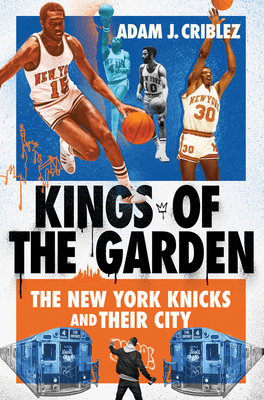
Podcast with Adam Criblez about his book Kings of the Garden: The New York Knicks and Their City

https://newbooksnetwork.com/kings-of-the-garden

In Kings of the Garden: The New York Knicks and Their City (Three Hills, 2024), Adam J. Criblez traces the fall and rise of the New York Knicks between the 1973, the year they won their last NBA championship, and 1985, when the organization drafted Patrick Ewing and gave their fans hope after a decade of frustrations.

During these years, the teams led by Walt Frazier, Earl Monroe, Bob McAdoo, Spencer Haywood, and Bernard King never achieved tremendous on-court success, and their struggles mirrored those facing New York City over the same span. In the mid-seventies, as the Knicks lost more games than they won and played before smaller and smaller crowds, the city they represented was on the brink of bankruptcy, while urban disinvestment, growing income inequality, and street gangs created a feeling of urban despair.

Kings of the Garden details how the Knicks’ fortunes and those of New York City were inextricably linked. As the team’s Black superstars enjoyed national fame, Black musicians, DJs, and B-boys in the South Bronx were creating a new culture expression―hip-hop―that like the NBA would become a global phenomenon. Criblez’s fascinating account of the era shows that even though the team’s efforts to build a dynasty ultimately failed, the Knicks, like the city they played in, scrappily and spectacularly symbolized all that was right―and wrong―with the NBA and the nation during this turbulent, creative, and momentous time.

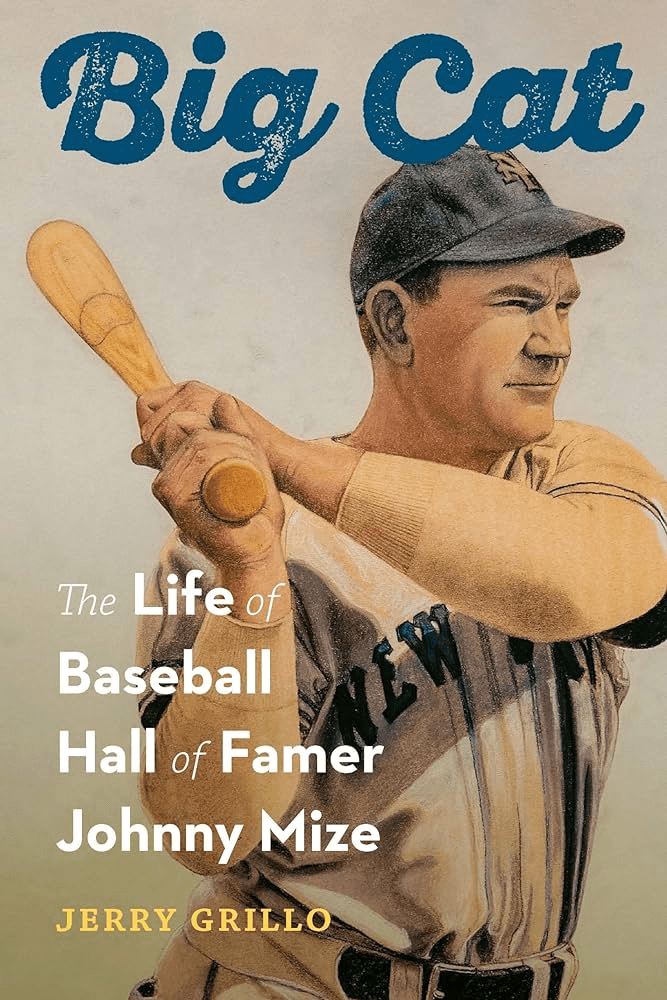
Podcast with Jerry Grillo, author of Big Cat: The Life of Baseball Hall of Famer Johnny Mize

https://newbooksnetwork.com/big-cat

Johnny Mize was one of the greatest hitters in baseball’s golden age of great hitters. Born and raised in tiny Demorest, Georgia, in the northeast Georgia mountains, Mize emerged from the heart of Dixie as a Bunyonesque slugger, a quiet but sharp-witted man from a broken home who became a professional player at seventeen, embarking on an extended tour of the expansive St. Louis Cardinals Minor League system.

Mize then spent fifteen seasons terrorizing Major League pitchers as a member of those Cardinals, the New York Giants of Mel Ott and Leo Durocher, and finally with the New York Yankees, who won a record five straight World Series with Mize as their ace in the hole—the best pinch hitter in the American League. Few hitters have combined such meticulous bat control with brute power the way Mize did. Mize was a line-drive hitter who rarely struck out and also hit for distance, to all fields, and usually for a high average. Nicknamed the Big Cat, “nobody had a better, smoother, easier swing than John,” said Cardinals teammate Don Gutteridge. “It was picture perfect.”

Tabbed as a can’t-miss Hall of Famer, then all but forgotten, Mize spent twenty-eight years waiting for the call from Cooperstown before he was finally inducted in 1981, delighting fans with his straightforward commentary and sly sense of humor during a memorable induction speech.

From the backroads of the Minor Leagues to the sunny Caribbean, where he played alongside the best Black and Latin players as a twenty-one-year-old, and to the Major Leagues, where he became a ten-time All-Star, home run champion, and World Series hero, Mize forged a memorable trail along baseball’s landscape. Big Cat: The Life of Baseball Hall of Famer Johnny Mize (U Nebraska Press, 2024) is the first complete biography of the Big Cat.

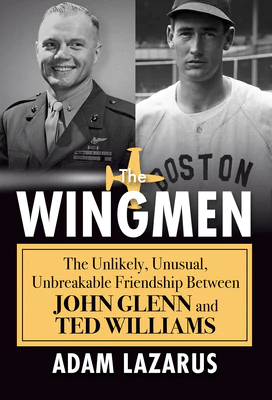
Podcast with Adam Lazarus about his book The Wingmen: The Unlikely, Unusual, Unbreakable Friendship Between John Glenn and Ted Williams

https://newbooksnetwork.com/the-wingmen

It was 1953, the Korean War in full throttle, when two men—already experts in their fields—crossed the fabled 38th Parallel into Communist airspace aboard matching Panther jets. John Glenn was an ambitious operations officer with fifty-nine World War II combat missions under his belt. His wingman was Ted Williams, the two-time American League Triple Crown winner who, at the pinnacle of his career, had been inexplicably recalled to active service in the United States Marine Corps. Together, the affable flier and the notoriously tempestuous left fielder soared into North Korea, creating a death-defying bond. Although, over the next half century, their contrasting lives were challenged by exhilarating highs and devastating lows, that bond would endure.

Through unpublished letters, unit diaries, declassified military records, manuscripts, and new and illuminating interviews, The Wingmen: The Unlikely, Unusual, Unbreakable Friendship Between John Glenn and Ted Williams (Citadel Press, 2023) reveals an epic and intimate portrait of two heroes—larger-than-life and yet ineffably human, ordinary men who accomplished the extraordinary. At its heart, this was a conflicted friendship that found commonality in mutual respect—throughout the perils of war, sports dominance, scientific innovation, cutthroat national politics, the burden of celebrity, and the meaning of bravery. Now, author Adam Lazarus sheds light on a largely forgotten chapter in these legends’ lives—as singular individuals, inspiring patriots, and eventually, however improbable, profoundly close friends.

Podcast with David Ostrowsky, author of Roberto Alomar: The Complicated Life and Legacy of a Baseball Hall of Famer.

https://newbooksnetwork.com/roberto-alomar

Roberto Alomar was not just a five-tool Hall of Famer; he was a magician on the diamond, a generational talent whose defensive wizardry left teammates and opponents breathless. Yet, despite his twelve All-Star selections and ten Gold Glove awards, he has remained one of the most contentious and enigmatic characters in baseball’s history.

Roberto Alomar: The Complicated Life and Legacy of a Baseball Hall of Famer (Roman & Littlefield, 2024) is the first complete, balanced biography of arguably the greatest second baseman in the history of Major League Baseball. It covers Alomar’s impressive career, his altercation with umpire John Hirschbeck and their eventual friendship, the allegations stemming from Alomar’s personal life, never-before-heard stories about his conflicts with both minor and major league teammates, and his global influence.

When Roberto Alomar retired in 2005, his place as one of baseball’s all-time greats was unquestioned. But the controversies that always seem to follow him make Alomar’s legacy far from clear. Drawing on dozens of personal interviews with Alomar’s former teammates and opponents, Roberto Alomar pulls back the curtain on one of the most significant, divisive, and perplexing figures in baseball history.

Podcast with Rich Cohen, author of When the Game Was War: The NBA’s Greatest Season.

https://newbooksnetwork.com/when-the-game-was-war

Four historic teams. Four legendary players. One unforgettable season.

The 1980s were a transformative decade for the NBA. Since its founding in 1946, the league had evolved from a bruising, earthbound game of mostly nameless, underpaid players to one in which athletes became household names for their thrilling, physics-defying play. The 1987–88 season was the peak of that golden era, a year of incredible drama that featured a pantheon of superstars in their prime—the most future Hall of Famers competing at one time in any given season—battling for the title, and for their respective legacies.

In When the Game Was War: The NBA’s Greatest Season (Random House, 2023), bestselling author Rich Cohen tells the story of this incredible season through the four teams, and the four players, who dominated it: Larry Bird and the Boston Celtics, Magic Johnson and the Los Angeles Lakers, Isiah Thomas and the Detroit Pistons, and a young Michael Jordan and his Chicago Bulls. From rural Indiana to the South Side of Chicago, suburban North Carolina to rust-belt Michigan, Cohen explores the diverse journeys each of these iconic players took before arriving on the big stage. Drawing from dozens of interviews with NBA insiders, Cohen brings to vivid life some of the most colorful characters of the era—like Bill Laimbeer, Kareem Abdul-Jabbar, Danny Ainge, and Charles Oakley—who fought like hell to help these stars succeed.

For anyone who longs to understand how the NBA came to be the cultural juggernaut it is today—and to relive the magic and turmoil of those pivotal years—When the Game Was War brilliantly recasts one unforgettable season and the four transcendent players who were at the center of it all.

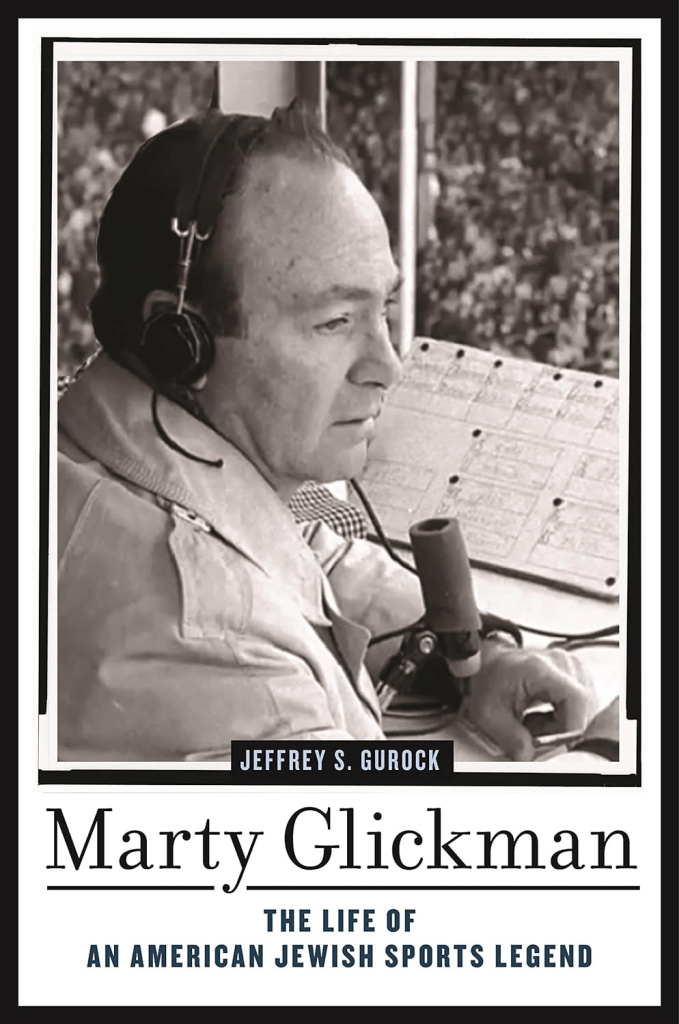
Podcast with Jeffrey Gurock about his book Marty Glickman: The Life of an American Jewish Sports Legend

https://newbooksnetwork.com/marty-glickman

For close to half a century after World War II, Marty Glickman was the voice of New York sports. His distinctive style of broadcasting, on television and especially on the radio, garnered for him legions of fans who would not miss his play-by-play accounts. From the 1940s through the 1990s, he was as iconic a sports figure in town as the Yankees’ Mickey Mantle, the Knicks’ Walt Frazier, or the Jets’ Joe Namath. His vocabulary and method of broadcasting left an indelible mark on the industry, and many of today’s most famous sportscasters were Glickman disciples. To this very day, many fans who grew up listening to his coverage of Knicks basketball and Giants football games, among the myriad of events that Glickman covered, recall fondly, and can still recite, his descriptions of actions in arenas and stadiums. In Marty Glickman: The Life of an American Jewish Sports Legend (NYU Press, 2023), Jeffrey S. Gurock showcases the life of this important contributor to American popular culture.

In addition to the stories of how he became a master of American sports airwaves, Marty Glickman has also been remembered as a Jewish athlete who, a decade before he sat in front of a microphone, was cynically barred from running in a signature track event in the 1936 Olympics by anti-Semitic American Olympic officials. This lively biography details this traumatic event and explores not only how he coped for decades with that painful rejection but also examines how he dealt with other anti-Semitic and cultural obstacles that threatened to stymie his career. Glickman’s story underscores the complexities that faced his generation of American Jews as these children of immigrants emerged from their ethnic cocoons and strove to succeed in America amid challenges to their professional and social advancement. Marty Glickman is a story of adversity and triumph, of sports and minority group struggles, told within the context of the prejudicial barriers that were common to thousands, if not millions, of fellow Jews of his generation as they aimed to make it in America.

Podcast with Mark Snyder about his book Mountaintop: The Inside Story of Michigan’s 1997 National Title Climb

https://newbooksnetwork.com/mountaintop

When the 1997 college football season began, the once-mighty Michigan Wolverines were dismissed nationally as a relic of a bygone era. Michigan had posted four straight four-loss seasons and started out No. 14 in the polls for the third straight year, its worst preseason rankings since 1985. Michigan was led by an accidental third-year coach, Lloyd Carr, who had suffered through back-to-back four-loss seasons after taking the job in the middle of a proverbial tornado. The starting quarterback was a fifth-year, former walk-on who nearly quit the sport. The offensive and defensive coordinators were brand new, the schedule was the toughest in the country, and Michigan’s status as a football powerhouse teetered on a razor’s edge. 

Right before the opener, Carr’s team heard a survivor from a Mount Everest tragedy describe what it took to do the impossible, when everything around you was falling apart. Climb the mountain became the team’s mantra. Four months later, the Wolverines stood on college football’s summit as the 1997 national champion, a perfect 12-0. A team with several future Pro (and College) Football Hall of Famers, the first-ever defensive Heisman Trophy winner (Charles Woodson), the greatest QB in football history (Tom Brady) and the last QB to ever beat him for an open job (Brian Griese), the 1997 Wolverines reset the standard for greatness at the school with the most victories in the sport’s history. This is the story of climbing the mountain, individually and as a brotherhood, during Michigan’s most fabled season ― one ending with its first national championship in a half-century and lone title in the last 75 years. Nick Baumgardner and Mark Snyder’s book Mountaintop: The Inside Story of Michigan’s 1997 National Title Climb (Printopya, 2023) is the journey from the inside, from the players, coaches, and staff members who lived the experience.

Podcast with Lincoln Mitchell about his book The One Hundred Most Important Players in Baseball History

https://newbooksnetwork.com/the-one-hundred-most-important-players-in-baseball-history

Baseball lore and history is filled with many valuable players, and not all of them are the Hall of Famers you know.

In The One Hundred Most Important Players in Baseball History (Artemesia Publishing, 2023) Lincoln A. Mitchell highlights the one hundred players who have had the biggest impact on baseball, popular culture, and history through their careers inside or outside of baseball. You’ll find stories about famous players like Babe Ruth and Jackie Robinson, but also lesser known but deeply impactful baseball players like Curt Flood, Hal Chase, and Felipe Alou. For over 120 years baseball has been a deep part of American life as folk culture and big business, but for just as long it has also been central to race relations, labor issues, global conflicts, and the songs of Bob Dylan. These one hundred players have influenced not only America’s pastime but the country as well.

Podcast with Earl Cureton about his book Earl the Twirl: My Life in Basketball

https://newbooksnetwork.com/earl-cureton-and-jake-uitti-earl-the-twirl-my-life-in-basketball-mcfarland-2023

Earl “The Twirl” Cureton was never a star player in the NBA, but then again, few people will ever be a celebrity athlete.  Earl’s story, instead, is about a life on the fringes of the league during its “Golden Era” of the ’80s and ’90s. A teammate of Julius Erving, Moses Malone, Michael Jordan, Charles Oakley, Muggsy Bogues, Hakeem Olajuwon, and more, Earl was a part of seven NBA teams in his twelve-season career. He won two championships during his career, first in 1983 with the Philadelphia 76ers, and then in 1994 with the Houston Rockets. And yet, as a professional basketball journeyman, every day was a struggle.

Growing up in Detroit during race riots, Earl worked hard and became a standout player at the University of Detroit. A 6′ 9″ center in the pros, Earl battled with Karem Abdul-Jabbar in back-to-back NBA Finals. While many know the stories of big names like Jordan, Magic Johnson, and Larry Bird, few understand the life of a player on the outskirts of the league. This is Earl’s own story, a unique perspective on the trials of a journeyman player: non-guaranteed contracts, tryouts and cuts, playing overseas, coming back from injury, and the looming “right of first refusal.”